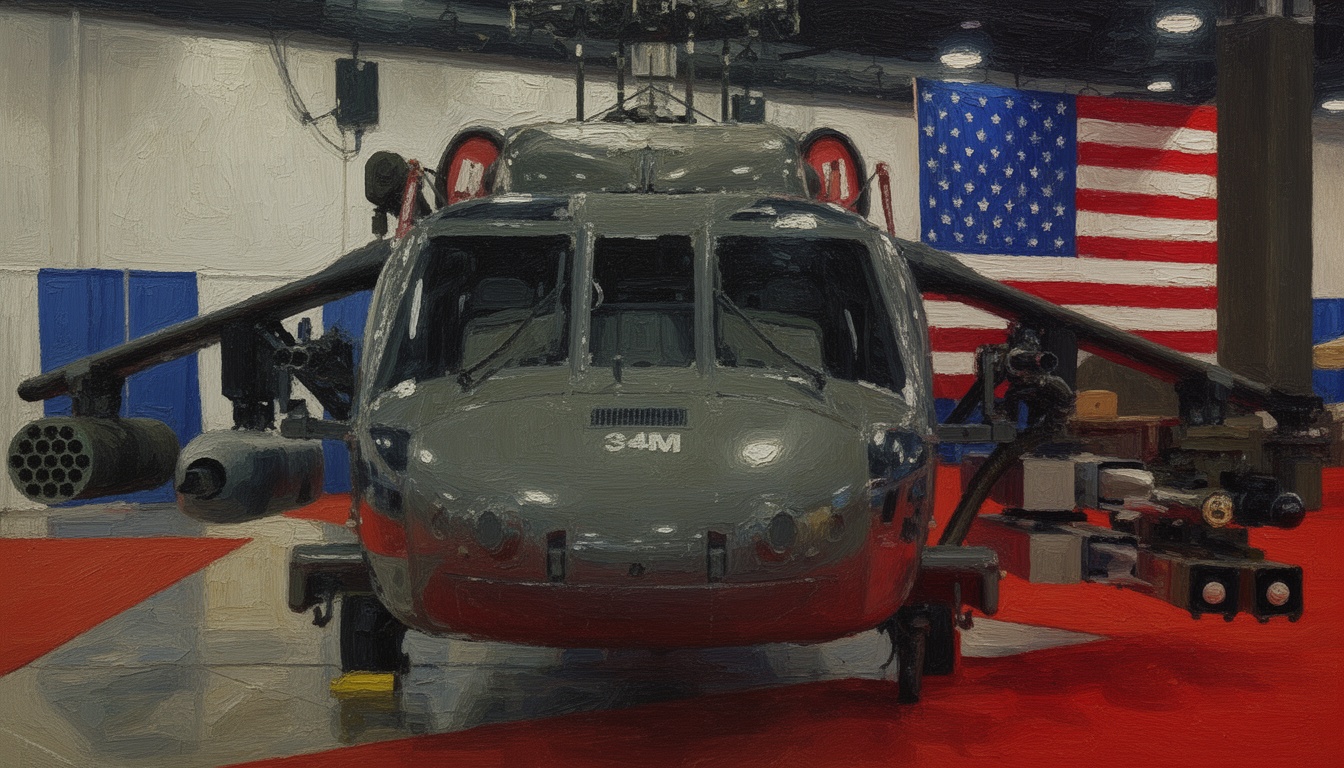
H-60 Black Hawk Gunship Gets Breakthrough Wings and Armament
The H-60 gunship advances with redesigned wings and updated armament. This evolution promises greater payload options, improved range, and enhanced survivability. The development signals a renewed emphasis on modular tech in rotary-wing warfare.
The H-60 family reveals a major upgrade: new wing structures and an expanded weapons suite. The changes enable researchers to test greater payloads and standoff capabilities for armed reconnaissance and close air support roles. This evolution appears designed to push the Black Hawk’s multi-mission envelope further into contested airspace. The upgrade emphasizes modularity, allowing different weapon configurations for specific theaters.
Historically, the UH-60 platform has adapted with avionics and lethality improvements, but this iteration focuses on soft-kill and hard-kill flexibility. The redesign may integrate new hardpoints, potential gun pod options, and advanced targeting sensors. If validated under combat-simulated conditions, it could extend the platform’s relevance against modern air defenses. The project aligns with a broader trend toward plug-and-play armament in rotary-wing platforms.
Strategically, the upgrade dovetails with larger force modernization efforts across many air forces seeking to balance speed, survivability, and firepower. By enabling a wider array of munitions, the aircraft could confront light- to medium-tier air defenses more effectively. The development also tests endurance in extended surveillance and interdiction missions. Analysts will watch for cost, interoperability, and maintenance implications across fleets.
Technically, the update centers on wing geometry, load-bearing capacity, and integration with new munitions rails. Specifics on the weapon systems remain under wraps, but expectations include compatibility with guided rockets, missiles, and potentially gun systems configured for higher-rate fire. Powerplant, avionics suites, and survivability enhancements are likely part of a broader package to boost mission persistence. The next phase will likely involve live-fire trials and live-virtual integration to assess real-world performance.
Looking ahead, the evolution could push other helicopter programs to adopt similar modular wing-and-weapon approaches. If the package proves robust, more operators may pursue similar upgrades to sustainability and deterrence in contested environments. This trajectory raises questions about maintenance burdens, crew training, and regional balance as airpower edges toward greater flexibility.