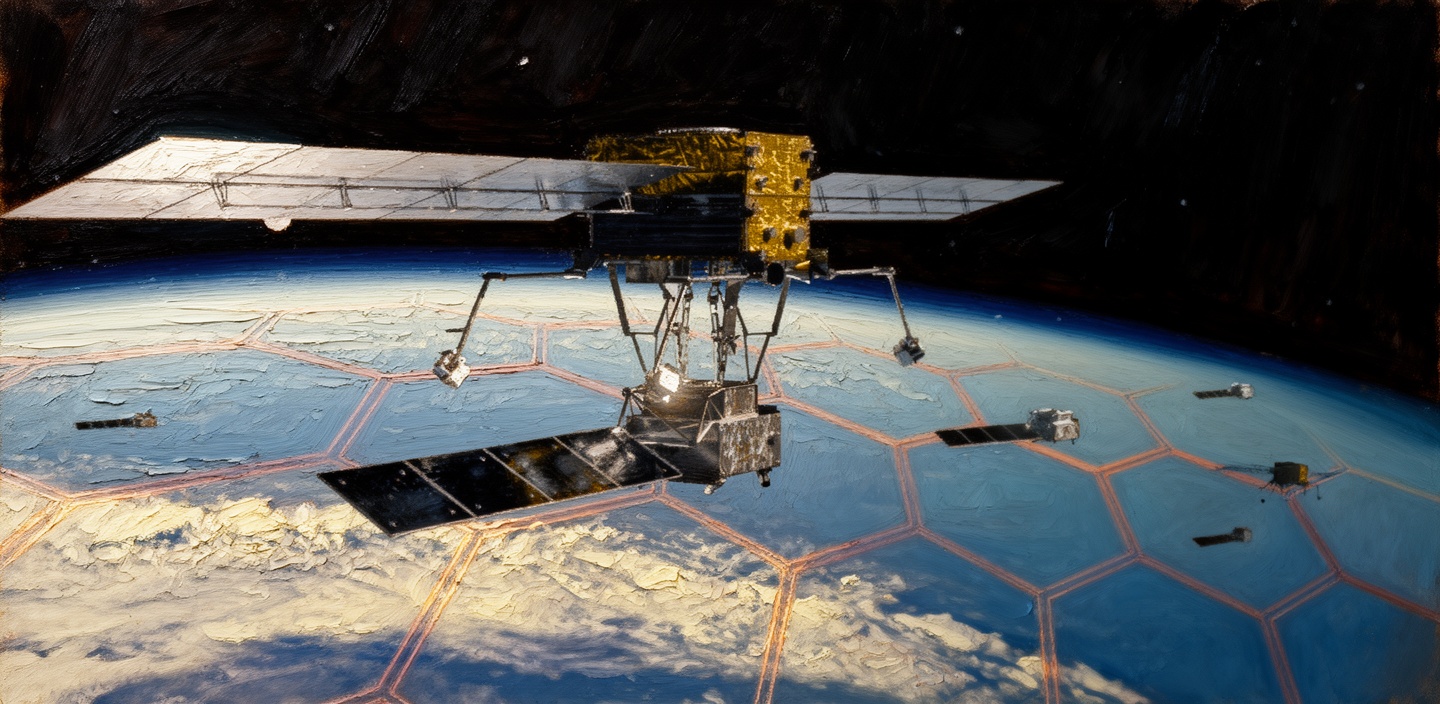
Golden Dome’s missing layer: on-orbit logistics for resilient missile defense
A sponsored defense-technology piece argues that missile defense constellations in space cannot remain resilient without on-orbit logistics built into their design. The article frames in-orbit servicing as the foundational “missing layer” for sustaining missile defense capability over time.
A sponsored industry text presents “The Golden Dome’s missing layer” as an absence of on-orbit logistics planning for a resilient missile defense concept. The author focuses on what happens after launch: how a constellation stays mission-capable in space. Rather than treating logistics as an afterthought, the piece ties it directly to constellation architecture.
The article argues that sustaining missile defense in space depends on building operational support into the system from the start. It highlights “on-orbit servicing” as the mechanism that keeps assets usable as the mission evolves. In the author’s framing, the constellation’s durability is inseparable from how it is maintained once it is already on orbit.
Strategically, the core claim points to a shift in how space-based missile defense is conceptualized. Persistent readiness matters because space systems face constraints that ground-based logistics cannot easily solve. The piece implicitly elevates resilience—continuity of capability—as a defining requirement, not just the ability to detect or intercept in a single moment.
Operationally, the sponsored content centers on integrating logistics into the architecture of the constellation. It does not present battlefield events or reported deployments, but it lays out a design philosophy: the system must be planned so that in-orbit servicing can support continued missile defense activity. The article’s emphasis remains on “foundational” engineering choices that enable ongoing sustainability of missile defense in space.
If the concept described in the sponsored piece gains traction, it would influence procurement conversations around space segment availability and lifecycle cost. Systems designed for sustainment in orbit can reduce downtime risk and support longer operational windows for missile defense functions. Conversely, if on-orbit servicing and logistics are not treated as core architecture elements, the constellation’s resilience would be undermined as conditions change after launch.