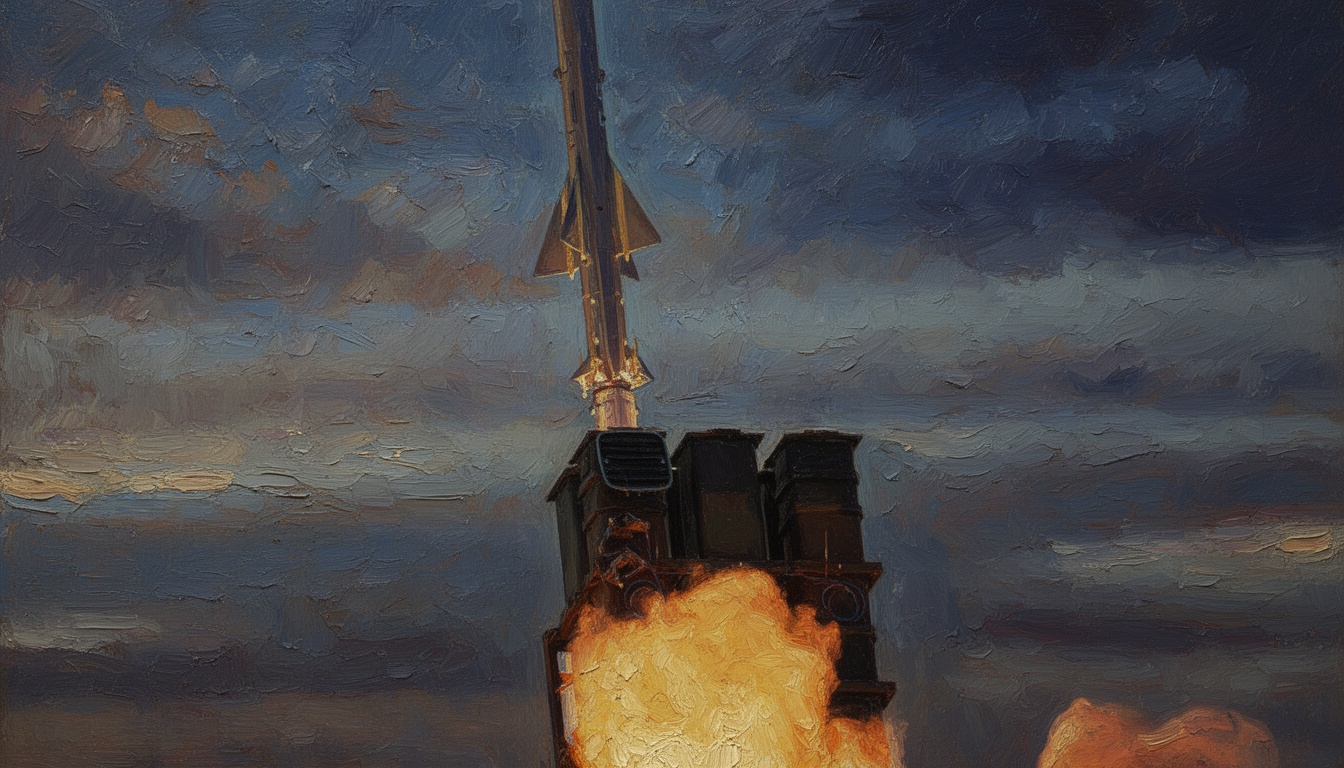
Global military spending hits record $2.9T in 2025
Global arms outlays rose to a fresh peak of $2.9 trillion in 2025, signaling persistent insecurity and renewed rearmament. The top three spenders—the United States, China, and Russia—account for over half of this total, underscoring a shifting balance of power and intensified competition. The data point to a sustained acceleration in defence budgets across major powers and key regions.
Global military spending reached an unprecedented $2.9 trillion in 2025, marking the 11th consecutive year of growth amid a widening perception of insecurity and strategic rivalry. The upsurge reflects persistent demand for modern weapons, advanced platforms, and cutting‑edge technologies across air, sea, land, and space domains. Governments continue to transform defence plans to address multipolar challenges, including great power competition, regional flashpoints, and disruptive security environments. The figure signals a sustained mobilization of resources beyond traditional budget cycles, with implications for fiscal policy, domestic tradeoffs, and alliance calculus.
Background context shows that the 2025 expansion builds on a decade of rearmament driven by rapid modernization programs and strategic deterrence considerations. Since the post‑Cold War lull, major powers have pursued larger, more capable arsenals and supply chains that integrate digital warfare, hypersonics, and precision strike capabilities. The growth also reflects reallocation of resources toward high‑end capabilities in response to perceived threats, as well as stockpiling and industrial resilience measures. Regional actors have ramped up investment in missiles, air defense, naval networks, and space assets to safeguard influence and deter rivals.
Strategically, the spending surge reinforces a global arms race dynamic and broadens the spectrum of potential crisis scenarios. Higher budgets affect alliance deterrence calculations, risk of miscalculation, and the cost of maintaining credible power projection. They also shape diplomatic leverage, enabling coercive bargaining or coercive signaling in contested theaters such as the Indo‑Pacific, Eastern Europe, and the Middle East. The scale of outlays emphasizes the transition to deterrence‑by‑capacity, where quantitative and qualitative improvements in forces raise the threshold for aggression and complicate crisis management for adversaries.
Technical and operational details show the United States, China, and Russia together accounting for about $1.48 trillion of the total, more than half of global spending. This concentration signals sustained investment in multi‑domain forces, cyber and space superiority, strategic delivery systems, and heavy modernization programs. In relative terms, the United States continues to outspend all others, while China accelerates fielding of next‑generation fighters, missiles, and maritime capabilities, and Russia prioritizes survivable platforms and integrated air defense amidst geopolitical strain. The distribution across sectors suggests a persistent emphasis on air and missile defense, naval power projection, long‑range precision strike, and industrial base readiness capable of sustaining high‑tempo operations.
Likely consequences point to heightened global security competition, increased urgency for arms control and transparency measures, and potential volatility in arms markets. The record level of spending can feed regional arms races, drive technology spillovers, and shape defense diplomacy with allies and partners. Going forward, expect accelerated procurement cycles, expanded joint exercises, and deeper collaboration on cyber defense and space resilience. Policymakers must weigh the tradeoffs between deterrence gains and fiscal sustainability, while allies consider synchronized modernization to maintain interoperability and credible deterrence in fragile strategic environments.