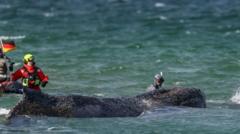
German Rescue Frees Whale, It Reaches Baltic Deep Waters
A massive German rescue operation has successfully guided a stranded whale to deeper waters in Lübeck Bay. This marks a critical moment for the animal's survival as rescue teams aim to ensure it reaches the open Baltic Sea. The incident highlights increasing maritime wildlife risks in the Baltic region.
German rescue teams have completed a large-scale operation to free a whale stranded near the Baltic coast. After several hours of coordinated effort, the whale has been guided into the deeper waters of Lübeck Bay, improving its chances of survival. Rescuers now monitor the animal closely, hoping it will continue towards the open sea.
The whale was initially spotted trapped in shallow coastal waters, which limited its mobility and posed grave risks of stranding mortality. Such incidents have become more frequent due to rising maritime traffic and changing environmental conditions affecting Baltic marine habitats.
Strategically, the rescue underscores the challenges of balancing human maritime activities and wildlife conservation in busy European sea lanes. The Baltic Sea, critical for regional trade routes, is also an important habitat for several marine species vulnerable to human impact.
Operational details reveal that the rescue involved specialized boats, acoustics monitoring, and coordinated stakeholder efforts from German maritime authorities and environmental groups. The whale species and size have not been officially disclosed, but the resources deployed indicate significant concern for the animal's welfare.
Looking forward, this event emphasizes the need for enhanced maritime wildlife monitoring and rapid response mechanisms. It may prompt increased funding and policy focus on protecting marine fauna across European waters, mitigating future maritime environmental crises.