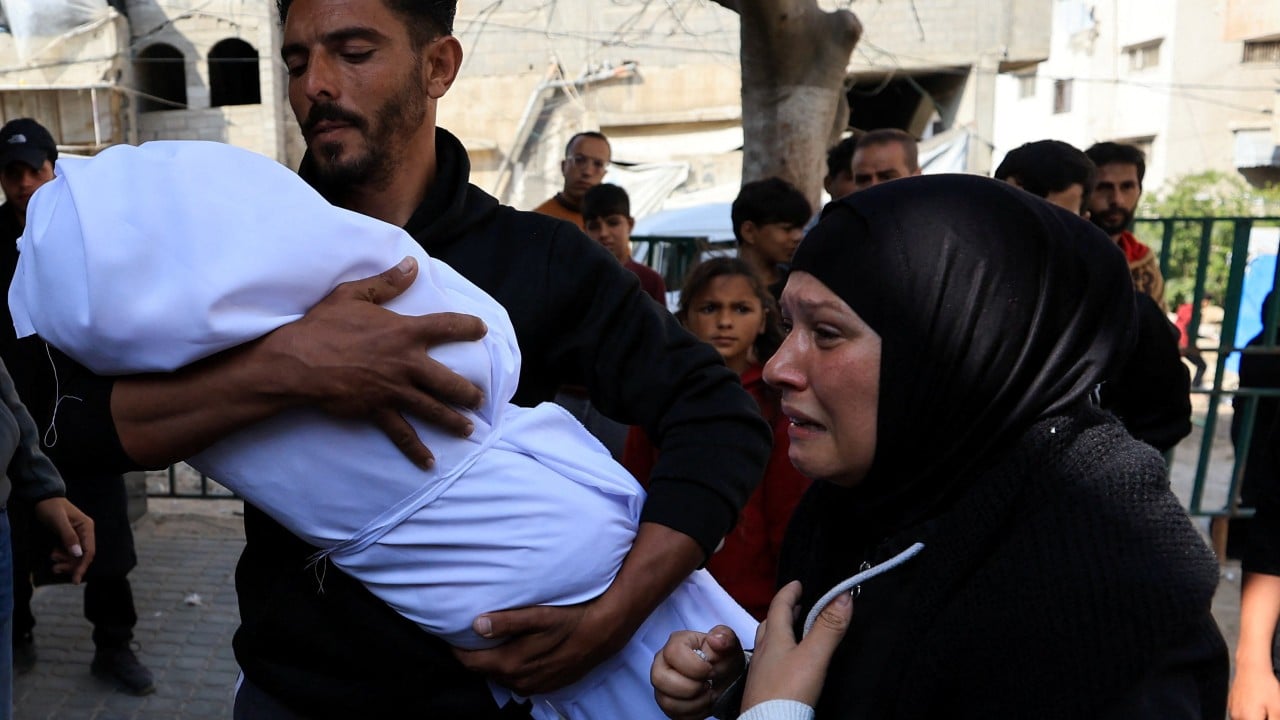
Gaza toll climbs as Israeli strikes kill pregnant woman and children
The latest Israeli strikes in Gaza have killed at least 13 people, including a pregnant woman carrying twins and two of her children. Hospitals report additional fatalities in Gaza City and Khan Younis, with eight killed in the latter including four police officers after a police vehicle was struck. The incidents signal a sharp intensification of hostilities and raise questions about civilian protection and police-role in the urban combat landscape.
Palestinians on Saturday buried a woman who was pregnant with twins and two of her children, among a death toll that reached at least 13 people from Israeli strikes in Gaza. The grim ceremony followed a day in which fatalities spread across multiple sites, underscoring a surge in urban combat risks. The burial rite punctuates a trajectory of rising civilian harm as the conflict intensifies around population centers and key security assets.
The Friday toll encompassed two men killed in Gaza City and eight others killed in the southern city of Khan Younis, according to local hospital reports. The distribution of casualties across northern and southern districts indicates a broadening footprint of active strikes and a potential shift in targeting patterns. Hospitals have become the primary chroniclers of the day’s violence, compiling casualty counts under mounting strain.
Officials at Nasser Hospital in Khan Younis said the eight fatalities there included four police officers who were killed after Israel targeted a police vehicle. The claim of a targeted police asset points to ongoing clashes in which security forces are drawn into direct engagement with strike elements. This raises concerns about the policing sector’s ability to operate under continuous attack while maintaining civilian protection protocols.
The broader fighting is characterized by rapid maneuvering and contested urban environments, where even routine movements risk lethal exposure. While the heaviest fighting has mostly shifted from earlier focal points, this phase still features high-intensity exchanges with casualties among civilians and security personnel. The incident set underscores how police units and protective services become potential flashpoints in crowded urban wards.
Looking ahead, the casualty trajectory and the targeting of security assets are likely to push international observers toward renewed calls for humanitarian corridors and stricter restraint. Between escalating urban combat risks and the humanitarian cost, displacement and shelter needs are expected to expand in the near term. Analysts will watch for indicators of broader strategic shifts, including changes in the security posture of the involved parties and potential international mediation efforts.