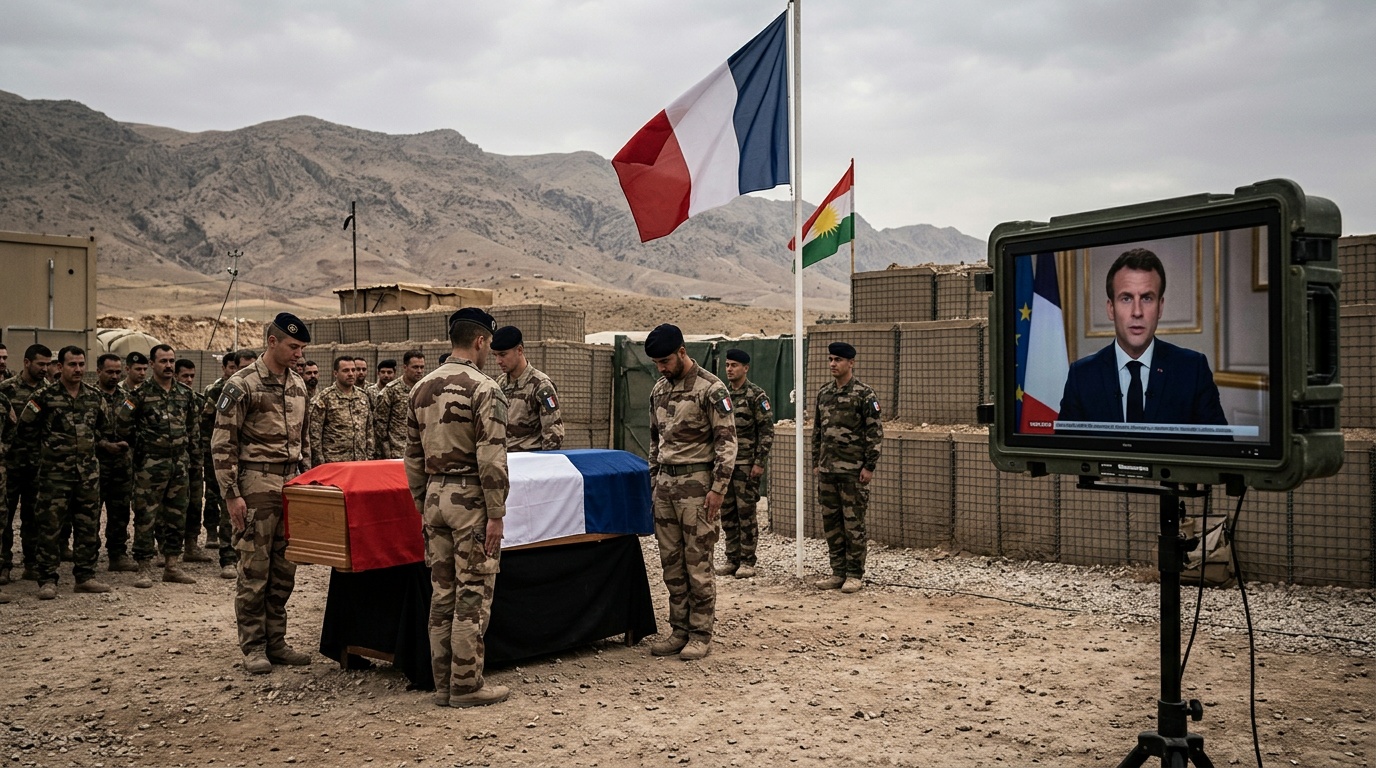
French Soldier Killed in Attack, Macron Condirms Rising ISIS Threat
The death of a French soldier in Iraq underscores a resurging ISIS threat in the region, raising alarms over security for international forces. This incident highlights the precarious stability in Iraqi Kurdistan amidst ongoing insurgency challenges.
A French soldier was killed in a targeted attack in Iraqi Kurdistan, marking a significant escalation of violence linked to the re-emergence of ISIS operatives in the area. The attack serves as a stark reminder of the persistent threat posed by the group, which has been attempting to regain foothold since its territorial losses in recent years. This incident is expected to provoke a strong response from France and its allies engaged in the region.
Historically, Iraqi Kurdistan has been relatively stable compared to other parts of Iraq; however, the Islamic State has been regrouping, exploiting weaknesses in security forces, particularly following the withdrawal and decreased presence of international forces due to shifting geopolitical priorities. The attack reflects a deteriorating security environment that has seen a rise in insurgent violence across Iraq, directly threatening foreign military commitments to local stability.
The significance of this incident cannot be overstated; it exemplifies a broader resurgence of extremist elements in the region, potentially destabilizing not just Iraq but also threatening the operational safety of multinational forces, including those from NATO member states deployed in counterterrorism missions. The killing raises urgent questions about the effectiveness of current security strategies in countering the evolving tactics of ISIS.
France's motivations in maintaining military involvement in Iraq are two-fold: to combat the re-emerging threat of ISIS and to project power and solidarity within the region. However, this incident may provoke reevaluation of France’s military engagement strategy, especially considering the rising casualties among foreign troops. Macron’s government faces mounting pressure to secure its forces and reconsider their operational footprint amidst growing regional instability.
Operational details surrounding the attack remain sparse, but reports indicate that it was a coordinated ambush, suggesting a level of planning and resource allocation by ISIS that raises concerns about their operational capacities. French forces in Iraq have primarily depended on air support and ground surveillance, but increasing attacks may necessitate a shift in tactics, possibly leading to a heightened troop presence.
The immediate consequences of this attack could be multifaceted; increased military operations by French and coalition forces are likely, aimed at disrupting ISIS's resurgence. Security assessments will become more stringent, and local forces might receive additional training and resources to bolster their capabilities. There’s also the looming risk of retaliation by ISIS, which may seek to conduct additional attacks against foreign and local military installations.
Historically, foreign military casualties in Iraq have often led to public outcry and political ramifications, shaping the narrative around military involvement. Previous incidents have prompted broader troop withdrawals or policy changes, as seen after the deaths of U.S. servicemen in previous years. This incident may galvanize the French public, potentially leading to calls for reexamination of France's role in international military engagements.
In the weeks ahead, intelligence analysts will monitor for shifts in ISIS activity levels and potential retaliatory attacks against foreign forces. The international community should remain alert to how this tragedy may influence tactical approaches in Iraq, the response of French forces, and the potential for further unrest in the region, signaling a critical juncture in the fight against terrorism.