French Navy Escalates Presence in Eastern Mediterranean Amid Iran Tensions
President Macron's deployment raises the stakes in a volatile region. French naval assets confront potential Iranian provocations and regional instability.
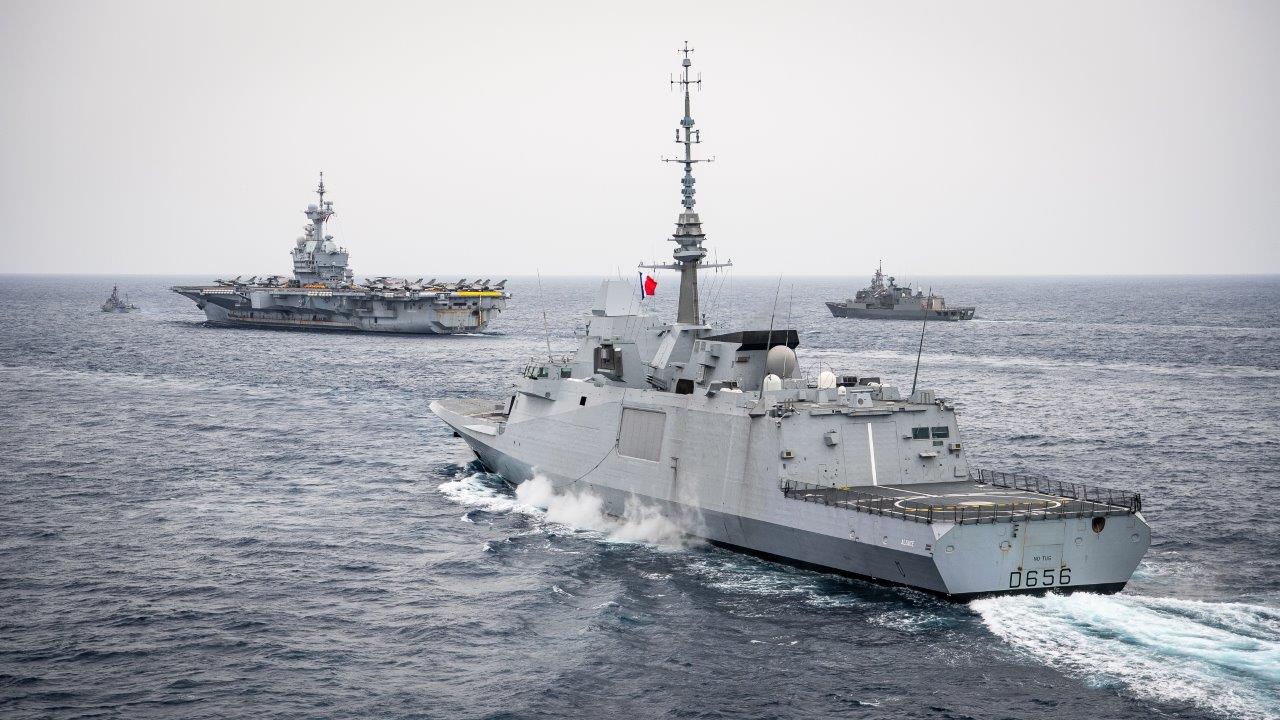
French President Emmanuel Macron announced a significant military maneuver, repositioning the aircraft carrier Charles de Gaulle and its accompanying strike group to the Eastern Mediterranean. This shift comes as tensions with Iran escalate, marking a decisive move by France to assert its influence and presence in a pivotal area of geopolitical friction. Additionally, the Aquitaine-class FREMM frigate Languedoc is set to reach Cyprus within days, alongside the deployment of two surface combatants to the Red Sea in support of the European mission, ASPIDES, aimed at countering Iranian aggression.
The historical context of this action stems from Iran's ongoing military provocations in the region, including threats to shipping lanes crucial to European and global trade. The mounting hostilities, particularly after Iran's recent maneuvers in the Strait of Hormuz and its backing of militant groups across the Middle East, have alarmed European nations, which have routinely faced Iranian incursions against maritime assets. France's latest military deployment is a clear signal of its commitment to safeguarding its interests and those of its allies in the face of increasing instability.
This escalation is significant as it signals a potential shift in military dynamics in the Mediterranean and Middle Eastern regions. The presence of the Charles de Gaulle, equipped with advanced aircraft such as the Dassault Rafale fighters, underscores France's resolve to act decisively against threats, particularly from Iran. Tensions have the potential to escalate rapidly given the crowded maritime environment characterized by both military engagements and civilian shipping routes essential for oil transport and economic stability.
Key actors in this scenario include France, which seeks to leverage its naval capabilities to deter Iranian influence, as well as Iran, which is increasingly assertive in projecting power across the region. France's military strategy aims to reassure allies such as Israel and Gulf states, who feel vulnerable to Iranian disinformation and threats. Meanwhile, Iran's leadership is motivated by a desire to showcase its military strength and determination to maintain influence in the Middle East.
The operational aspects of this deployment include not just the Charles de Gaulle but also enhancements to support capabilities, with the accompanying escort comprising destroyers and frigates, all well-armed and fitted with modern missile systems. Maritime operations in the region come at a high cost; the full operational capability for the carrier strike group is estimated to be in the hundreds of millions of euros, given ongoing maintenance and operational costs.
Potential consequences of this escalation include heightened military encounters in international waters, where miscalculations could lead to direct confrontations. Iran may respond by intensifying its proxy operations or increasing naval maneuvers, leading to a more volatile security environment. The risk of miscommunication or accidental escalation could become a significant concern, prompting all actors involved to proceed with caution.
Historically, the Mediterranean has been a stage for similar naval deployments, reminiscent of the Cold War era during which military posturing often escalated tensions between NATO and Soviet forces. The stakes have evolved, but the underlying dynamic of military mobilization as a means of political signaling remains prevalent in today's geopolitical environment.
In the immediate future, observers should monitor Iran’s naval movements and rhetoric towards the United States and its allies, as well as any military exercises in the region that could serve as provocative signals. Additionally, the reactions from other key players, such as NATO allies and regional powers, will provide insight into the trajectory of this ongoing crisis. Macron's directive is just the beginning; the coming weeks will reveal whether further military engagements will be necessary to counter Iran's ambitions.