France Deploys Naval Armada, Escalating Middle East Alliance Uncertainty
France's substantial naval deployment in the Mediterranean reflects its assertive global posture while prompting Middle Eastern nations to reassess strategic partnerships in the wake of growing tensions with Iran.
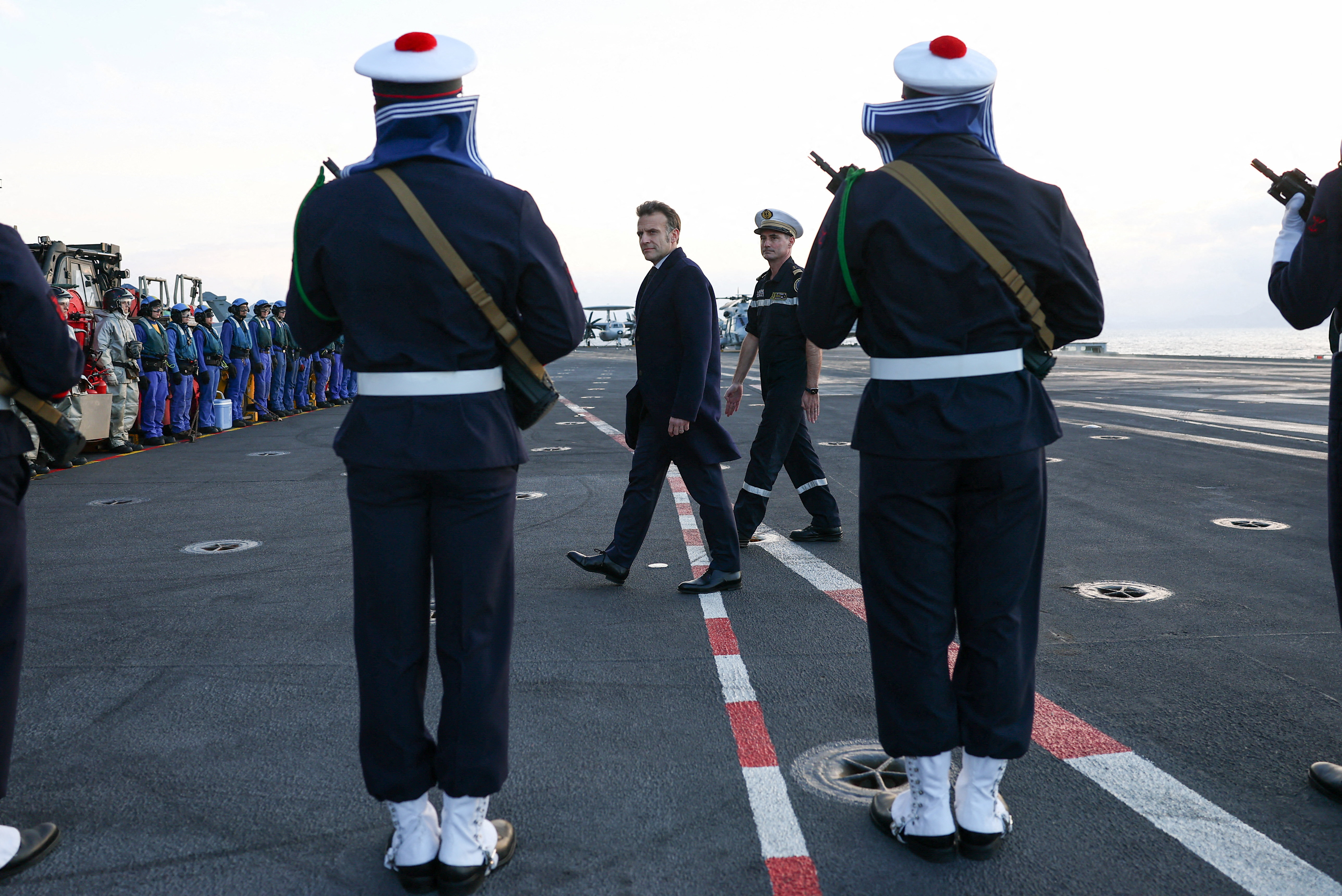
France has deployed a formidable naval armada to the Mediterranean Sea, featuring multiple warships, including the aircraft carrier Charles de Gaulle. This military show of force is a direct response to increasingly volatile dynamics in the region, particularly concerning Iran's nuclear ambitions and its influence in the ongoing conflicts in Syria and Iraq. Analysts suggest that this display not only bolsters French military credibility but also serves as a strategic signal to both allies and adversaries in the Middle East.
Historically, France has maintained a significant military presence in the Mediterranean, often positioning itself as a counterbalance to U.S. influence in the region. With the ongoing instability stemming from Iranian expansionism following years of proxy conflicts, including the Syrian civil war and tensions in the Persian Gulf, the deployment underscores France's intent to play a pivotal role in future security arrangements in the region. The historical patterns of military engagement by France also indicate a desire to reclaim influence amidst shifting geopolitical currents.
This deployment bears significant implications for international power dynamics as it could compel Middle Eastern nations to reconsider their security frameworks and alliances. Nations traditionally aligned with the U.S. could pivot towards European powers like France in a bid to diversify their security partnerships. Such a shift could lead to realignment in existing coalition structures, potentially erasing long-held loyalties and fostering new coalitions aimed at countering Iranian influence.
Key players in this development include France, with its renewed military assertiveness, and Middle Eastern countries wary of Iranian expansionism. Nations such as Saudi Arabia and the United Arab Emirates may leverage this opportunity to reinforce ties with France, seeking advanced military technologies and strategic partnerships to bolster their defenses. Conversely, Iran may respond through aggressive rhetoric or increased military posturing to deter perceived encroachments on its sphere of influence.
The operational details of the French deployment include a versatile fleet capable of projecting power across the Mediterranean and beyond, with air operations supported by the Charles de Gaulle, which can carry up to 40 aircraft. French military expenditures, amounting to approximately €39.2 billion in 2023, reflect their commitment to maintaining a robust naval presence capable of executing complex operations in contested environments.
The potential consequences of this assertive deployment are manifold: increased tensions between Europe and Iran, a higher likelihood of maritime confrontations, and possible escalations of proxy conflicts as regional powers respond to the shifting balance of power. The path forward could see heightened military engagements, as nations adjust their military postures in reaction to French maneuvers.
Historically, naval deployments such as this have often spurred renewed conflict or reasserted influence in contested areas, as seen with the intervention in Libya in 2011. The repercussions of France’s latest armada could similarly redefine the geopolitical landscape, forcing other nations to consider their military readiness and diplomatic strategies in the context of evolving threats.
Looking ahead, observers should monitor the reactions from Iran and its proxy groups, as well as any shifts in defense agreements among Gulf states. Additionally, the impact of this deployment on the U.S. presence in the Mediterranean will be crucial; a decisive grasp on regional alliances could determine the long-term strategic stability of the area, influencing future defense polices among major powers.