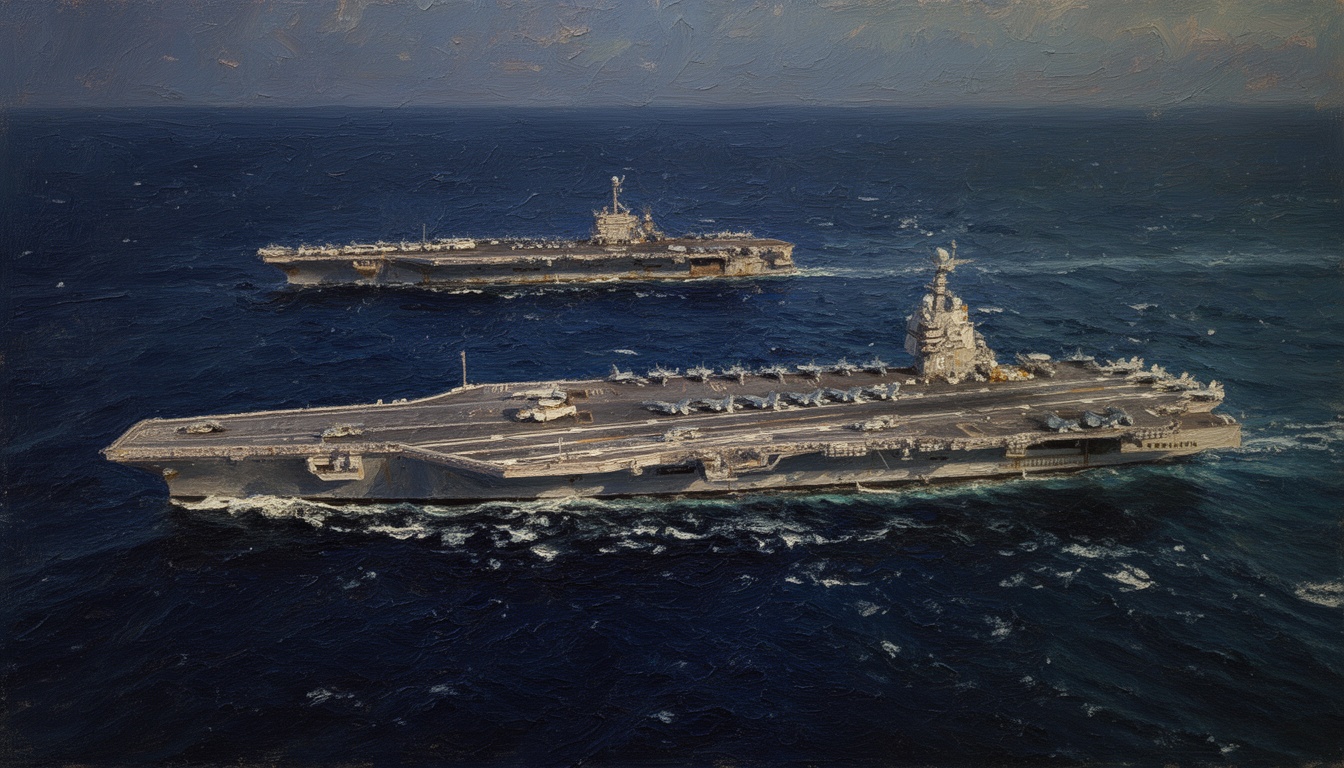
Ford Class Review Casts Doubt on Navy’s Future Carrier Plans
A comprehensive Ford-class assessment pits the new Gerald R. Ford hull against the Nimitz baseline, weighing gains and losses in operational capability. The review scrutinizes damage control, sortie generation, and mission readiness, with implications for future U.S. power projection and allied carrier strategy. The findings threaten to reshape planned next-gen carrier procurement and carrier-centric deterrence postures.
The Ford-class review lays out a blunt question: has the modern hull delivered the sustained aviation combat power that the Navy envisioned, or have embedded tradeoffs narrowed its margin of advantage over the Nimitz-class? The document contrasts sortie generation, energy management, and maintenance cycles to quantify net gains. It also highlights gaps in carrier survivability and catapult reliability that could constrain high-end operations against advanced anti-access environments. The overall tone is cautionary, signaling a potential pivot in how the Navy models future carrier balance of ship count and capability.
Context matters: the Ford program was designed to push automation, advanced sensors, and a new electromagnetic launch system, while limiting crew size and accelerating sortie tempo. Yet repeated assessments have flagged higher than anticipated life-cycle costs and integration challenges with weapons, rescue, and command networks. The comparison to the venerable Nimitz-class is not abstract: it tests whether the Ford hull’s promises—faster sortie rates, longer presence on station, and better fuel efficiency—translate into strategic dominance in contested theaters. The review therefore sits at the nexus of program management, industrial base survivability, and warfighting doctrine.
Strategically, the assessment refracts how the United States projects power across vast maritime theaters and how allies calibrate their own carrier plans. If Ford-class advantages prove unreliable or cost-prohibitive, planners may revert to greater emphasis on carrier air wings and standoff missiles, or accelerate diversification toward integrated unmanned systems. The document implicitly pressures a recalibration of deterrence calculus in the Indo-Pacific and beyond, where peer adversaries seek to constrain carrier access and disrupt theater command. In short, it accelerates debate over tactical reach versus strategic resilience.
Operational details matter: the Ford class introduces the EMALS launch system, advanced so-called “smart” weapons handling, and a redesigned island with improved sensor fusion. But the platform also carries cost signals that dwarf earlier hulls; per-hull procurement and sustainment are widely cited as double-digit billions, while maintenance stays complicated by new types of wear and integration challenges with the AFGWC/Electro-Optical sensor suite. Crew sizes, cycle times, and sortie generation rates are central to the assessment, as is the risk profile in high-end contests that demand rapid, long-duration carrier presence. The likely consequences are a disciplined pause on acceleration of further Ford variants without significant remediation, and a more conservative path toward the next-gen carrier family alongside robust allied anti-access tactics and airpower partnerships.