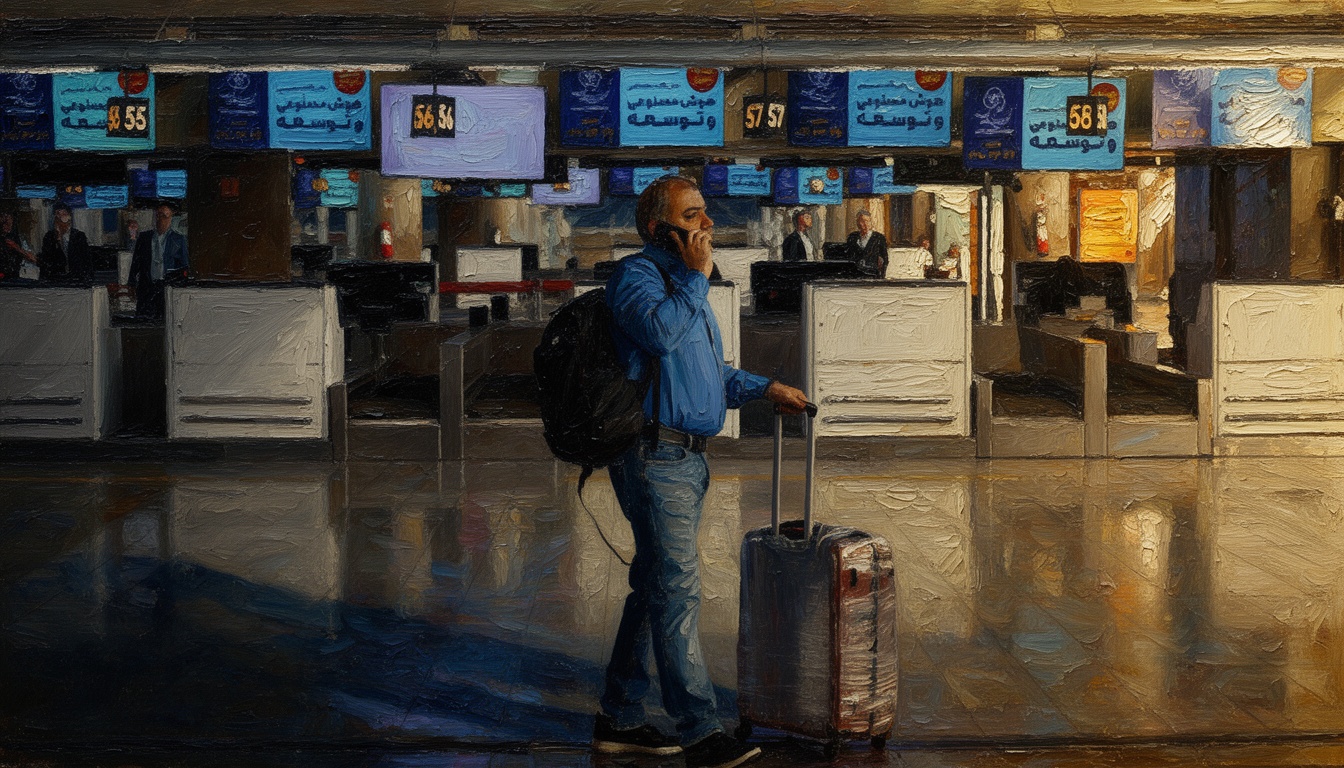
Flights Resume at Tehran Airport as US-Iran Ceasefire Holds
Tehran resumes international air traffic following a period of disruption tied to ongoing US-Iran tensions. Analysts view the restart as a potential stabilizing signal, but risk remains from broader regional flashpoints and sanctions pressures. The incident underscores how aviation can become a barometer for perceived security in the Gulf and beyond.
Flights resumed at Imam Khomeini International Airport in Tehran after a multi-week disruption tied to the broader US-Iran conflict dynamic. Airport authorities confirmed a restart of international services, with several carriers resuming limited routes and reservation systems gradually returning to normal. The decision appeared tied to reports that the US-Iran ceasefire had held in the immediate area and to ongoing efforts to avert cascading disruptions to civil aviation. Officials cautioned that while services were back to near-normal levels, operational constraints and safety checks remained in place.
Context for the restart traces to a broader pattern of civil aviation resilience under sustained geopolitical pressure. Iran has faced periodic airspace restrictions and overflight warnings from Western partners during times of heightened tension, which disrupts passenger flows and cargo movement. Regional carriers, in particular, have had to adjust schedules to accommodate evolving security advisories and insurance costs. The current curtailments, while easing, illustrate how security dynamics translate into everyday travel and commercial activity. Analysts warn that soft forces—insurance premiums, route diversification, and maintenance backlogs—could still dampen traffic in the near term.
Strategically, the aviation reopening signals a potential thaw in non-military friction avenues between Tehran and foreign partners. While not a direct shift in armed posture, restoring normal flight operations affects international perceptions of Tehran’s risk calculus and its willingness to support or resist external pressures. The incident also feeds into Gulf security calculations, where commercial connectivity often mirrors or foreshadows political overtures. Observers will monitor whether airlines expand or restrict corridors depending on evolving risk assessments and sanction regimes.
Technical and operational details include resumed international routes, incremental slot allocations, and renewed passenger screening throughput matching pre-disruption baselines. Airport spokespeople cited restored passenger volumes, reactivation of international check-in facilities, and a phased return of service with emphasis on safety compliance and fuel supply continuity. Freight operations are expected to follow once passenger demand stabilizes, with logistics firms watching for cargo clearance timelines and cross-border clearance efficiency. The broader defense and security sectors will track whether any ancillary restrictions reemerge in response to shifting risk tolerances or sanctions enforcement.
The likely consequences point to a cautious stabilization rather than a definitive chill-break in regional tensions. A successful aviation restart reduces economic friction, supports diplomatic signaling, and marginally eases humanitarian travel constraints. Yet the persistence of US-Iran tensions, sanctions, and regional rivalries means aviation gains may be reversible if political or military conditions deteriorate. In the near term, expect airlines to adopt conservative capacity plans, insurers to adjust premiums, and governments to leverage civil aviation as a barometer of Gulf security dynamics.