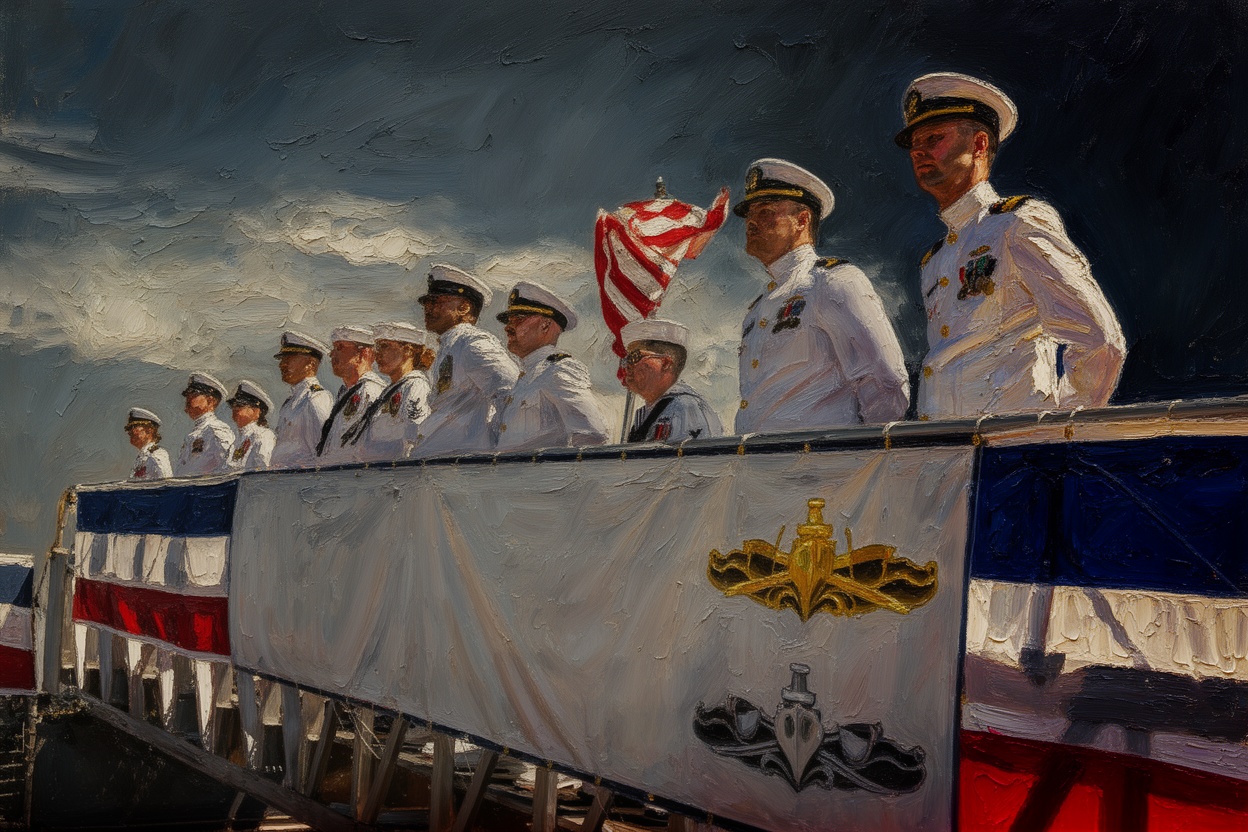
Flight III DDG-124 Harvey C. Barnum Joins US Navy Fleet
The Arleigh Burke-class destroyer DDG-124 Harvey C. Barnum Jr. was commissioned at Norfolk, signaling continued U.S. naval modernization. The event underscores Flight III's enhanced sensors and layered defense capabilities, reinforcing maritime deterrence in a crowded Indo-Pacific and Atlantic theater. The ceremony marks another milestone in expanding the United States' distributed lethality and power projection.
The United States Navy commissioned the Flight III guided-missile destroyer USS Harvey C. Barnum Jr. (DDG 124) at Naval Station Norfolk on April 11, 2026. The event drew a crowd of military personnel, families, and defense observers, underscoring the ship's role in ongoing fleet modernization. Barnum Jr. represents the latest in the Arleigh Burke class, featuring radar and sensor upgrades designed to improve tracking and engagement against advanced threats.
The ceremony highlighted the Warship's integration into U.S. Navy tactics that emphasize distributed lethality and resilient sea control. Flight III ships are intended to bolster cruise-missile and air-defense coverage for carrier groups and surface action groups in high-tension regions. The commissioning aligns with broader defense priorities to sustain a credible deterrent and quick-reactive seabed-to-space intelligence network.
Strategically, the DDG-124 adds to the United States' persistent presence in critical sea lanes and contested areas of the Indo-Pacific and Atlantic theaters. The ship’s enhanced AN/SPY-6 radar and improved data-sharing capabilities are expected to fuse with unmanned systems and allied interoperability initiatives. This evolution supports a more agile response to near-peer rival maritime power and hybrid threats.
Technical details for Barnum Jr. include its Flight III design improvements, integrated air and missile defense, and enhanced propulsion reliability. While the official cost and crewing figures are typically released in follow-on briefs, industry observers anticipate a substantial investment in sensors, digital architectures, and training pipelines. The ship's commissioning reinforces U.S. commitments to modernize surface combatants and sustain a forward-looking deterrent posture.
Looking forward, the Barnum Jr. will participate in routine deployments, exercises with allied navies, and rapid-response scenarios. Analysts expect continued momentum behind the Flight III program as more ships enter the fleet, expanding baseline capabilities for sea control, intelligence, and precision strike options. The result is a more adaptable and resilient naval force prepared for evolving maritime contestation.