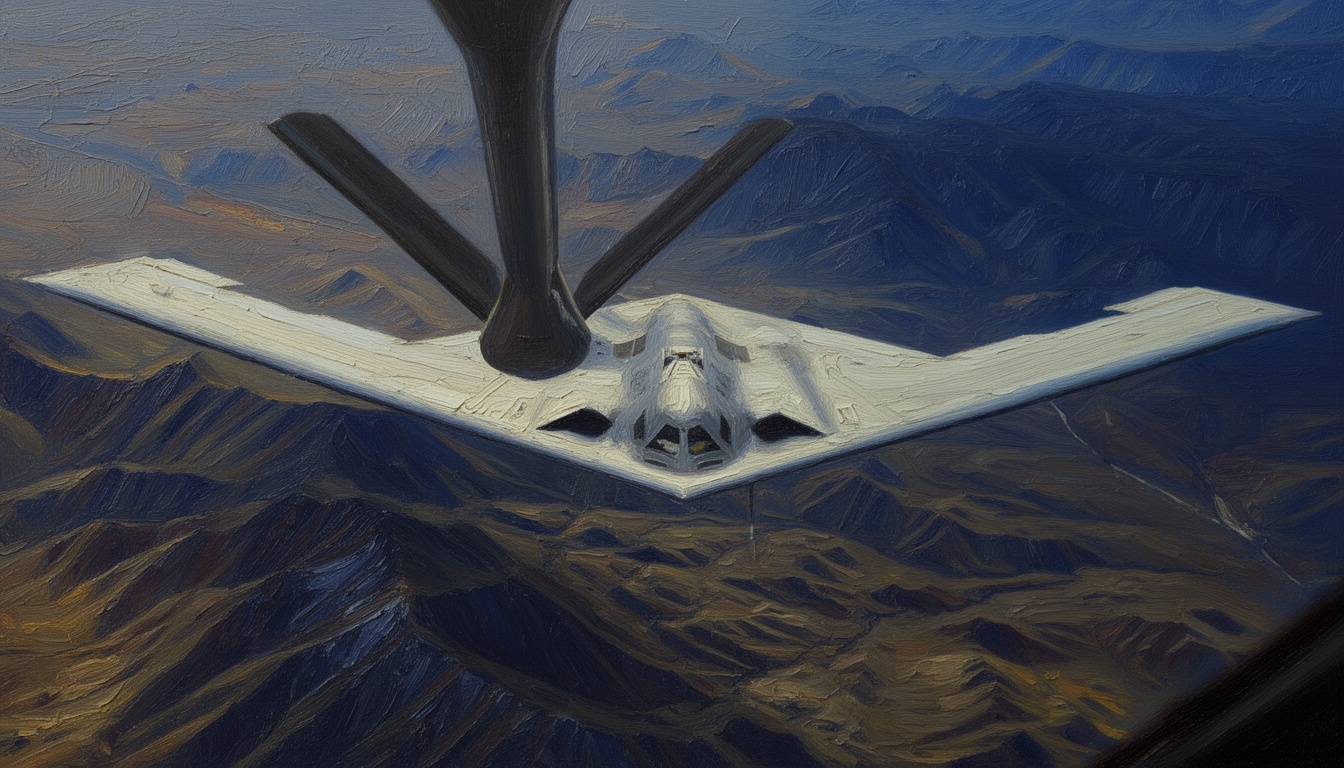
First Full Overhead Image of B-21 Raider Emerges
A new aerial refueling trial image provides the clearest overhead view yet of the USAF's next-generation stealth bomber. The shot hints at design features and integration that could influence future operations and deterrence in long-range strike capabilities. Analysts will watch for further releases to confirm performance and basing implications.
A fresh aerial refueling trial image offers the most comprehensive overhead view to date of America's new stealth bomber, the B-21 Raider. The photograph captures the aircraft in a mid-air rotation, revealing contours and wing layout with greater clarity than previous stills. Engineers and program observers are dissecting the image for hints about sensor housing, venting, and possible stealth treatment at the trailing edges. The revelation comes as the program moves toward more routine testing, signaling potential milestones on the timetable toward initial operational capability.
Context around the B-21 program remains tightly scripted, but imagery like this accelerates public and adversary interpretation of the platform’s intended level of stealth, range, and payload flexibility. The aircraft’s signature has been deliberately kept under wraps, with occasional leaks and official briefings offering only glimpses into its capabilities. This latest photo confirms ongoing refinement, particularly around air refueling compatibility, which is critical for global reach and rapid response in crisis scenarios. Analysts will compare this image with earlier renderings to assess whether new features point to improved sensor integration or improved aerodynamic stealth.
Strategically, the image reinforces a broader trend: the modernization of long-range strike and the medium-to-long-term balance of power in air-centric deterrence. If the B-21 fulfills its stated goals—low observability, extended range, and the ability to carry a mix of conventional and potentially nuclear-leaning payloads—it could alter the calculus of regional rivals and require updates to allied basing and pre-positioning concepts. The visibility of refueling gear and undercarriage fairings in this shot may indicate how the system negotiates interoperability with current tanker fleets and future autonomous refueling concepts, a topic closely watched by defense planners.
Technical cues in the image suggest a blended wing-body silhouette consistent with prior disclosures, though the exact materials and coatings remain classified. The refueling configuration hints at standard air-to-air transfer protocols, with the potential for multiple compatible receiver systems. No explicit data on speed, service ceiling, or payload is provided, but the framing emphasizes the aircraft’s role as a high-priority, survivable strategic asset. The program’s progress is a bellwether for broader modernization efforts across allied air forces seeking similar survivability and reach.
Looking ahead, a steady stream of high-resolution imagery and official test data will shape assessment across intelligence and defense communities. If the B-21 advances toward early operational deployment, it will influence regional crisis dynamics, formal deterrence postures, and NATO/ally planning for long-range strike options. The next few quarters will be decisive for confirming whether this visual reveal translates into tangible test performance and a credible, stealthy footprint in contested airspaces.