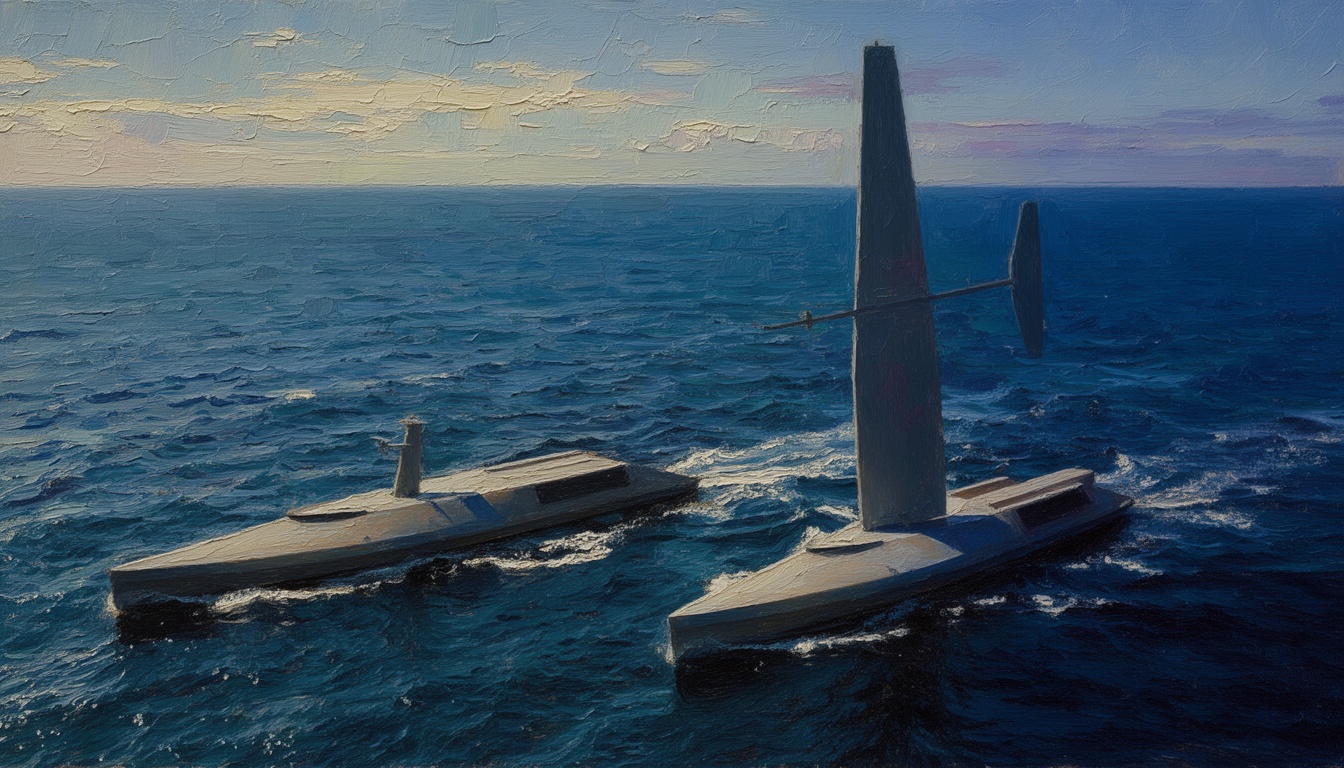
Fincantieri Marine Group to build Saildrone Spectre USV
Fincantieri Marine Group has won a contract to construct Spectre, Saildrone’s new multi-mission uncrewed surface vessel. The award signals a growing collaboration between a major shipbuilder and a naval autonomy company. Spectre aims to expand unmanned surface capabilities across naval, maritime security, and ISR missions.
Fincantieri Marine Group has been selected to construct the Spectre, Saildrone’s next-generation multi-mission unmanned surface vessel (USV). The deal underscores a shift in naval procurement toward integrated autonomous platforms and off-board sensing for distributed maritime operations. The Spectre program envisions a modular, multi-role hull capable of persistent ISR, mine countermeasures, surface warfare, and payload delivery roles. This engagement positions Fincantieri in the growing network of shipyards expanding into autonomous systems production.
Spectre represents a notable evolution for Saildrone, which has carved a niche in persistent unmanned maritime missions through its suite of small, autonomous watercraft. By partnering with Fincantieri Marine Group, Saildrone seeks to leverage a traditional naval shipbuilder’s integration and production expertise to scale manufacturing, certification, and maintenance workflows for a broader customer base. The collaboration also signals a potential pathway for combining Saildrone’s autonomy stack with Fincantieri’s shipbuilding standards and supply chains.
Strategically, the Spectre program could influence cost curves and capability balance within allied navies pursuing distributed maritime operations. If successful, the USV could augment carrier groups, amphibious task forces, and littoral combat teams with long-endurance, networked sensors and precision payloads. Competitors in the USV space—ranging from smaller boutique developers to large defense contractors—will likely reassess bid strategies and system architecture to match Saildrone and Fincantieri’s design choices.
Technical and operational details remain closely held, but expectations focus on modular payload bays, open-architecture data links, and robust autonomy for contested-water environments. The hull is likely designed for rapid fielding, with emphasis on maintenance-friendly components and supportable logistics chains. Budgetary disclosures have not been publicly released, but the contract value will influence subsequent iterations, supplier ecosystem investments, and cross-domain collaboration across allied fleets.
Looking forward, the Spectre-USV program could catalyze further industry partnerships and stimulate standardization efforts for unmanned maritime platforms. The integration of Saildrone’s sensing suite with Fincantieri’s naval engineering capabilities may pave the way for broader adoption of autonomous systems in high-threat theaters. Real-world effectiveness will hinge on endurance under adverse conditions, resilience against adversarial cyber and electronic warfare, and the ability to integrate with fleet-wide C2 constructs.