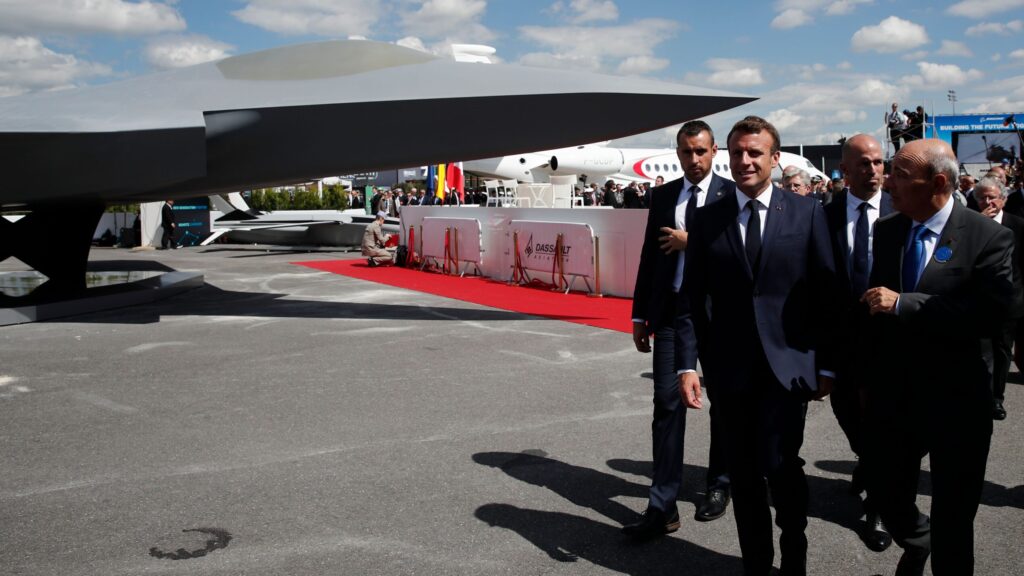
FCAS Program Faces Collapse Amid Airbus Clash, Warns Dassault CEO
The Future Combat Air System (FCAS) initiative teeters on the brink of failure as tensions rise between major European defense partners. Without resolution, France may unilaterally advance the project, undermining transnational cooperation.
The Future Combat Air System (FCAS) program, a cornerstone of European defense cooperation, is on the verge of collapse due to escalating tensions between France's Dassault Aviation and Germany's Airbus. Dassault CEO Eric Trappier stated that the project will be 'dead' unless disputes with Airbus are effectively resolved. This stark warning comes on the heels of German Chancellor Olaf Scholz's remarks indicating that Berlin may pursue alternative defense capabilities independent of Paris, further deepening the rift between both nations.
The FCAS program, aimed at developing a next-generation combat aircraft by 2040, is built on the premise of advanced collaboration among France, Germany, and Spain. Established in 2017, the initiative was envisioned as a response to rising global security threats and a means to unify European defense manufacturing. However, recent disagreements on the operational specifications and funding allocations have brought the project's future into jeopardy.
This situation is significant as it exposes the fragility of European defense partnerships and raises questions about collective military capabilities. If the FCAS program collapses, Europe risks losing crucial technological advancements and may find itself increasingly dependent on the United States for advanced fighter aircraft. Additionally, this development could embolden rival states in the region, undermining European security and cohesion.
Key players in this drama include Dassault, which is determined to push ahead with its vision for the aircraft, and Airbus, which has provided essential input and shouldering considerable financial risk. Dassault's insistence on maintaining its schedule could be an indication of its desperation to secure defense contracts and technological leadership in Europe, while Germany may view expanding national capabilities as a necessary safeguard amid geopolitical uncertainty.
Operationally, the FCAS program involves complex technologies, including unmanned aerial vehicles (UAVs) and artificial intelligence systems integrated with a manned fighter jet. The project is projected to cost around €300 billion, with various milestones set for the coming years. As the competing interests threaten project deadlines, the likelihood of significant budget reallocations to maintain national programs rises, which could further jeopardize FCAS viability.
The implications of this clash could lead to a fracturing of bilateral defense agreements within Europe, prompting nations to prioritize national capabilities over collaborative efforts. Escalation pathways include individual nations pursuing their own fighter jet programs, thereby complicating inter-state defense agreements further and resulting in a less coordinated European defense posture.
This discord reflects broader historical tensions in European defense collaborations, reminiscent of the difficulties faced by the Eurofighter Typhoon program in the 1990s, where disagreements among partner nations delayed developments and increased costs. The present situation could similarly become a cautionary tale about the risks associated with fragmented defense strategies.
Looking ahead, defense analysts should closely monitor public statements from German and French officials regarding the FCAS. Key indicators will include changes in funding commitments, announcements of independent defense programs, and any movement towards bilateral talks aimed at resolving the disputes. The geopolitical landscape will become increasingly critical as both nations assess their capabilities in light of the program's uncertainty.