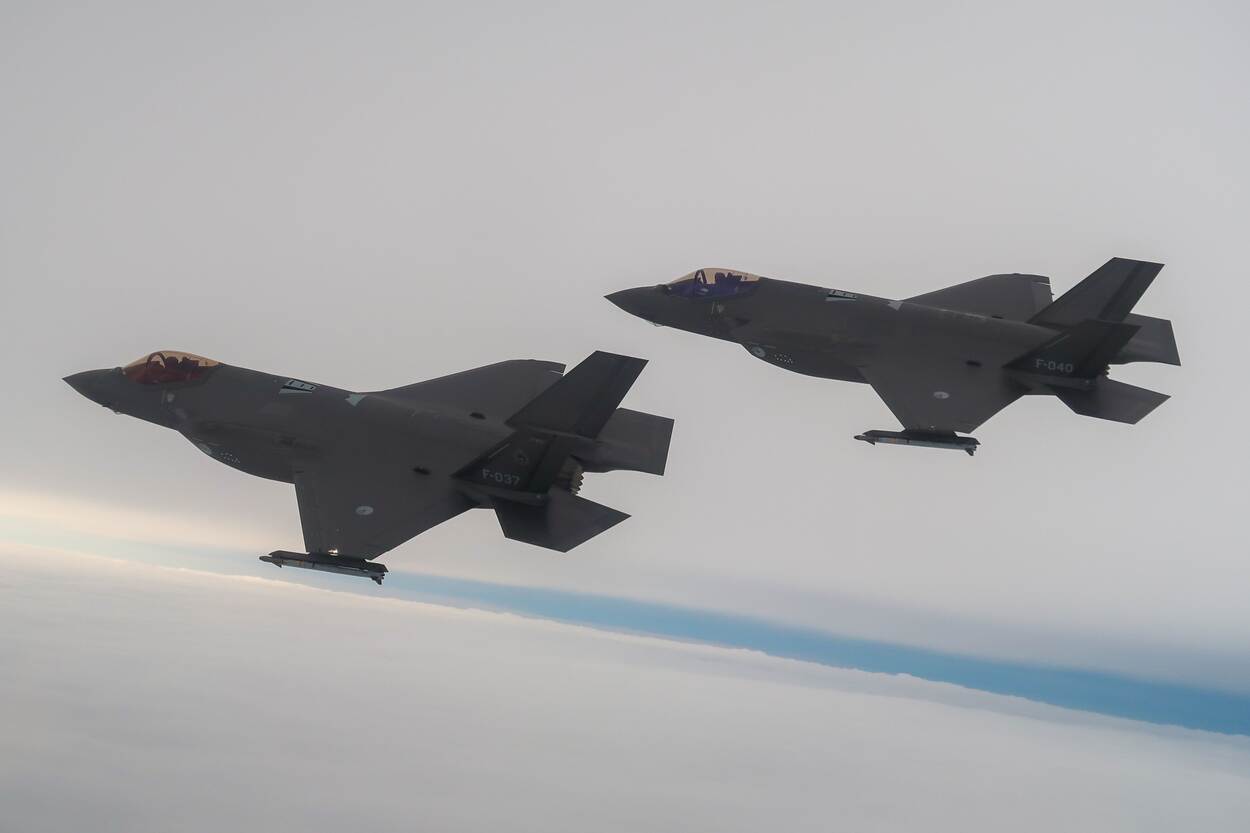
F-35s Exposed Over Iran: Software Delays Threaten Security
Critical software failures leave F-35 jets exposed in hostile Iranian skies during 'Operation Epic Fury.' Lack of TR-3 upgrades may compromise mission success against Iranian threats.
The F-35 Lightning II jets, central to the US military's offensive over Iran as part of 'Operation Epic Fury,' are now facing heightened risks due to delayed software upgrades. Despite their advanced stealth capabilities, these jets are flying without the crucial TR-3 software update, raising significant operational vulnerabilities.
The operation launched on February 28 was designed to assert air dominance over Iran and mitigate regional threats. The F-35s, noted for their advanced design and stealth, were expected to operate unhindered. However, the lack of the TR-3 upgrade—a pivotal enhancement for integrating new software capabilities—has left these aircraft exposed.
The lack of software upgrades significantly undermines the strategic effectiveness of the F-35s. This delay not only exposes the jets to potential detection by Iranian radar but also threatens the success of the broader mission objectives, posing a serious security risk.
The United States has long relied on the F-35s' technological edge to maintain air superiority. However, the software stagnation raises questions about the aircraft's readiness and the Pentagon's commitment to timely advancements. As a result, this delay could embolden adversaries, particularly within the contentious Middle Eastern landscape.
Without the TR-3 upgrade, the F-35s lack crucial enhancements in electronic warfare systems, sensor integration, and data processing capabilities, all essential for modern combat operations. The absence of these features could compromise the jets’ ability to effectively engage and neutralize Iranian missile systems.
This setback in the F-35 program mirrors past challenges faced with complex defense systems, where technological development timelines were not met, impacting operational readiness. Historical parallels can be drawn to similar delays in past fighter jet upgrades which resulted in strategic disadvantages.
Looking ahead, it is crucial to monitor the Pentagon's response to this challenge. Shifts in upgrade timelines, congressional oversight on defense spending, and international reactions could indicate the future trajectory of US air capabilities over volatile regions such as Iran. These factors will significantly impact the strategic landscape of Middle Eastern airspace operations.