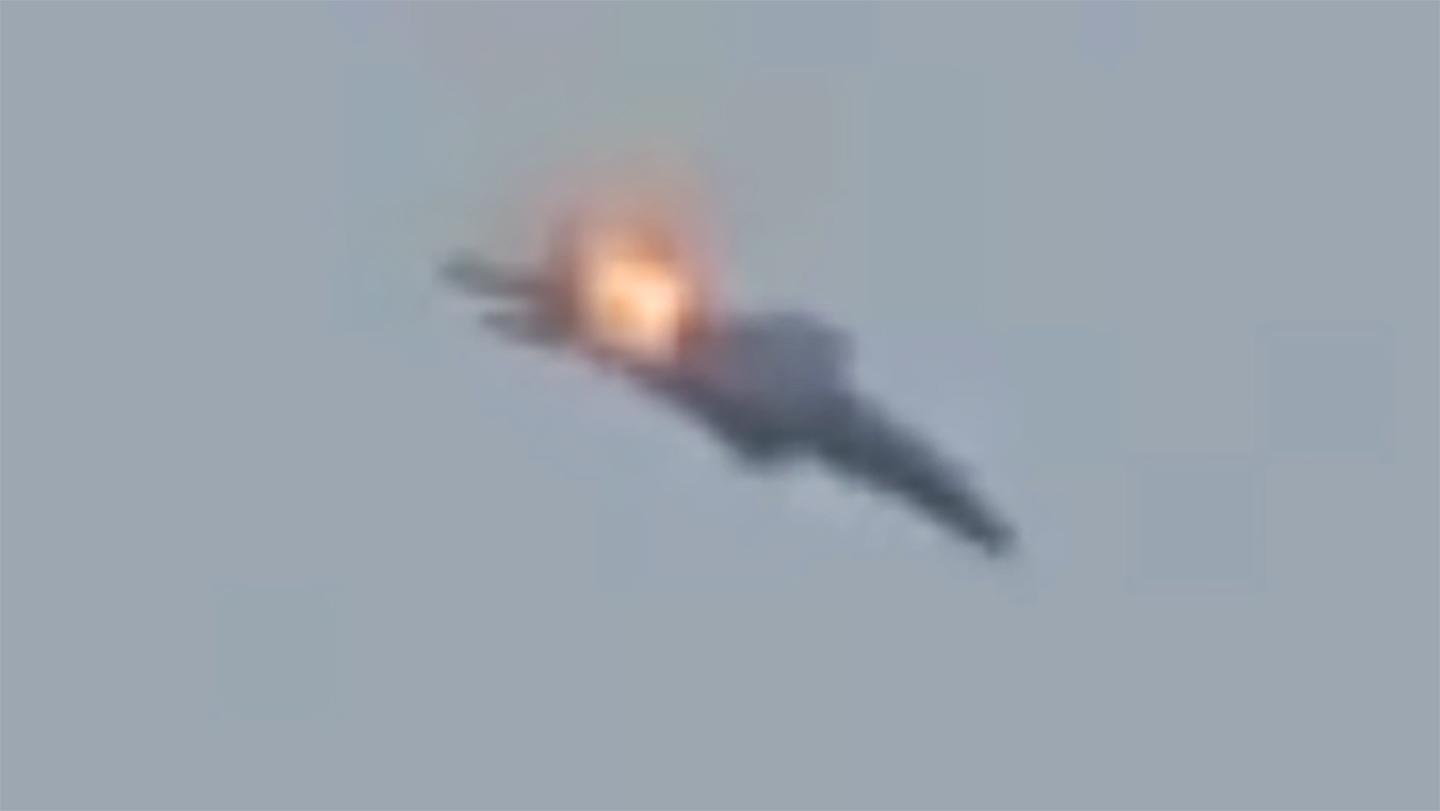
F-15 Crashes While Ablaze in Dangerous Middle Eastern Skies
The catastrophic crash of the F-15 raises critical concerns regarding flight safety and operational integrity in high-stakes environments. Such incidents could embolden adversaries observing vulnerabilities within U.S. air operations.
An F-15 fighter jet crashed spectacularly in the Middle East after entering a flat spin and detonating in flames before hitting the ground. Eyewitness footage shows the aircraft missing its vertical tails, indicating severe mechanical failure before the pilot lost control. The incident underscores the hazardous conditions faced by military aircraft in the region, with implications extending beyond simple loss of equipment.
Historically, the F-15 has served as a pivotal asset for air superiority since the late 1970s, representing a blend of speed and advanced avionics. This latest incident follows a series of mechanical and operational mishaps within the U.S. Air Force fleet, highlighting underlying issues of aircraft maintenance and mission pressures. Previous reports have also indicated an uptick in operational tempo in the region, increasing stress on aging airframes.
The significance of this crash cannot be understated; it exposes potential vulnerabilities in U.S. aerial operations. Adversaries, particularly Iran and its proxy forces, are closely monitoring such failures, knowing they can capitalize on perceptions of U.S. military fragility. Furthermore, any loss of advanced airframes impacts the U.S. air superiority strategy, which relies heavily on the capabilities of the F-15.
Key actors within the U.S. military may downplay the implications, attributing the crash to isolated technical malfunctions. However, the scenario could also reflect resource constraints and insufficient R&D funding to keep aging aircraft like the F-15 operationally relevant. Competing defense priorities might be endangering safety and operational readiness, as reflected in this incident.
Details surrounding the crash reveal critical operational considerations. The F-15 is equipped with powerful Pratt & Whitney F100 engines, and at least one of these engines may have suffered catastrophic failure, leading to the ensuing disaster. Additionally, ongoing conflicts in the region demand an extensive maintenance and support network, the reliability of which is increasingly in question.
This incident may escalate scrutiny over maintenance practices and readiness among U.S. forces deployed in high-risk environments. Given the geopolitical tensions in the region, such incidents could serve as a catalyst for adversarial action, as they might perceive a moment of opportunity to challenge U.S. dominance.
Historical parallels can be drawn to similar incidents that have eroded confidence in air operations. The series of crashes involving military aircraft during operational deployments in Afghanistan and Iraq once prompted sweeping reviews of air safety protocols and maintenance practices; this current event may require similar reassessments.
Looking ahead, intelligence indicators will be critical in assessing U.S. responses and the implications for mobilization strategies. Observers should monitor subsequent investigations into the crash, as well as any shifts in operational protocols, to gauge how this event might influence the broader security landscape in the Middle East.