Explosive Device Kills 13, Injures 38 on Colombian Bus
A bus bombing in southwestern Colombia leaves 13 dead and 38 wounded, with the army labeling it a terrorist act. The attack underscores escalating violence tied to drug trafficking networks in Cauca, threatening regional security and transit corridors.
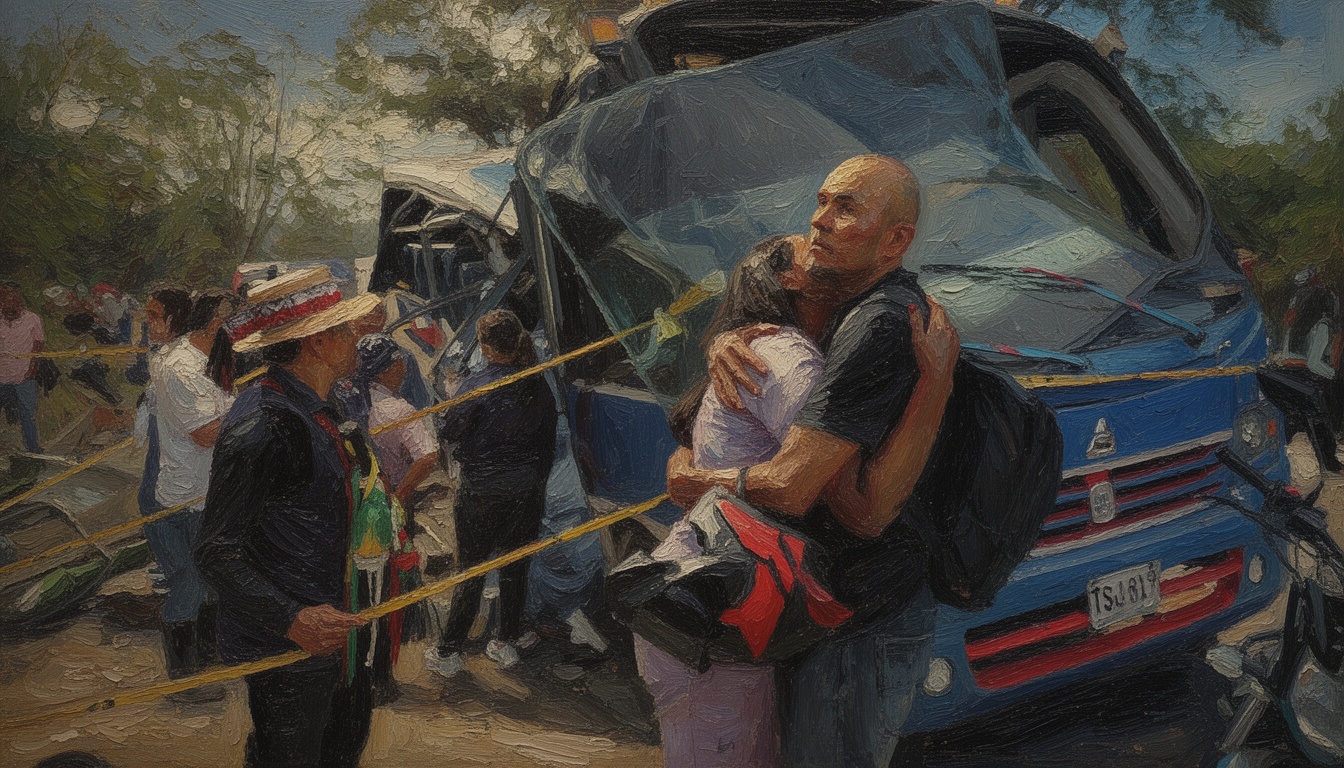
A bomb detonated on a civilian bus traveling along the Panamerican Highway in Cajibio, Cauca, killing 13 people and wounding 38 others. The army chief described the incident as a terrorist act, signaling a deliberate strike designed to maximize casualties among civilians. The violence appears connected to ongoing criminal networks tied to the drug trade that have intensified in the region, raising the stakes for local authorities and security forces. Five children are among the injured, underscoring the horrific impact on non-combatants and stressed civilian resilience in affected communities.
Cauca has long been a flashpoint for the convergence of narcotics trafficking, illegal armed groups, and competition for control over routes and resources in southwestern Colombia. The Panamerican Highway serves as a critical arterial link for commerce and mobility; attacks on its belt can disrupt supply chains, complicate law enforcement operations, and erode public confidence in provincial governance. Local officials have struggled with a patchwork of insurgent and organized-crime factions, often operating with limited state presence in rural pockets. This incident follows a pattern of sporadic, high-impact violence that aims to intimidate communities and overwhelm security resources.
Strategically, the attack raises questions about the capability, reach, and intent of criminal networks in Cauca to execute mass-casualty events with improvised devices. It tests Colombia’s regional partnerships, border controls, and the capacity of security forces to protect transport corridors during a period of heightened pressure from narcotics trafficking. The incident may prompt tactical adjustments, including fortified bus routes, increased roadside security, and targeted intelligence operations against leading criminal groups. It also has potential political repercussions, placing pressure on regional authorities to demonstrate results in reducing violence and securing civilian life.
Technical and operational details remain limited, but the target—a passenger bus on a major national route—suggests a strategy aimed at maximizing disruption to civilians and signaling reach beyond isolated urban centers. The weapon is described as an explosive device; no immediate information confirms its exact composition or the insurgent or criminal actors responsible. The casualty figures—13 dead and 38 injured, with multiple minors among the injured—indicate a high-lethality construct likely designed for rapid, indiscriminate impact and mass casualty burden on trauma systems. Investigations will focus on device construction, explosive weight, and potential collaboration between loosely affiliated groups operating in Cauca.
Looking ahead, the attack will likely prompt a tightening of security measures along major corridors and could trigger a shift in how authorities marshal resources in Cauca and neighboring departments. The incident may also influence regional cooperation dynamics, including information-sharing and cross-border interdiction efforts, as criminal networks adapt to increased scrutiny. Humanitarian considerations—medical triage capacity, shelter for displaced families, and psychosocial support for survivors—will shape immediate response, while long-term security planning will need to address the governance vacuum that can enable such violence to persist. In the near term, a surge in joint patrols, rapid response teams, and targeted operations against the most active cells in the region appears probable as authorities seek to restore public confidence and deter further attacks.