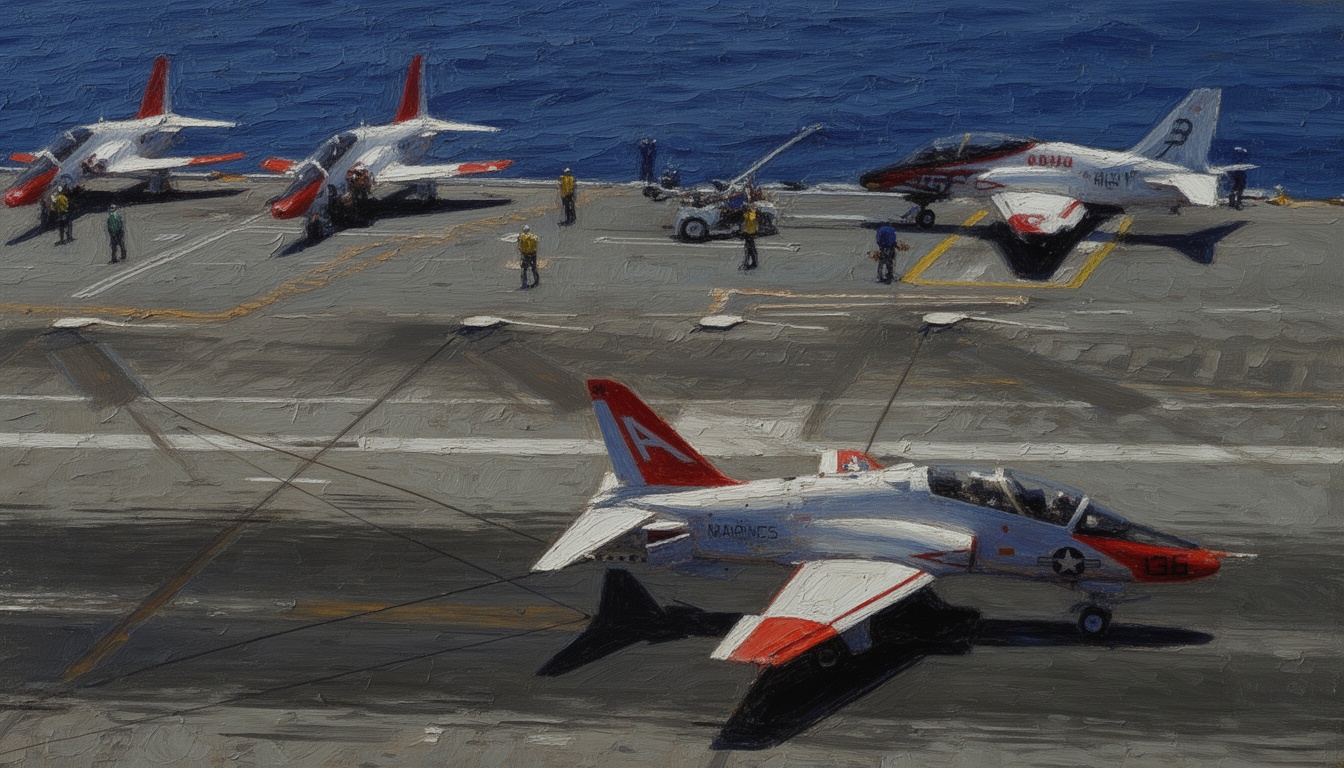
EXCLUSIVE: Lockheed exits Navy trainer aircraft competition
Lockheed Martin withdraws from the Navy Undergraduate Jet Training System contest. Remaining bidders are SNC, Boeing, and Textron Beechcraft in partnership with Leonardo. The move narrows a high-stakes program that shapes the future of carrier-based pilot training.
Lockheed Martin has pulled out of the Navy’s Undergraduate Jet Training System competition, dramatically altering the field for a high-profile trainer aircraft program. The decision reduces the bidders to SNC, Boeing, and Textron Beechcraft, which is partnering with Leonardo on a joint bid. This exit follows a surprise maneuver that reorders the competitive landscape for a program valued in the several-billion-dollar range over its lifecycle. The Navy now faces a narrowed field as it moves toward final bid evaluation and a potential award in the coming months.
Context for the competition centers on the service’s goal to modernize jet training for new naval aviators, transitioning from legacy types to a more capable, cost-effective platform. Each remaining competitor brings a distinct approach: SNC emphasizes domestic integration and sustainment, Boeing foregrounds its long-running trainer lineage, and Beechcraft by Textron, with Leonardo, leans on European collaboration and propulsion versatility. The shift could influence industrial baselines, including production sites, supply chains, and foreign-partner participation. Observers will watch for how the Navy values commonality with maintenance ecosystems and the ability to scale training to larger cohorts.
Strategically, the exit by Lockheed shifts balance among major defense primes and tests the Navy’s risk calculus. The service seeks a platform that aligns with distributed training, data-driven evaluation, and interoperability with unmanned and fifth-generation assets. With Lockheed out, the remaining bidders may intensify non-price factors: training fidelity, instructor scorn, and lifecycle support agreements. The outcome will shape not only the U.S. Navy’s training doctrine but potentially alliances and aerospace supply chains across allies observing the procurement closely.
Technical and operational details for the finalists include the likelihood of selecting a jet capable of realistic instrument and live-fly training, with modern cockpit ergonomics, data links, and maintenance predictability. The architecture under evaluation emphasizes adaptability to evolving mission profiles and the integration of advanced simulation environments. Budget contours, production ramp-up timelines, and support contracts are central to the decision, alongside risk sharing between the program office and the prime contractors. Final qualification milestones and a formal award decision will reveal how the Navy intends to balance cost, capability, and political considerations.
Looking ahead, the Navy faces a decision that will influence pilot throughput, training safety, and long-term fleet readiness. A winner will need robust industrial security, resilient supply chains, and scalable maintenance footprints to sustain a high-visibility program. Analysts expect a careful assessment of lifecycle costs, including overhauls and upgrade paths as aircraft and systems mature. In the near term, the competitive dynamics among SNC, Boeing, and Textron Beechcraft/Leonardo will crystallize as technical demonstrations conclude and the Navy dissects contractor proposals for risk and innovation.