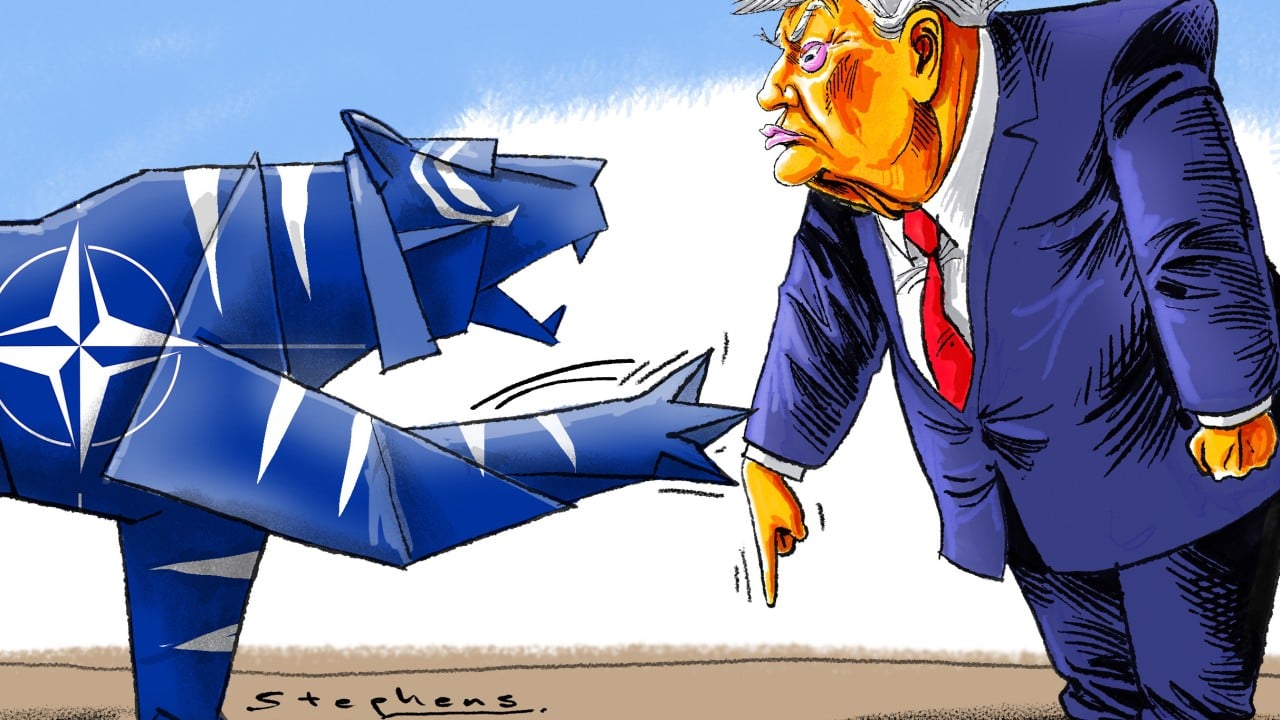
Europe Closes Airspace to US, Triggers NATO Crisis
European bans on US aircraft over Iran tensions provoke sharp NATO rifts. Washington's Iran strategy clashes with key allies, risking alliance cohesion and raising questions about NATO's future.
Europe's decision to close its airspace to US military flights linked to Iran has escalated a deep rift within NATO. This move directly challenges Washington's hardline Iran policy and signals growing discord between the US and its key European allies.
US President Donald Trump criticized NATO members, calling them "very bad allies" and threatening to leave the transatlantic security alliance if they do not align with his approach to Iran. Meanwhile, NATO Secretary General Mark Rutte is reportedly planning a visit to Washington to try to reassure and stabilize the alliance amid mounting tension.
The closures come as several European capitals openly resist US calls to support efforts unblocking the strategic Strait of Hormuz, a vital chokepoint for global oil shipments. This divergence reflects broader disputes over Middle East policy and NATO’s operational unity.
Technically, the airspace restrictions limit US military freedom of movement across crucial European routes, complicating logistics for operations related to Iran. The bans also signal a political rebuke of Washington’s Iran sanctions enforcement, undermining coordinated Western pressure.
This crisis within NATO risks fracturing the transatlantic partnership at a time of global strategic uncertainty. The alliance faces a test in reconciling divergent Iran policies and maintaining collective security frameworks. Future NATO cohesion hinges on resolving this fundamental discord before it destabilizes broader defense cooperation.