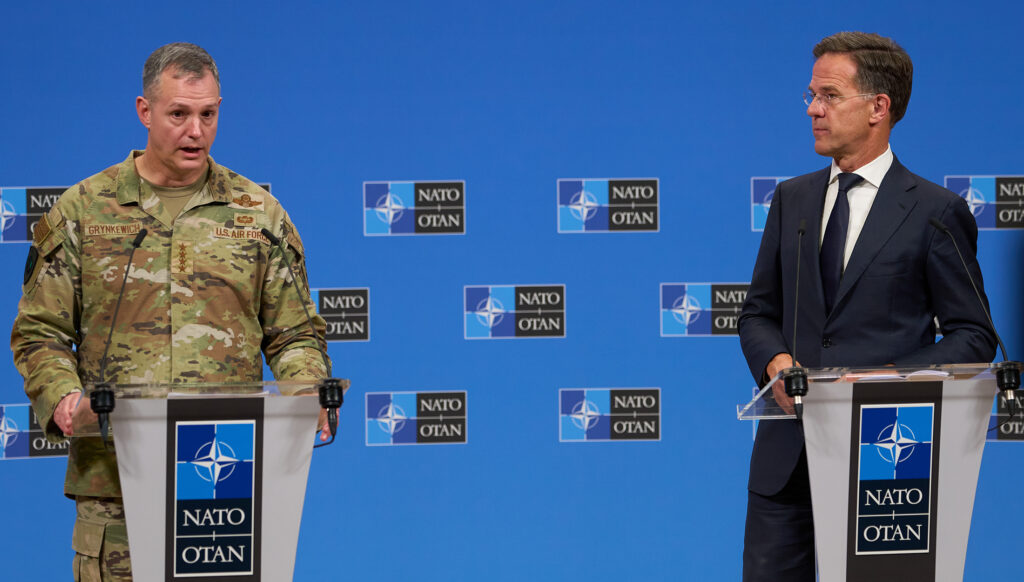
EUCOM Commander Predicts Europe’s Conventional Defense Shift by 2035 Crisis
The US may be sidelined as Europe attempts to assert conventional defense leadership, signaling a potential rift in NATO cohesion. This move could hasten a reconfiguration of military alliances amid rising global tensions.
EUCOM Commander General Christopher Cavoli has claimed that Europe will lead its conventional defense efforts by 2035. This statement, while promoting European autonomy, raises serious concerns about the future of the transatlantic alliance under NATO. As European nations begin to contemplate this shift, the implications for U.S. influence in European defense strategies loom large.
Historically, the United States has been the backbone of NATO, providing critical military capabilities and leadership since the alliance's inception in 1949. However, increasing European dissatisfaction with U.S. foreign policy direction, highlighted by differing priorities between Washington and European capitals, has sparked a drive toward self-reliance. The conflict in Ukraine and escalating tensions with Russia have forced Europe to rethink its security architecture, pushing member nations to enhance their individual defense capabilities.
This development is significant as it potentially marks a watershed moment for NATO, indicating a pivot away from reliance on U.S. military support. If Europe successfully transitions to a self-sufficient defense posture, it could alter the global security landscape, emboldening adversaries who perceive a weakened Western alliance. Furthermore, it exposes vulnerabilities as European nations vie for military resources and strategic coherence amid different national interests.
Key actors behind this initiative include Germany and France, both advocating for increased investment in defense, independent of U.S. guidance. Their motivations may be rooted in the desire for greater strategic autonomy but could also be driven by domestic pressures to enhance national security capabilities. This push is likely to exacerbate tensions between old NATO allies, with some nations unwilling to fully commit to an independent European defense strategy, while others perceive this as an opportunity for power projection.
Technically, the European defense landscape is characterized by various ongoing military modernization efforts. Nations like Germany are increasing their defense budgets to meet NATO's 2% GDP target and pursuing advanced weapon systems like the Eurofighter Typhoon and the PzH 2000 self-propelled howitzer. Furthermore, the European Union's new defense initiatives, such as the European Defence Fund, aim to increase investment in joint military capabilities, although execution remains fraught with challenges concerning interoperability.
The potential consequences of this shift could unleash a new wave of military competition in Europe and beyond. Should Europe succeed in gaining conventional defense capabilities independently, concerns about European defense fragmentation could escalate, complicating partnerships with other global powers. Additionally, adversarial states like Russia or China might take advantage of perceived deficiencies within NATO, igniting a cycle of strategic miscalculations and military escalations.
Historically, precedents of military alliances redefining their roles are evident, most notably seen with the post-Cold War reorientation of European defense policies. The dissolution of the Soviet Union marked a period where European states sought greater autonomy, and this current move can be considered a similar pivot, albeit in a much more complex global security environment.
Looking forward, defense analysts should closely monitor European defense spending trends and announcements regarding joint military initiatives. Key indicators will include changes in commitment from NATO member states, the development of specific military capabilities, and the evolving dynamics within NATO as the U.S. grapples with its own national interests. The timeline to 2035 could well be a contentious period that redefines not only Europe’s military roles but the framework of global security itself.