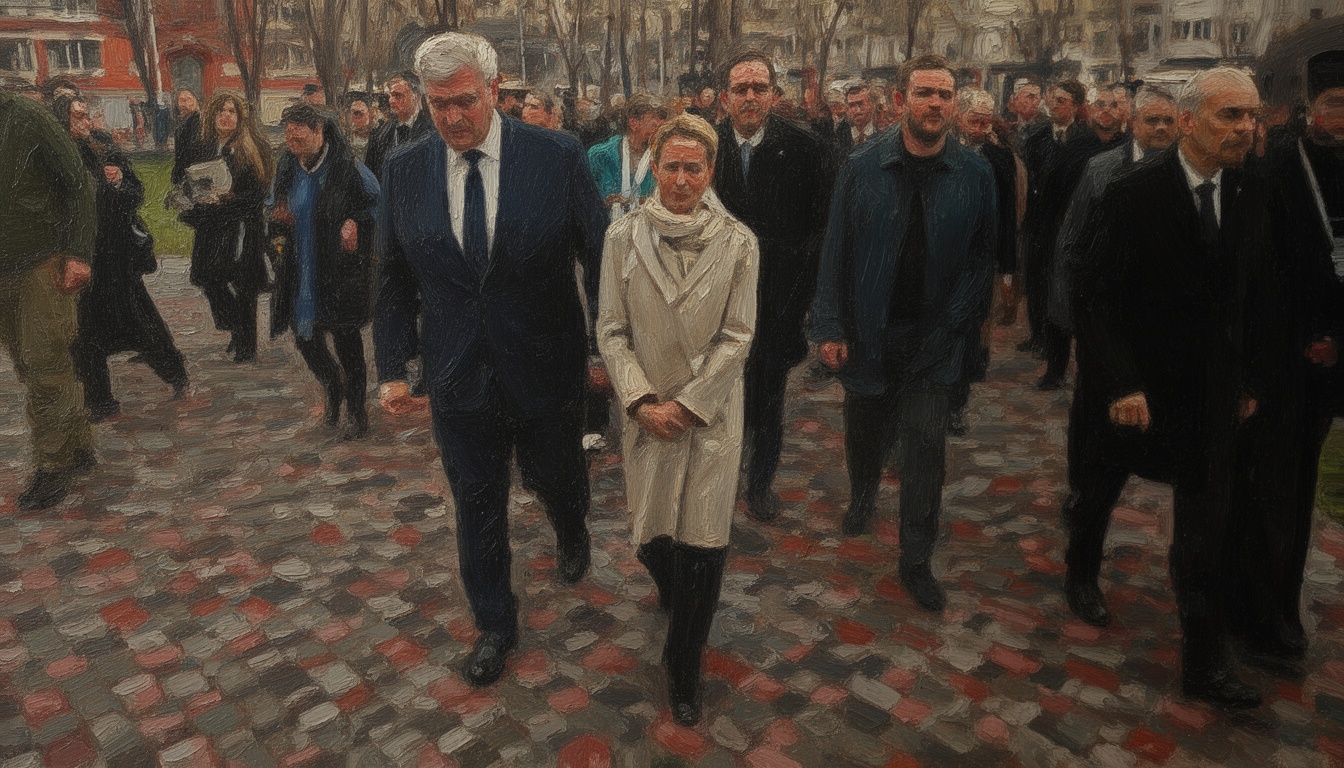
EU Ministers Visit Bucha to Cement Support for Ukraine
Four years after the Bucha massacre, EU foreign ministers reinforce commitment to Ukraine’s defense. The visit underscores Western resolve against Russian war crimes and signals continued military and political backing.
Four years after Russian forces retreated from Bucha in 2022, revealing hundreds of civilian bodies, the EU has heightened its political and symbolic backing for Ukraine. A delegation of EU foreign ministers visited Kyiv and Bucha on March 31 to commemorate the massacre’s anniversary and discuss enhanced support mechanisms.
The Bucha massacre emerged as a grave symbol of Russia’s brutal campaign in Ukraine, with evidence of executions and civilian abuses sparking global outrage. Hundreds of victims, including women, children, and elderly civilians, were discovered with many bodies left exposed in the streets, fueling international condemnation and war crime inquiries.
Strategically, the EU’s visit signals an escalation in political cohesion and support for Ukraine, reinforcing sanctions on Russia and bolstering Kyiv’s capacity to resist further aggression. The delegation’s presence aims to deepen military aid, humanitarian relief, and diplomatic pressure as the war continues to strain regional and global security.
The EU foreign ministers’ agenda included meetings with Ukrainian officials, discussions on increased arms deliveries, financial packages, and coordination on sanctions enforcement. The visit highlighted the war’s humanitarian toll and underscored the EU’s commitment to upholding international law and deterring further Russian violations.
Looking forward, this demonstration of solidarity may harden diplomatic stances and accelerate material aid to Ukraine, while signaling to Moscow the persistence of Western resolve. It foreshadows intensified efforts to isolate Russia economically and politically, potentially prolonging the conflict’s intensity and complexity in Eastern Europe.