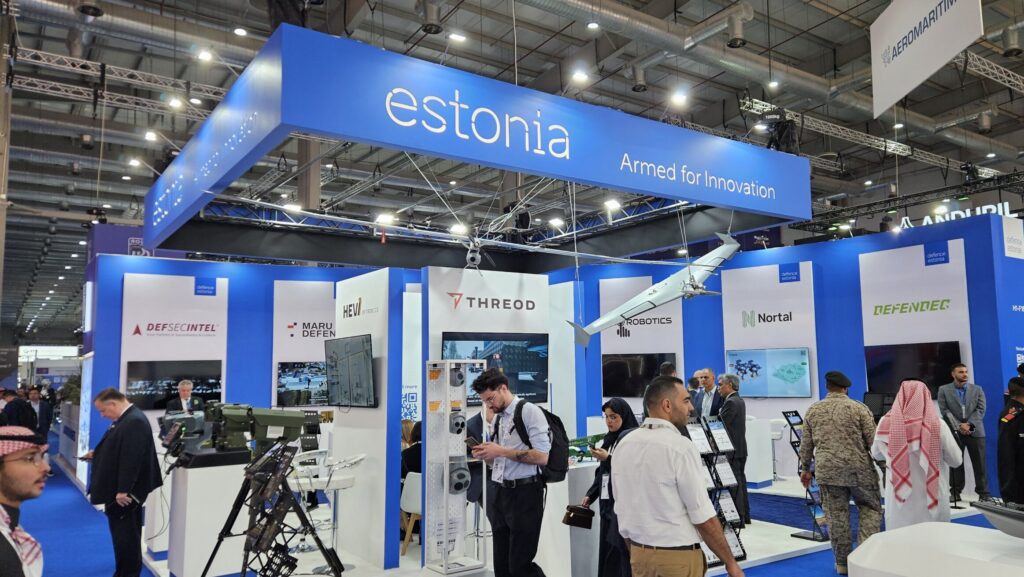
Estonia and Saudi Arabia Initiate Defense Procurement Partnership Talks
Estonia and Saudi Arabia are exploring collaborative defense procurement, marking a significant step in their bilateral relations. This potential partnership could reshape defense supply chains and increase operational capabilities for both nations within a global market framework.
The Estonian government, represented by Defense Procurement Director Siim Sukles, has confirmed that officials are currently engaged in discussions with their Saudi counterparts to establish a collaborative framework for defense procurement. As part of these preliminary talks, officials are assessing potential avenues for cooperation, emphasizing the importance of strategic partnerships in the evolving global defense market.
This development takes place against the backdrop of a shifting geopolitical landscape where defense expenditures are increasingly dictated by multi-national alliances and partnerships. Estonia, a NATO member, seeks to diversify its defense capabilities while bolstering security ties with Gulf monarchies, particularly as regional threats continue to escalate. Saudi Arabia’s focus on military modernization and its Vision 2030 initiative provide a complementary interest for Estonia in technology transfer and defense innovation.
Key players in this development include the Estonian Ministry of Defence and the Saudi Ministry of Defense, with both nations motivated by distinct strategic goals. Estonia aims to enhance its defense procurement processes and tap into new technology sources, while Saudi Arabia seeks to expand its defense partnerships beyond traditional suppliers to enhance its military capabilities and operational readiness.
The prospective cooperation between Estonia and Saudi Arabia may have broader regional implications. It could signal a shift in defense supply chains, expanding the traditional Western-centric procurement models. Should this partnership materialize, it could encourage other nations to engage in similar collaborative ventures, potentially leading to a more interconnected and diversified defense industry.
Historically, Estonia has prioritized cooperation with Western allies; however, the pursuit of ties with Saudi Arabia indicates a strategic pivot to include non-traditional partners. This move mirrors a historical pattern where nations have sought to strengthen their defense capabilities through diversified partnerships in response to emerging security challenges.
Looking ahead, analysts suggest that if these initial talks materialize into concrete agreements, it could mark the beginning of a new wave of defense collaboration in which smaller nations leverage partnerships with larger states. Moreover, such collaborations could influence regional security architectures and impact the balance of military power in the Gulf region.