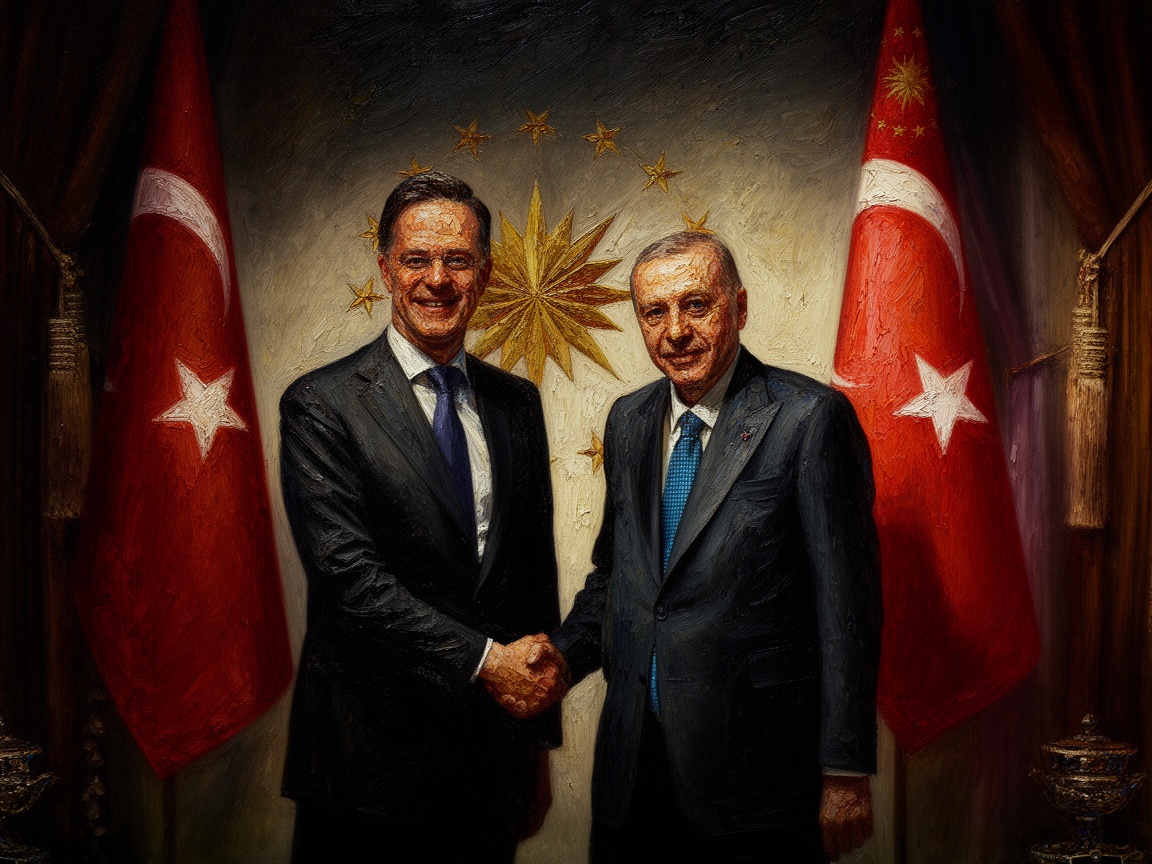
Erdogan aims to revive Russia-Ukraine talks as Turkey hosts diplomacy drive
Turkish President Erdogan presses to restart Moscow-Kyiv negotiations. He meets NATO chief as Kyiv asks Ankara to host a leaders’ summit with Russia. The development signals Ankara’s effort to shift the balance of diplomacy and potentially shape the next phase of the conflict.
Erdogan has stepped forward to revive Russia-Ukraine talks, framing Turkey as a pivotal mediator in the crisis. He publicly underscored Ankara’s readiness to play a constructive role, while engaging with allied partners to keep channels open. The Turkish President also briefed NATO's secretary-general on the diplomacy initiative, signaling a coordinated approach with Western allies. The move comes as Kyiv has urged Ankara to host a high-level meeting with Moscow, seeking a tangible path toward negotiations rather than prolonged stalemate.
Background to the initiative rests on a long-standing Turkish preference for balancing relations with both Russia and the West. Turkey has previously offered to host talks and has leveraged its unique geographic and political position to influence both sides. Erdogan’s push aligns with Ankara’s broader strategy to preserve strategic autonomy while preventing the conflict from spilling into greater regional instability. The timing coincides with a period of shifting war dynamics on the ground and evolving Western diplomatic posture toward Moscow.
Strategically, Ankara’s diplomacy could complicate Moscow’s calculus by offering a formal platform for dialogue without forcing concessions from either side. Washington and European capitals have historically welcomed any credible channel that preserves risk of escalation while maintaining pressure on Russia. A Turkish-hosted meeting would test Russia’s willingness to engage without eroding its leverage in ongoing operations. The development also signals that Turkey seeks to expand its role in regional security architecture amid rising tensions with some partners over various strategic dimensions.
Operationally, the effort folds into Turkey’s defense-industrial and logistical capabilities, including airspace management, peacetime-absent but ready mediation infrastructure, and the ability to coordinate multi-national delegations. The specifics of invitations, security arrangements, and the agenda remain under discussion, with Ankara signaling readiness to adapt to evolving circumstances. If successful, the talks could influence humanitarian corridors, prisoner exchanges, and regional stability beyond the immediate Russia-Ukraine framework.
Forward assessment suggests a high-stakes diplomatic maneuver. A Turkish-brokered summit would raise the cost of intransigence for both Moscow and Kyiv, potentially producing a framework for phased concessions. However, significant obstacles persist, including mutual distrust, the status of Ukrainian territory, and the willingness of external backers to leverage a Turkish brokered process. The next steps will reveal whether Ankara can translate rhetorical support into a durable diplomatic channel that reshapes the conflict’s trajectory.