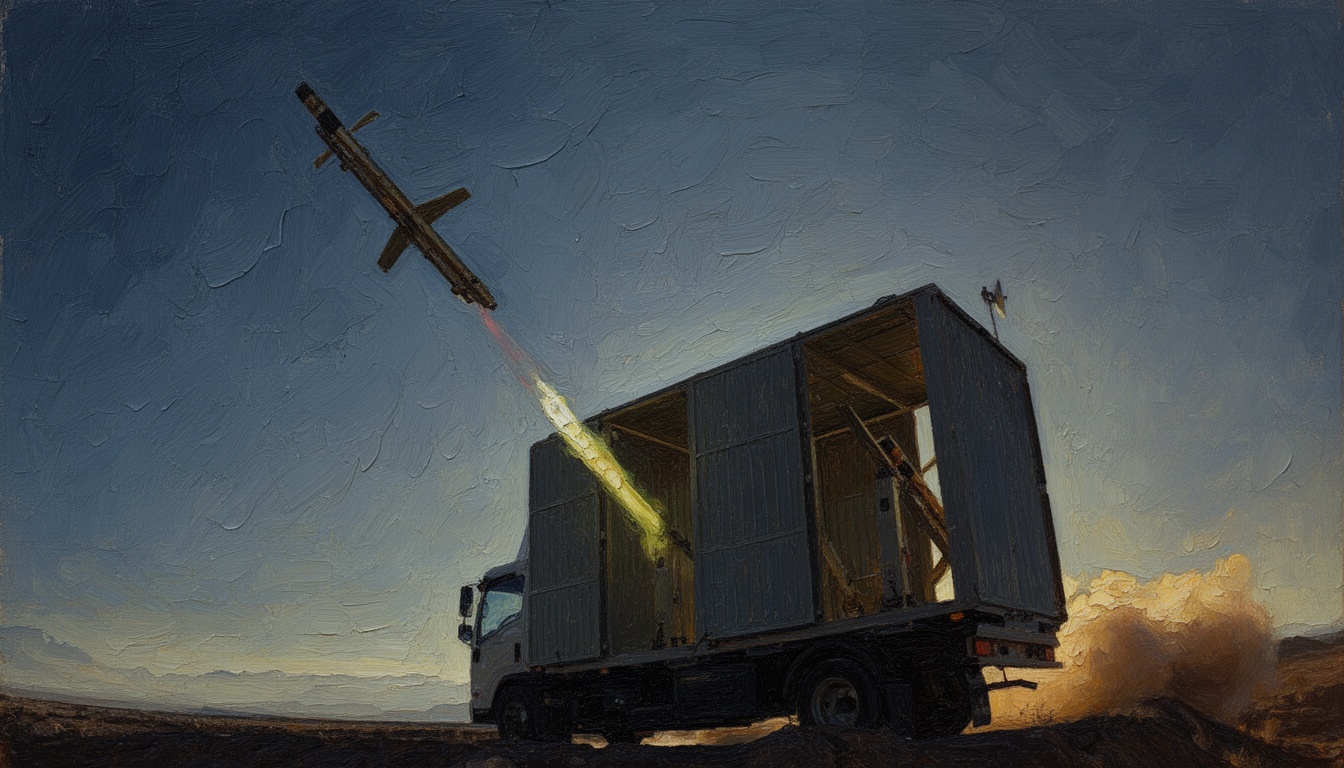
English: Iran's low-cost 358 missile challenges high-value US assets
English: Iran's 358 loitering munition, nicknamed SA-67, is reportedly shooting down expensive US platforms, signaling a shift in cost-imposition and deterrence. State media in China and regional observers spotlight its use against drones like the MQ-9 Reaper in the broader Iran-Israel-US dynamic. The weapon’s light weight and claimed effectiveness raise questions about the balance of power, industrial vulnerability, and future counter-drone warfare.
English: The core development is blunt: Iran’s 358, a lightweight loitering munition, is described as a cost-effective counter-drone system that has allegedly taken out high-value US assets. The reports emphasize its potential to threaten expensive platforms with a relatively inexpensive weapon, highlighting a shift in battlefield economics. This underscores a broader trend where asymmetric capabilities challenge traditional dominance by expensive, high-end platforms. Background context shows Iran’s emphasis on indigenous systems amid regional hostility and external sanctions, while weapons tests and battlefield claims feed into an escalating regional tech arms race. Strategic significance centers on deterrence dynamics, with Iran signaling it can inflict meaningful losses without matching Western dollar figures in procurement. The 358, also known as SA-67, is presented as a compact interceptor capable of engaging drones in contested airspace, raising the threshold for maintaining air superiority for external powers. Technical or operational details include the missile’s roughly 50 kg weight and its loitering capability, positioning it as a modular, low-cost counter-drone solution. The likely consequences point to intensified budgetary and tactical planning among US and allied forces, prompting revisits of drone defense architectures and supply chain resilience. Analysts expect a broader adoption of affordable munitions concepts, potentially driving new alliances and regional deterrence calculations. Forward assessment suggests a shifting paradigm where price-informed warfare becomes a central component of regional security considerations, with NATO and allied air forces reassessing drone survivability, suppression of enemy air defenses, and rapid-reaction countermeasures.