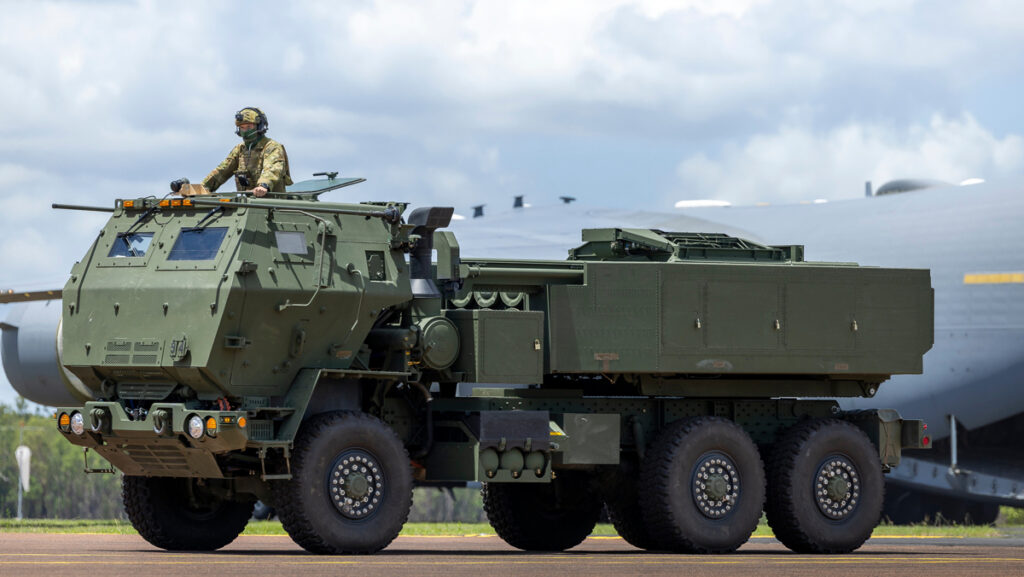
Australia Invests $1.6 Billion in HIMARS and Precision Strike Missiles
Australia plans to enhance long-range strike capabilities through a decade-long investment in HIMARS and Precision Strike Missiles, totaling A$2.3 billion.
The Australian government has committed A$2.3 billion ($1.6 billion) over the next ten years to bolster its long-range strike capabilities via the procurement of US-made High Mobility Artillery Rocket Systems (HIMARS) and Precision Strike Missiles (PrSM). This substantial investment is part of Canberra's broader strategy to modernize its military and improve deterrence measures in the face of shifting regional security dynamics.
Australia's emphasis on advanced artillery systems like HIMARS is indicative of its response to rising threats in the Indo-Pacific, particularly from nations displaying increasingly assertive military postures. As tensions grow, particularly with China, Australia recognizes the importance of enhancing its strike capabilities to ensure a credible defense posture and regional stability. This investment aligns with Australia’s strategic focus on interoperability with ally forces, primarily the United States.
The strategic significance of this investment cannot be overstated. HIMARS provides Australia with a flexible, mobile artillery platform capable of delivering precision strikes at a significant range, improving the Royal Australian Army's operational effectiveness. Coupled with the acquisition of Precision Strike Missiles, the enhancement of Australia's military capabilities represents a vital step in maintaining balance in an evolving security environment, with implications for partner nations in the region.
Operationally, integrating HIMARS into the Australian Defense Force (ADF) requires investment in training, infrastructure, and maintenance support systems. The system's adaptability for different missions enhances operational readiness and quick response capabilities. Additionally, the ability to rapidly deploy strikes with precision aligns with the ADF’s commitment to modern warfare concepts and multi-domain operations.
As Australia embarks on this significant military upgrade, the likely outcomes will include enhanced deterrence against adversarial actions, improved cooperation with allied forces in joint operations, and a clearer signal to regional actors regarding Australia's commitment to safeguarding its sovereignty and maintaining peace in the Indo-Pacific region. Australia’s HIMARS investment heralds a transformative phase in its defense strategy, necessitating ongoing assessment of its long-term implications for regional security dynamics.