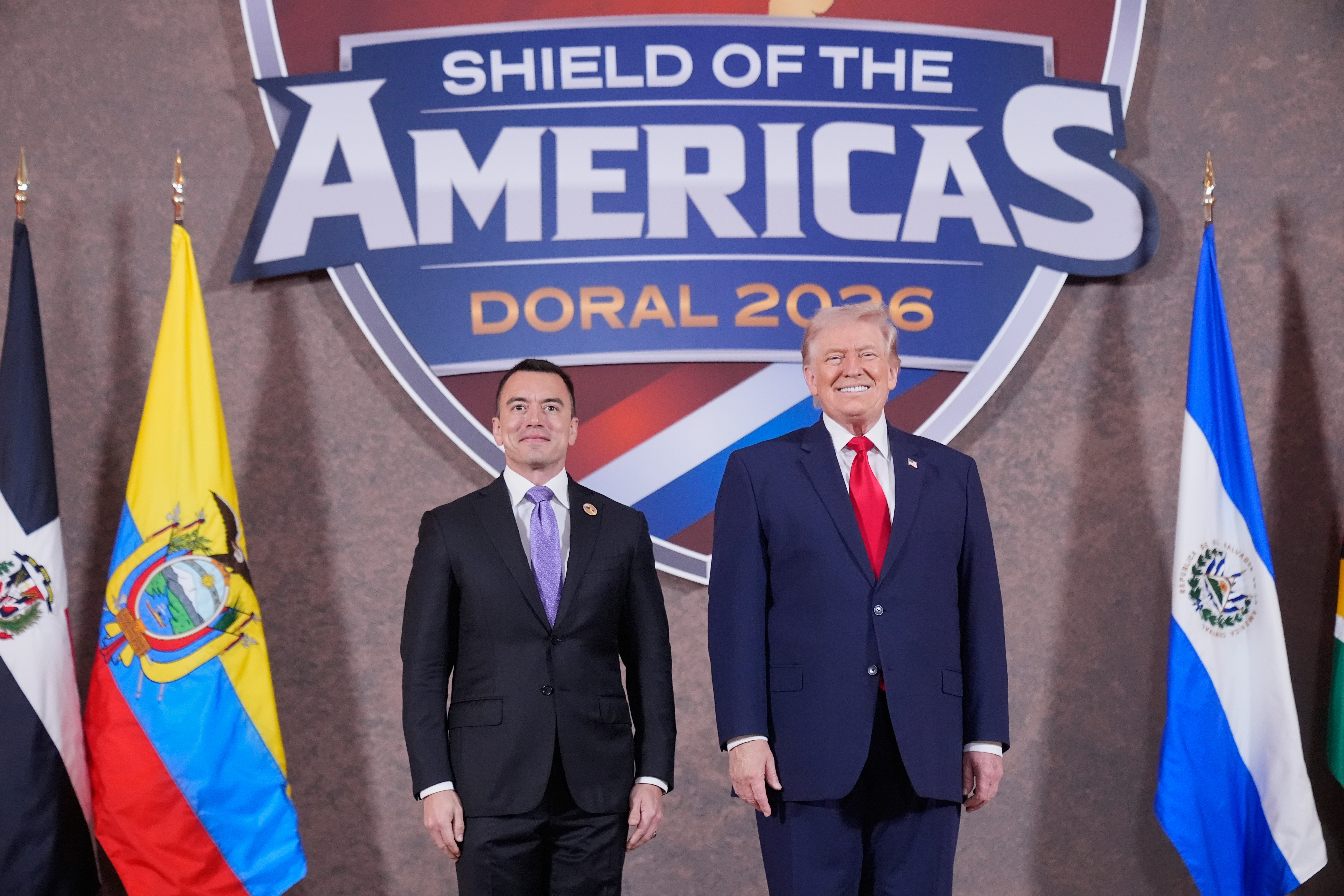
Ecuador Launches Major Offensive Against Criminal Groups with US Military Support
Ecuador's government is escalating its fight against organized crime, launching a significant military operation aided by the United States. This aggressive stance highlights growing instability in the region, potentially reshaping power dynamics across South America.
Ecuador has initiated a major military offensive aimed at dismantling violent criminal groups terrorizing its cities, significantly escalating its efforts to combat organized crime. This operation is being carried out with direct support from the United States, which indicates a tightening of US-backed security measures in a country grappling with unprecedented levels of violence and lawlessness. Just days prior to this announcement, joint military operations between Ecuadorian and US forces commenced, underscoring a robust collaboration to address the escalating security crisis.
Historically, Ecuador has struggled with rising violence tied to drug trafficking, gang wars, and organized crime, particularly in urban areas such as Guayaquil. This current offensive comes in the wake of heightened public outcry over crime rates, which have surged dramatically due to the influence of powerful narcotics trafficking organizations that operate across the Andean region. The violence has also been compounded by the fallout from regional conflicts and the spillover effects of Colombia's internal turmoil, making Ecuador a battleground for competing criminal factions.
The significance of this offensive extends beyond Ecuador’s borders; it reveals the strategic vulnerabilities that threaten regional stability in South America. The aggressive approach, backed by US military resources, indicates a willingness to confront these criminal organizations head-on while also sending a stark warning to neighboring countries about the potential for similar escalations. This move could shift the balance of power among criminal groups and influences the dynamics of regional security cooperation.
Key actors in this scenario include Ecuador's President Guillermo Lasso, who is responding to increasing pressure from both citizens and international partners to act decisively against crime. Underneath the guise of protecting national sovereignty, Lasso's government appears motivated by a broader goal of securing international legitimacy and strengthening its position within the context of US foreign policy in Latin America. The role of the United States, particularly its provision of military intelligence, equipment, and training, also reflects American interests in curbing drug trafficking and violent crime in its immediate vicinity.
Operationally, the Ecuadorian military's capacity to conduct this offensive will be bolstered by American assistance, potentially including the deployment of advanced surveillance technology and tactical units. Furthermore, the Ecuadorian Armed Forces reportedly plan to mobilize up to 7,000 troops in areas heavily affected by criminal activity. This deployment signifies a major commitment relative to the size of Ecuador's military and could see the introduction of extensive counter-narcotics operations in the weeks and months ahead.
The consequences of this escalation may ripple through the region, potentially igniting further violence as criminal groups retaliate against coordinated actions by the state. A surge in confrontations between state forces and armed groups could emerge, with unintended civilian casualties threatening public support for Lasso's government. Additionally, neighboring countries may feel compelled to intensify their own security measures in response to heightened tension along their borders.
Historically, similar offensives against organized crime have met with mixed results. The Mexican government's military-led strategies against drug cartels in the past have often led to increased violence and instability rather than lasting resolution. These precedents illustrate the risks of military intervention without addressing underlying social and economic factors contributing to crime.
In the near future, analysts should closely monitor the outcomes of the Ecuadorian offensive, especially regarding troop deployments, criminal gang retaliations, and evolving US involvement. Indicators such as shifts in crime rates, increases in civilian casualties, and reactions from neighboring countries will be critical in assessing the broader implications of this military campaign and its potential for escalation or resolution of the ongoing crisis.