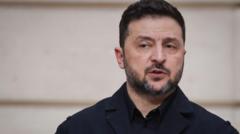
Easing Russian Sanctions Risks Prolonging Ukraine Conflict, Warns Zelensky
Ukraine and its allies are alarmed that potential sanctions relaxation could embolden Russia, thereby prolonging the ongoing war. The US decision risks undermining efforts to enforce significant economic pressure on Moscow, which is critical for shortening the conflict.
Ukrainian President Volodymyr Zelensky has issued a stark warning that any easing of sanctions on Russia may further entrench the ongoing conflict, jeopardizing prospects for peace. He underscores that such moves by the United States fundamentally weaken the collective international stance against Kremlin aggression. This development comes as discussions intensify around the potential for sanctions relief, raising alarms among Ukraine and its Western allies.
The backdrop to Zelensky's comments is a sustained period of warfare that began with Russia's full-scale invasion of Ukraine in February 2022. Sanctions imposed by Western nations have been a critical tool in crippling the Russian economy, thereby attempting to limit its military capabilities. However, as the war drags on with significant humanitarian consequences, pressures have mounted within some Western governments to reconsider the efficacy and impact of these sanctions, leading to cracks in the united front against Moscow.
This situation is significant as it reflects strategic vulnerabilities in the Western alliance and reveals dissenting opinions on the effectiveness of continued sanctions. Any reduction in economic pressure could enable the Kremlin to bolster its military efforts and maintain operations in Ukraine, potentially extending the duration and impact of the conflict. This creates a precarious balance, where optimism for peace must compete with fears of heightened Russian aggression.
Key players in this scenario include the United States, European Union member states, and Ukraine itself. While the Biden administration is publicly committed to supporting Ukraine's sovereignty, internal divisions exist regarding the long-term sustainability of sanctions. Some U.S. lawmakers and European officials argue for reassessing sanctions as they weigh the growing economic challenges faced domestically, which could inadvertently signal weakness against Russian advances.
Operationally, the conflict has witnessed Russia deploying an estimated 190,000 troops along the Ukrainian border and utilizing advanced artillery systems, such as the TOS-1 thermobaric rocket launcher, to devastating effect. The financial toll of the ongoing war has already reached upwards of $200 billion for Ukraine alone. Without stringent sanctions, Russia might acquire resources to replenish its military supplies and sustain its offensive capabilities.
If sanctions are relaxed, the consequences could be dire, leading to a significant escalation of hostilities, with Russia potentially launching renewed offensives across key sectors in Ukraine, particularly in the eastern Donbas region where fighting has been relentless. Prolonged conflict could also destabilize the region further, pushing neighboring countries to heighten their military readiness.
Historical parallels can be drawn to the 2014 annexation of Crimea, where initial sanctions were put in place but were lifted or weakened in subsequent discussions, allowing Russia to consolidate its territorial gains. This precedent showcases the dangers of economic disengagement, as the Kremlin may interpret the relaxation of sanctions as a sign of waning resolve from the West.
Looking ahead, it is critical to monitor the political discourse in the U.S. and Europe regarding sanctions policy. Intelligence indicators such as shifts in public support, military supply changes, and statements from key government officials will be essential in assessing how this situation evolves. The fate of Ukraine hangs in the balance as the international community grapples with the implications of sanctions policy against Russia.