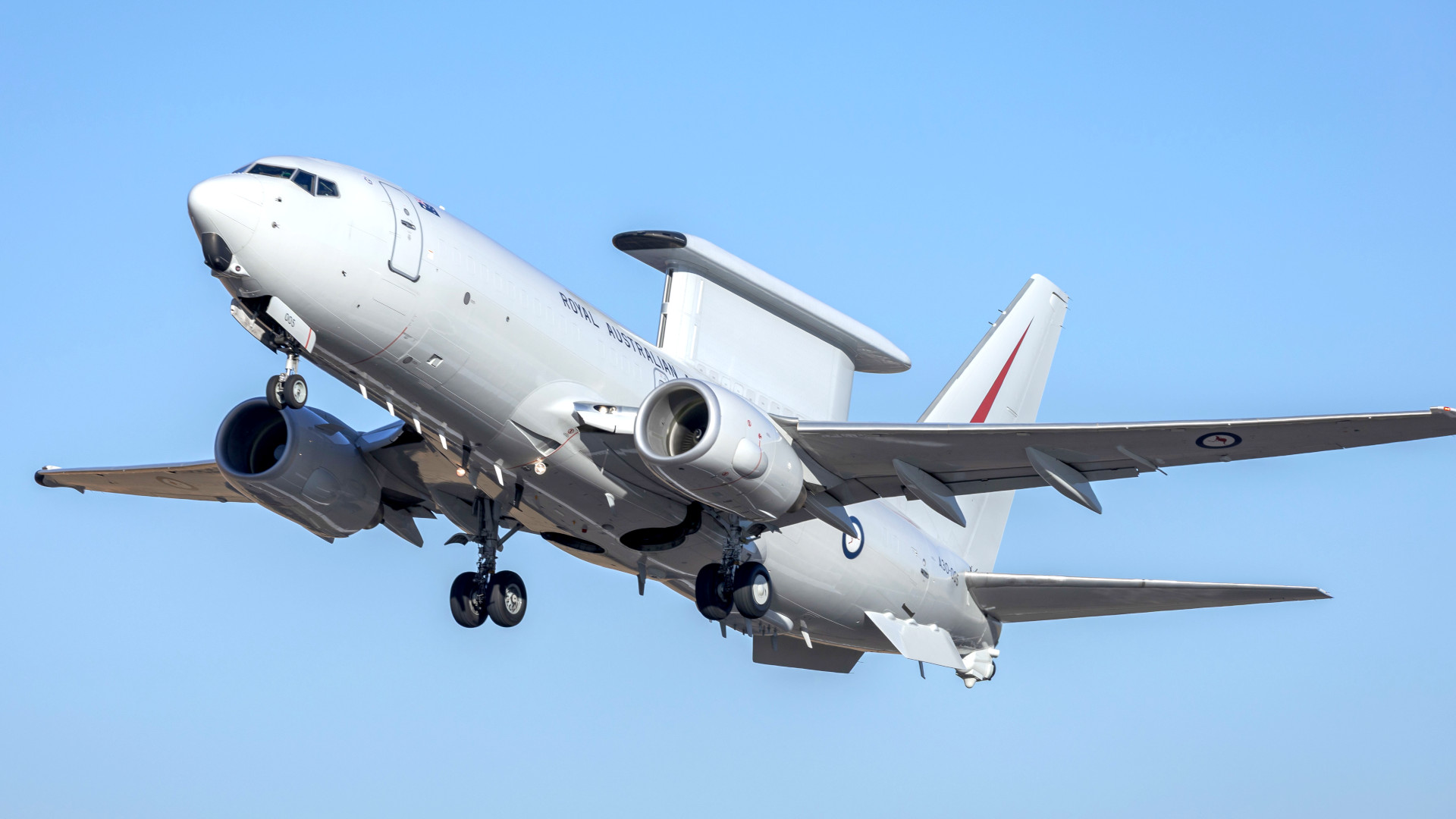
E-7A Wedgetail Enhances Detection of Iranian Drone Threats in Gulf
The E-7A Wedgetail's advanced capabilities significantly elevate detection of Iranian drone operations and potential missile threats, presenting a pivotal shift in regional security dynamics. This escalation underlines the growing urgency for enhanced surveillance against Tehran's asymmetric warfare strategies.
The introduction of the E-7A Wedgetail into operations marks a critical upgrade in the ability to detect Iranian drone and cruise missile threats aimed at the Persian Gulf. This aircraft, equipped with superior radar and surveillance technologies, poses a direct challenge to Tehran's drone capabilities, which have been increasingly used in asymmetric conflicts. The Wedgetail can track multiple low-flying targets simultaneously, indicating a decisive leap in situational awareness for regional forces.
The Iranian military has expanded its drone fleet significantly over recent years, bolstered by advances in indigenous drone manufacturing since the mid-2000s. Following the U.S. withdrawal from the 2015 nuclear deal and subsequent sanctions, Iran has turned to its drone technology, aligning them with asymmetric tactics against regional adversaries and U.S. assets in the Gulf. Increased frequency of drone incursions and reported surveillance operations underlie the urgent need for enhanced counter-drone capabilities in the region.
This development is significant as it potentially shifts the balance of power in the region. The enhanced detection and tracking capability of the E-7A Wedgetail allows for earlier responses to potential attacks, effectively altering Iran's calculus for drone operations. The Iranian defense strategy heavily relies on drones to extend its reach and project power, and improved surveillance directly undermines these efforts, possibly leading to heightened military tensions.
Key players in this escalatory landscape include the U.S., its regional allies like Saudi Arabia and Israel, and Iran itself. The U.S. sees the Wedgetail as a crucial asset in its broader strategy to contain Iranian influence while ensuring the security of maritime routes in the Gulf. Conversely, Iran views the increased surveillance capabilities as a direct threat, likely prompting escalatory measures to counteract this technological advantage.
The E-7A Wedgetail is armed with advanced Northrop Grumman's APY-2 radar, capable of detecting aerial targets at ranges exceeding 200 kilometers. Furthermore, it can track over 250 targets simultaneously, vastly improving predictive response capabilities against a proven adversarial drone threat. A budget allocated by Australia, amounting to approximately $2 billion for the acquisition and operationality of this aircraft, underscores its strategic importance.
The likely consequences of this development point towards an increase in tensions around the Persian Gulf. As Iran adapts to counter this enhanced surveillance, it may accelerate its drone programs or engage in tactical sabotage against regional U.S. forces. Furthermore, the U.S. and its allies might feel pressured to conduct more frequent military exercises or intelligence operations to mitigate emerging threats.
Historic parallels can be drawn with the Cold War era, when technological advancements in surveillance led to critical shifts in military strategies. The U.S. use of advanced reconnaissance and interception systems reshaped how adversaries operated, much like the E-7A may now influence Iranian drone engagements. Previous technological races during that period highlighted potential flashpoints, setting the stage for conflicts born from miscalculations.
Looking ahead, the focus will be on Tehran's adaptive strategies in response to enhanced detection capabilities. Intelligence indicators to monitor include any uptick in Iranian drone activities or missile launches against U.S. surveillance assets, as well as potential Iranian attempts to develop countermeasures against the Wedgetail's advanced systems. Additionally, any increased military posturing from allied forces in the region could signal escalating tensions ahead.