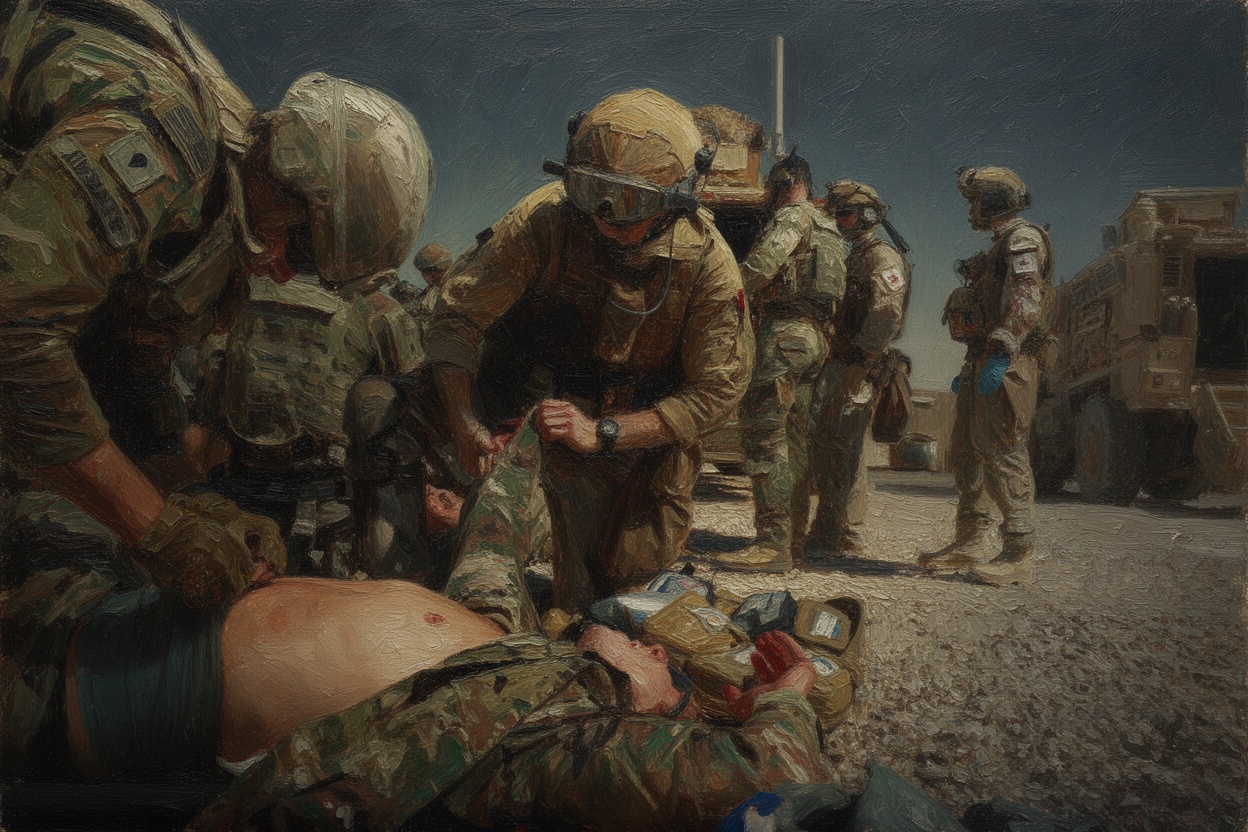
Drone warfare has dramatically changed the battlefield. Is the US medical corps ready?
Studies drawing on combat experience from Ukraine report that drone-delivered explosives generate more destructive effects. They also link these strikes to a wider range of traumatic injuries with higher severity. The findings raise a readiness question for the US medical corps as drone warfare expands beyond one theater.
Studies based on the Ukraine war report a clear shift in battlefield harm: drone-delivered explosives cause more destructive effects than previously expected. The research also links these munitions to a wider range of traumatic injury types and greater injury severity. Those two factors together can overwhelm medical capacity faster than many pre-drone casualty models.
The Russia-Ukraine war has accelerated the spread of drones that deliver explosive payloads at tactical distances and in large numbers. This changes how forces fight and how wounded soldiers are distributed across time and terrain. Instead of one dominant injury pattern associated with traditional artillery and mortar cycles, responders face more varied trauma profiles.
For strategic planners, medical readiness is now part of combat power. If drones drive more severe, more diverse trauma, survival depends on how quickly units can stop bleeding, perform damage-control interventions, and move patients to appropriate care. The question is not only whether treatment exists, but whether US medical planning matches the casualty profile produced by modern drone munitions.
Operationally, the key reported change is the injury spectrum: a wider range and higher severity. That implies downstream pressure on triage training, wound management equipment, resuscitation practices, and post-surgery monitoring. Even without naming specific injury mechanisms, the direction is unambiguous—medical systems designed for older wound distributions may see longer treatment times and higher complication rates.
Looking ahead, the study-based lesson points toward faster adaptation in doctrine and resourcing. US and allied medical organizations are likely to review field-care timelines, trauma team readiness, and how they stock and distribute critical consumables. As drone warfare spreads, medical corps preparedness may become a decisive limiter on force effectiveness—especially during dense, rapid drone attack waves.