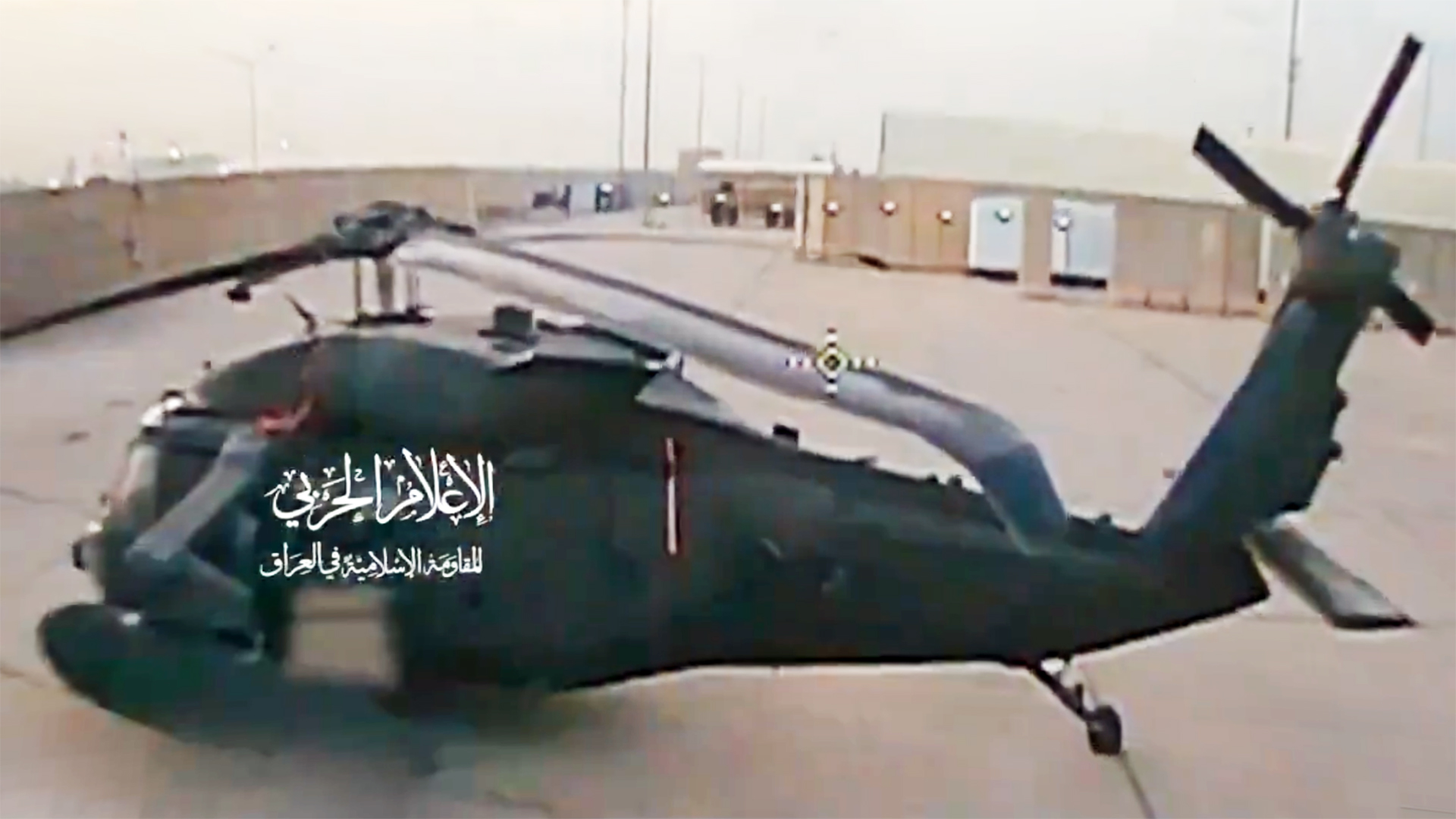
Drone Strike Destroys U.S. Army Black Hawk Helicopter in Iraq
FPV drone attacks on U.S. military assets in Iraq reveal critical vulnerabilities in force protection. The emerging unmanned aerial threat challenges traditional airbase security, signaling potential global risks to military aviation.
A U.S. Army Black Hawk helicopter was destroyed while parked in Iraq after being targeted by a First Person View (FPV) drone attack. This incident highlights the growing danger posed by small, maneuverable drones against critical military assets in conflict zones. No casualties were reported, but the damage to a key tactical helicopter underscores emerging challenges to U.S. force protection.
FPV drones have surged in accessibility and lethality in recent years, with non-state actors and hostile militias exploiting these low-cost platforms for targeted attacks. Battlefield deployments and rear-area airbases housing U.S. aircraft present an expanding target set. This drone assault in Iraq illustrates the evolving drone threat environment faced by U.S. forces amid regional tensions.
Strategically, the attack exposes glaring gaps in airbase defense and force protection protocols. It raises alarms about vulnerabilities U.S. and allied militaries face worldwide, especially in theaters with active insurgency or proxy warfare. The ability of small drones to carry explosives and evade traditional radar and countermeasures demands urgent tactical and technological responses.
The drone used was an FPV model capable of precise maneuvers and low-altitude approach, likely equipped to deliver explosive payloads. The Black Hawk helicopter, a critical utility and combat platform valued upwards of $15 million, suffered catastrophic damage rendering it inoperable. Force structure, protective barriers, and electronic warfare assets must adapt rapidly to counter this asymmetric aerial threat.
Going forward, the U.S. and its allies must accelerate deployment of counter-UAV systems, integrate advanced sensors and electronic jamming, and redesign secure aircraft parking to minimize drone attack damage. Failure to do so risks further attrition of air mobility capabilities overseas and at home, shifting regional power balances and jeopardizing operational readiness.