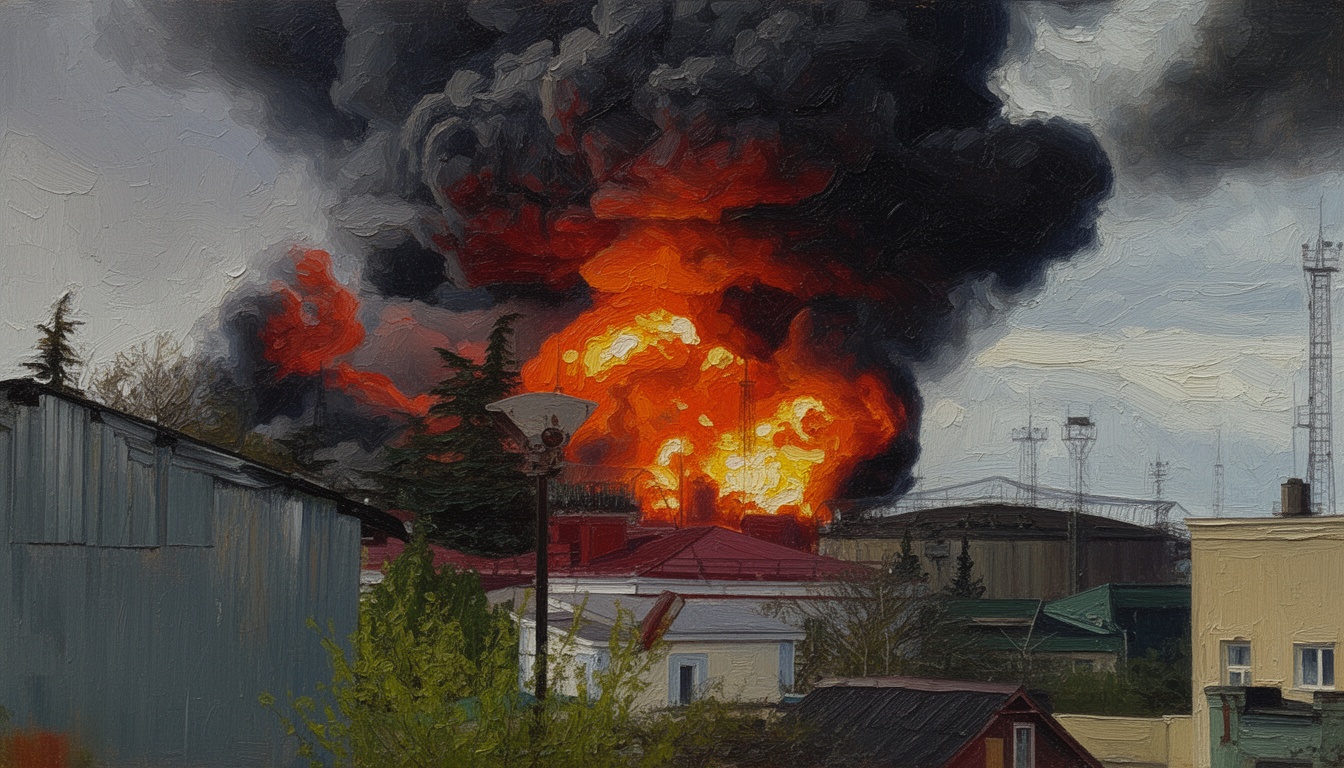
Drone attack sparks refinery blaze in Tuapse, Russia
A Ukrainian drone strike ignited a fire at an oil refinery in Tuapse, Russia. The incident raises regional security concerns and sparks environmental and economic ripple effects. Authorities are still assessing damage and potential spread of pollutants amid cooling efforts.
A Ukrainian drone strike has triggered a blaze at an oil refinery in the Russian port city of Tuapse. The explosion and ensuing fire were reported in the early hours, with emergency services deploying to contain the blaze. Local authorities have imposed perimeter controls and evacuated nearby zones as containment measures continue. No verified casualty figures have been released, and the exact scale of damage remains under assessment.
The Tuapse refinery sits within a region already affected by elevated tensions between Russia and Kyiv, and the incident compounds concerns about energy-security disruption in the Black Sea basin. The attack follows a pattern of cross-border strikes targeting critical energy infrastructure in the wider theater, underscoring the fragility of petrochemical supply chains. Officials have warned of possible environmental contamination and air-quality effects in the immediate vicinity.
Strategically, the attack signals a sustained effort to degrade Russia’s energy infrastructure, potentially extending impacts beyond Tuapse to regional markets and shipping lanes. Analysts will monitor whether this event prompts a rapid reallocation of refinery capacity, increased security around coastal facilities, or a shift in logistics toward inland refineries. The geopolitical reverberations may influence NATO-Russia deterrence postures and Open Sea corridor security.
Technical notes on the refinery and response are still developing. The facility reportedly handles multiple grades of refined products and supports regional fuel supply. Firefighting units, environmental teams, and crane-assist crews are coordinating in efforts to isolate the burning unit and prevent further spread. Preliminary data suggest a cooldown phase may extend several days, during which emissions monitoring and groundwater testing will be critical.
Looking ahead, the incident could recalibrate risk assessments for energy infrastructure in the region. If the fire damages key processing units or storage tanks, downstream fuel prices and supply security could tighten in affected markets. Emergency authorities will likely pursue enhanced protective measures around coastal refineries and accelerate maintenance turns at nearby plants to cushion potential shortfalls.