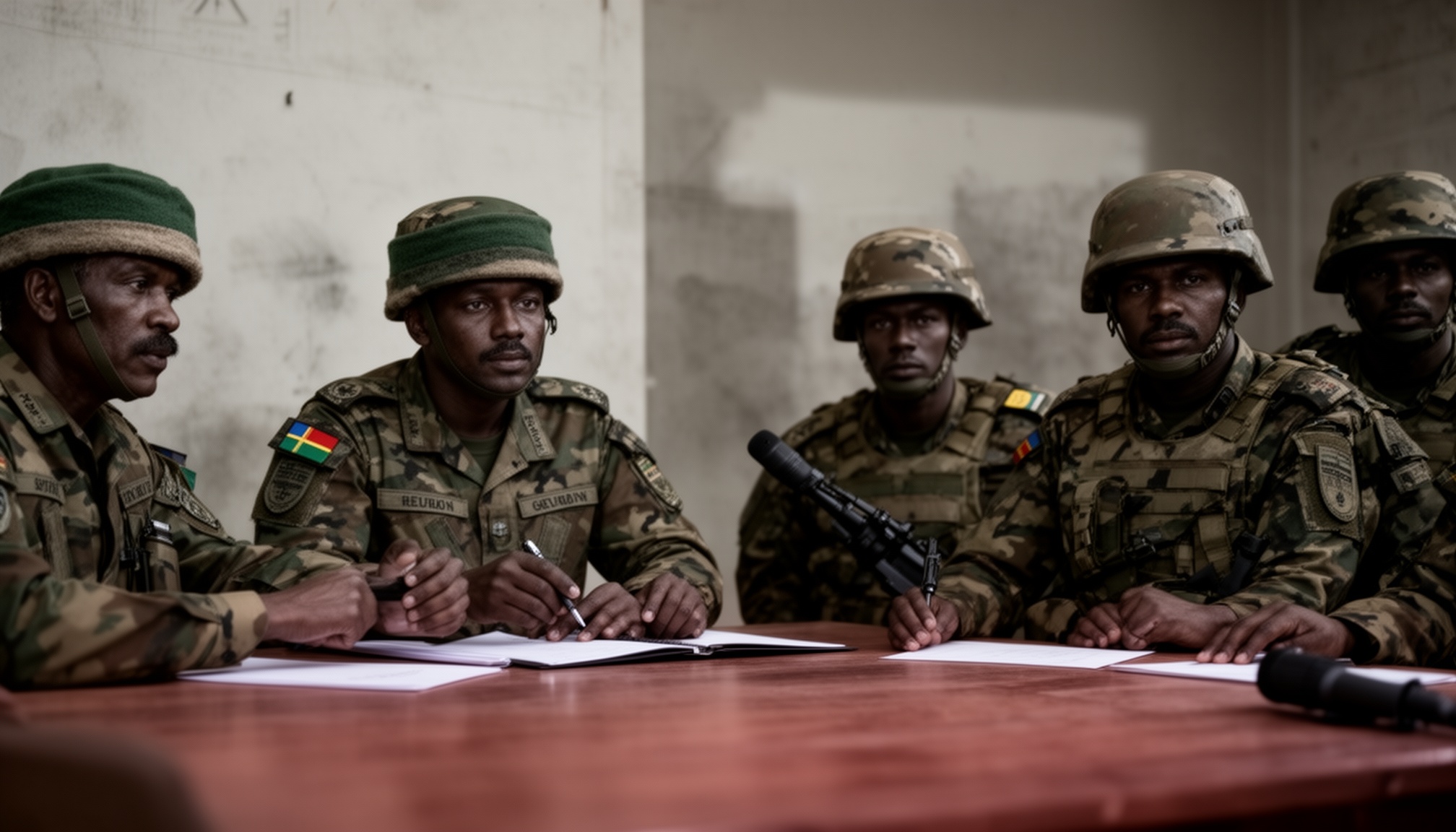
DRC Government, M23 Rebels Pledge Civilians Protection and Aid Deliveries
In Switzerland, the DRC government and M23 rebels agree to safeguard civilians and sustain aid convoys. A supervisory protocol for a ceasefire advances, signaling cautious progress in a fragile peace process. The talks underscore the international push to stabilize eastern Congo and reduce civilian suffering.
The DR Congo government and M23 rebels have publicly committed to protecting civilians and ensuring the safe passage of aid deliveries. The commitments were announced after high-stakes discussions in Switzerland, where negotiators pressed for practical measures on ceasefire oversight. The agreement marks a tangible shift from rhetoric to verifiable protections on the ground, even as mistrust persists between the sides. The international community welcomed the accord, while warning that implementation would determine its durability.
Context here matters: the DRC’s eastern provinces have endured years of violence, with civilian harm and displacement driving regional instability. The M23 faction, reborn after a period of relative quiet, remains a focal point for regional security dynamics involving Rwanda and Uganda. The Swiss talks were framed as a confidence-building step designed to reduce cross-border spillover and create space for broader negotiations. Observers note that the ceasefire oversight protocol could become a blueprint for other fragile ceasefires in Africa.
Strategically, the agreement seeks to constrain escalation and reduce humanitarian strain, which in turn supports regional disarmament and stabilization efforts. If civilian protections hold, it could enable more predictable aid flows and strengthen governance legitimacy in local administrations. However, incentives to violate the ceasefire persist, especially in contested supply routes and contested towns. The balance will hinge on monitoring capabilities, credible enforcement, and sustained international engagement.
Technical details are emerging: the ceasefire oversight protocol envisions joint monitoring teams, access corridors for humanitarian agencies, and rapid reporting mechanisms for violations. Specific numbers on patrols, roving observers, and the geographic scope of oversight are still being finalized, but the framework aims to deter violence at critical chokepoints. Military and civilian authorities alike are preparing for phased implementation, contingent on continued trust-building and transparency. The coming weeks will test the protocol’s resilience against provocations and battlefield dynamics.
Looking ahead, the immediate risk is a lull that could be exploited by spoilers, while the longer-term test is the consolidation of civilian protections into a lasting political settlement. The Swiss process could catalyze international support for disarmament, demobilization, and reintegration programs in the region. If the ceasefire gains credibility, donor states and agencies are likely to scale up humanitarian aid and development assistance. The next phase will hinge on rapid response to violations and the establishment of verifiable metrics for compliance.