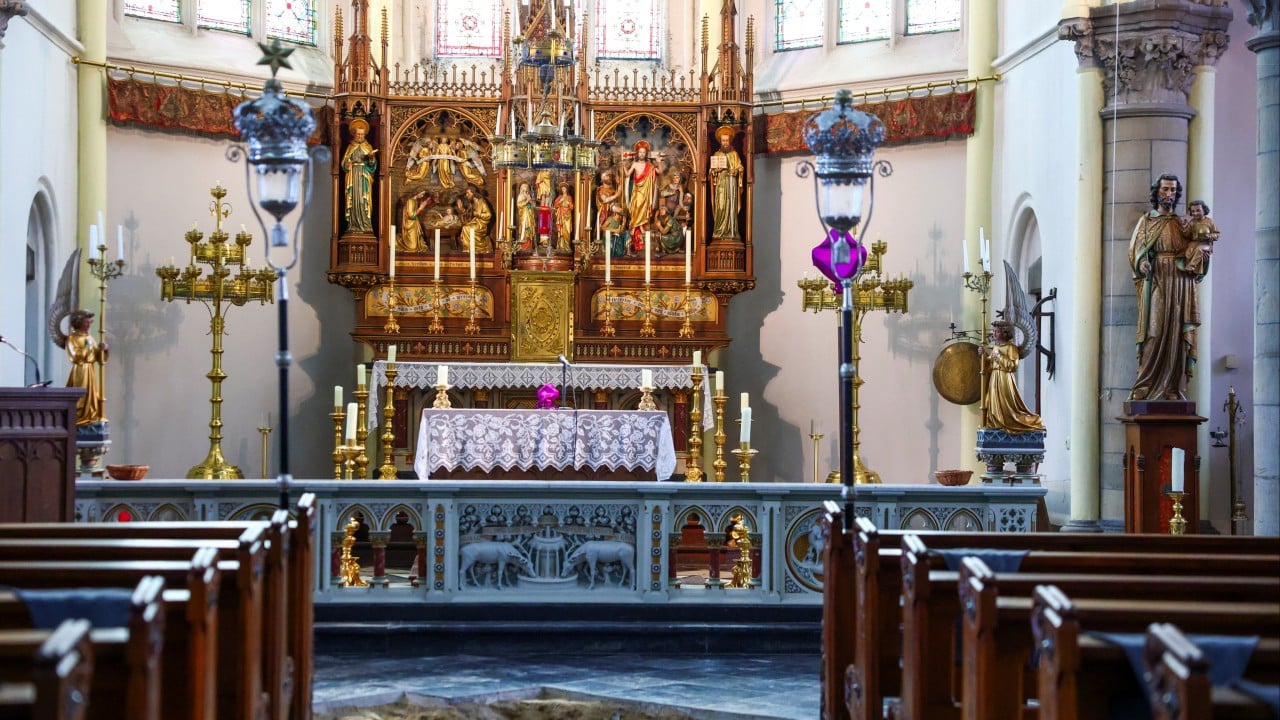
Discovery of Musketeer d’Artagnan's Remains in Maastricht Church
Archaeologists have potentially uncovered the skeleton of Charles de Batz de Castelmore d’Artagnan beneath the altar of St Peter and Paul Church in Maastricht. DNA analysis is underway to confirm the identity of the remains found following subsidence of the church floor.
Recent excavations at the St Peter and Paul Church in Maastricht, the Netherlands, have revealed a burial site beneath the altar floor containing skeletal remains believed to be that of the famed French musketeer Charles de Batz de Castelmore d’Artagnan. This discovery was made after a section of the church floor subsided, exposing a hidden grave under the tiles. Archaeological teams began detailed investigations to uncover more about the burial and initiated DNA testing protocols to establish a conclusive identification.
Charles de Batz de Castelmore d’Artagnan, a significant historical figure known for his role as a musketeer in the 17th century France, has been a subject of historical intrigue due to his legendary exploits and the cultural impact immortalized in literature. The potential recovery of his remains offers an opportunity to gain forensic insights into his life, death, and burial practices of the era.
From a strategic cultural heritage perspective, this finding underscores the value of archaeological preservation in historical sites and the role of multidisciplinary scientific approaches like DNA forensics in heritage identification. The responsible authorities are coordinating efforts between church officials, archaeologists, and forensic experts to ensure the remains are properly studied and conserved.
The discovery also holds significance for Franco-Dutch historical relations and provides a potential focal point for cultural tourism development in Maastricht. Should the remains be conclusively identified as d’Artagnan’s, it may prompt further scholarship and public interest into the 17th-century military figures whose legacies bridge historical fact and myth.
The excavation and research are being conducted by a Dutch archaeological institute in collaboration with French historical researchers, highlighting international cooperation in safeguarding and interpreting shared European heritage.