Direct US-Iran Talks Open in Pakistan as War Strains Persist
Direct peace talks between the United States and Iran are set to begin in Pakistan, with a US delegation led by Vice-President J.D. Vance. Tehran's team is headed by Parliament Speaker Mohammad Bagher Ghalibaf and Foreign Minister Abbas Araghchi. The talks mark the first direct negotiations since hostilities intensified weeks ago, underscoring mounting mistrust and the fragility of any durable agreement.
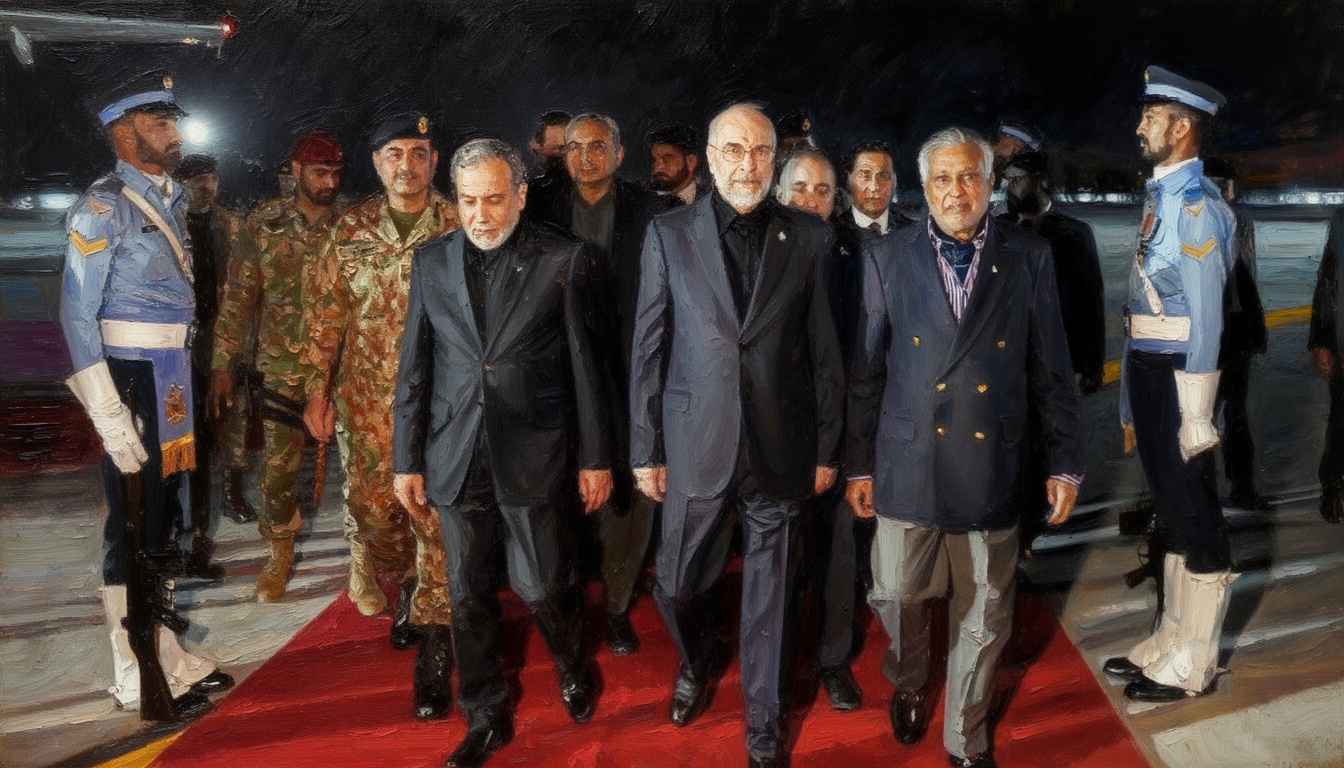
Direct peace talks between the United States and Iran are due to begin in Pakistan, with the US delegation led by Vice-President J.D. Vance arriving in Islamabad shortly. The Iranian side, led by Parliament Speaker Mohammad Bagher Ghalibaf and Foreign Minister Abbas Araghchi, landed in Islamabad early on Saturday. This will be the first direct negotiations since the war began, marking a potential shift from regional brinkmanship to formal diplomacy. The atmosphere surrounding the talks is characterized by deep mistrust on both sides, underscoring how hard it will be to translate dialogue into meaningful de-escalation.
Background to these talks includes a period of heightened tension and sustained exchanges over security guarantees, sanctions relief, and regional influence. Both sides have spoken publicly about their core red lines, while attempting to present their positions as constructive steps toward stabilizing the broader conflict. Pakistan has positioned itself as a neutral host, aiming to facilitate a process that could prevent a wider regional conflagration. Yet the path from ceremonial openings to substantive concessions remains uncertain given the recent history of miscalculations and retaliatory actions.
Strategic significance rests on whether direct engagement can produce a framework for restraint, or whether the talks devolve into a stalemate that validates reciprocal escalation. The talks could influence adjacent flashpoints, including allied deterrence calculations and the risk calculus of regional actors. They also test the resilience of international diplomacy in a landscape where multiple powers calibrate risk and reward in near real time. A breakthrough would alter the incentives for all involved and could recalibrate the balance of power in the Middle East.
Operational details remain scarce, but the delegation lineup signals a two-track approach: US guarantees and diplomatic verifications on the one hand, and Iran's demands for sanctions relief and regional security assurances on the other. Late-stage expectations hinge on whether a credible monitoring mechanism can be paired with verifiable restraints on proxies and strategic movements. Budgetary and logistical support for these talks in Pakistan indicates high-level political priority, though the cost of failure would be measured in renewed violence and fractured regional trust.
Looking ahead, analysts expect an extended negotiation trajectory with risk of relapse into crisis if any red lines are crossed. The immediate question is whether the talks produce a tangible pause in hostilities or simply a temporary lull that buys time for bargaining. The most likely near-term outcome is a staged set of confidence-building measures, followed by a formal framework that may require additional rounds to produce verifiable agreements and durable deterrence.