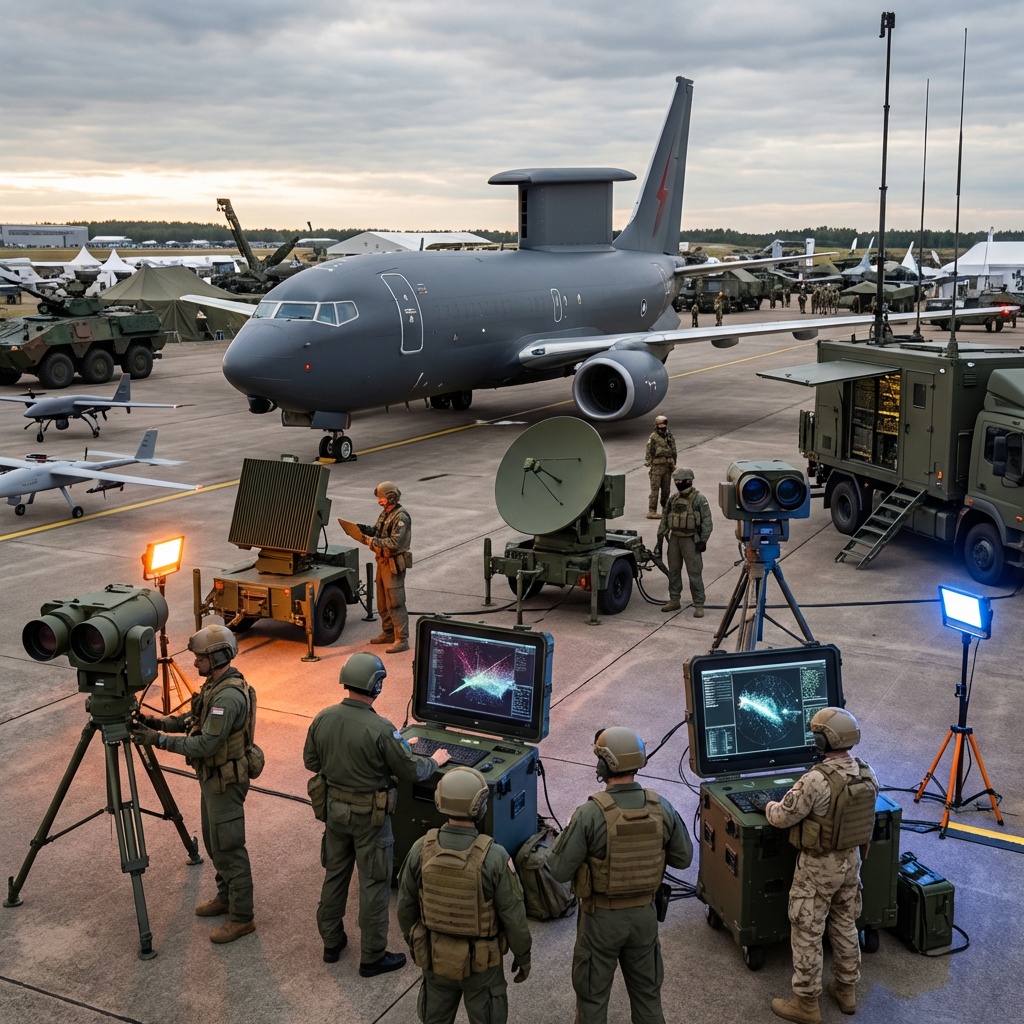
Department of Air Force Initiates Comprehensive Sensor Fusion Experiments
The Department of Air Force is launching extensive sensor fusion experiments aimed at improving situational awareness and combat effectiveness. Concurrently, Air Force leadership is advancing rapid prototype development for the E-7 Wedgetail platform.
The Department of the Air Force has announced the initiation of a series of sensor fusion experiments labeled 'Ringleader,' which seek to enhance the integration and interoperability of various sensor data sources for improved command and control capabilities. This initiative underscores a growing emphasis on network-centric warfare and the need to streamline data from multiple sources into cohesive operational plans. The integration of advanced algorithms and data analytics is expected to facilitate real-time situational awareness and predictive capabilities in dynamic combat environments.
In addition to the sensor fusion efforts, Air Force Secretary Troy Meink has indicated continued commitment to the development of the E-7 Wedgetail, with ongoing work on two rapid prototypes. While the E-7 is designed to serve as an airborne early warning and control system, it remains to be seen whether the Department will fully commit to the program moving forward. The E-7 Wedgetail builds on the capabilities of its predecessor, incorporating modern radar systems and enhanced processing power to enable effective tracking and engagement of air and ground targets.
The strategic significance of the 'Ringleader' program cannot be understated as it aligns with broader military objectives to leverage technology in complex multi-domain operations. As the threats faced by air forces evolve, the ability to rapidly assimilate data from a multitude of sensors—whether ground-based, airborne, or maritime—will be critical for maintaining tactical superiority. This initiative is part of a larger trend within the Department of Defense to refine sensor capabilities and foster integration across different platforms and services.
Developed by the Air Force along with collaborative stakeholders, the sensor fusion experiments promise to capitalize on advances in artificial intelligence and machine learning, potentially revolutionizing the way information is processed and utilized in combat scenarios. This could facilitate data assessment in milliseconds, enabling commanders to make informed decisions swiftly and efficiently.
Potential applications of this technology extend beyond immediate air combat scenarios and could be leveraged in joint operations, homeland defense, and allied engagements. The outcomes of the ongoing sensor fusion experiments may also influence future investments in defense systems, shaping the trajectory of military modernization efforts over the coming years as the Air Force seeks to adapt and overcome emerging threats in an increasingly complex security landscape.