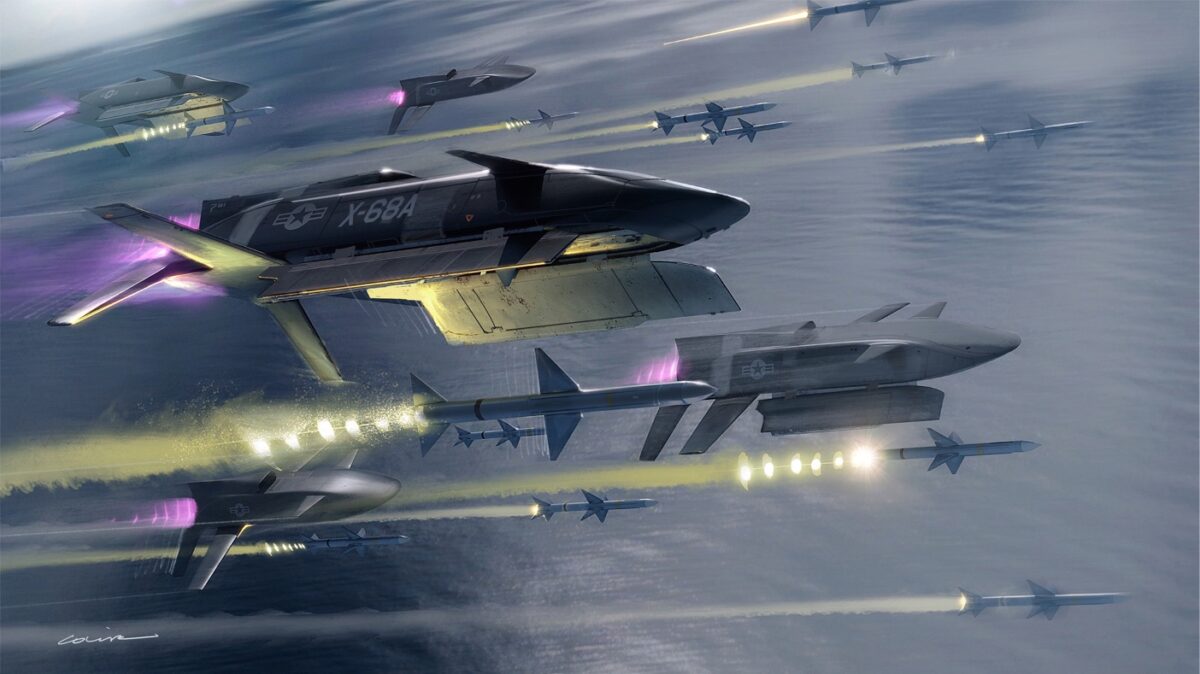
DARPA's LongShot Drone-Carrier to Revolutionize Aerial Warfare with F-15 Integration
The advancement of DARPA's LongShot program could disrupt aerial combat dynamics by integrating an unmanned system with air-to-air missile capabilities. This development signifies a strategic shift towards drone-centric warfare, impacting global military aviation strategies.
The United States Defense Advanced Research Projects Agency (DARPA) has made significant strides in its 'LongShot' program, which is focused on developing an unmanned aerial vehicle (UAV) capable of launching air-to-air missiles from existing manned platforms like the F-15 fighter jet. Recent reports indicate the program has met several crucial technical milestones, effectively transitioning from conceptual development to tangible prototype readiness. The air-launched vehicle is designed to enhance the combat effectiveness of manned fighters by extending their operational range and enhancing strike capabilities against airborne threats.
This development is increasingly relevant in a global context where advancements in unmanned systems are reshaping traditional notions of air superiority. The potential of the LongShot drone to carry advanced munitions and operate alongside manned aircraft serves to increase the asymmetrical edge of U.S. air power amid rising tensions in various regional conflicts, particularly involving peer and near-peer adversaries. The evolution towards combining manned and unmanned systems can alter engagement tactics, thereby strengthening U.S. defense posture in contested environments.
Key players in this landscape include the U.S. military, primarily through DARPA, and major defense contractors like General Atomics Aeronautical Systems, which are motivated by the need to maintain technological superiority and counter evolving air threats posed by nations such as Russia and China. As both of these countries enhance their aerial capabilities and develop advanced UAVs, the integration of systems like LongShot becomes critical for maintaining deterrence and ensuring effective response strategies in future conflicts.
The implications of this technology extend beyond U.S. borders; if successfully deployed, the LongShot program may trigger a renewed arms race in aerial unmanned systems, encouraging other nations to accelerate their advancements in similar technologies. A shift towards drone warfare not only alters conventional air tactics but also raises considerations regarding the rules of engagement, particularly in asymmetric warfare scenarios where decision-making cycles become increasingly automated.
Historically, the integration of new technologies into military platforms has led to paradigm shifts in warfare—illustrated by the introduction of missile technology during the Cold War. The LongShot program stands to follow this precedent, potentially setting the stage for future conflicts where the interaction between manned and unmanned systems is commonplace.
In conclusion, as the LongShot project approaches its first flight, the development signals a notable step in the evolution of aerial warfare. Analysts will be closely monitoring further progress, as successful deployment may compel reshaping existing aerial doctrines and strategies across the globe.