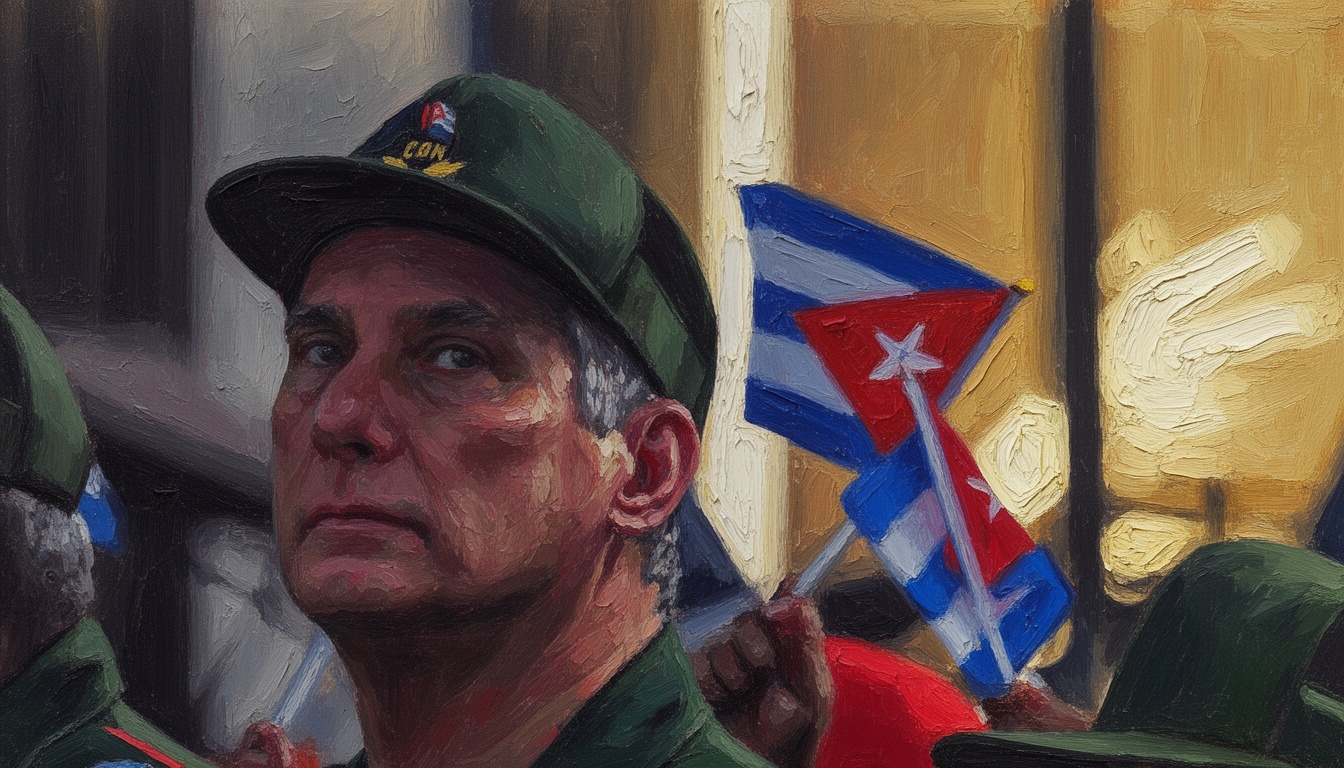
Cuba’s president says island does not wish for US aggression, but ready to fight
Cuban President Miguel Díaz-Canel stated Cuba does not seek confrontation but is prepared to resist any military aggression from the United States. The remarks came at a rally marking the 65th anniversary of the Cuban Revolution's socialist essence. The speech frames a high-stakes posture aimed at deterring external coercion and signaling resolve to domestic and regional audiences.
The core development is blunt: the Cuban president asserts that Cuba will not tolerate military aggression from the United States, while simultaneously declaring that the island stands ready to engage if such an escalation occurs. He framed the stance within a historic context, comparing current tensions to the moment on April 16, 1961, when the revolution’s resolve was on full display. The announcement comes at a large rally commemorating the 65th anniversary of Cuba's socialist revolution, underscoring political symbolism and domestic morale.
Background: The rhetoric taps into a decades-long trajectory of U.S.-Cuba antagonism, dating back to the early revolutionary period and intensified by post-Cold War sanctions, sanctions, and periodic spikes in rhetoric from Washington. By invoking 1961, the administration seeks to anchor the present posture in a narrative of resilience and continuity. The speech also serves as a message to regional observers about Havana’s willingness to deter external interference through a display of unity and readiness.
Strategic significance: The statement signals a deterrent posture intended to complicate any prospective U.S. options for coercive action. It places Cuba in a position where it can avoid miscalculation by making clear that the island will mobilize if threatened. For regional powers, the address could influence calculations around alliance commitments, coerce diplomats toward de-escalatory language, and shape neighbour states’ assessments of Havana’s defensive priorities.
Technical/operational details: No new weapons systems or budgets are announced. The focus remains political-military—noting readiness without detailing specific forces, deployments, or operational plans. The message is primarily about national resolve, with a tone designed to sustain domestic support and deter external threats through credible signaling rather than through disclosed military deployments.
Consequences/forward assessment: The speech is likely to heighten vigilance across Cuban security apparatuses and may influence U.S. political calculations in the short term. If Cuban deterrence remains credible, it could reduce the probability of a rapid military misstep but raise the risk of crisis dynamics should misperceptions arise. In the medium term, Havana may seek to diversify security partnerships to reinforce deterrence while avoiding provocative escalations that could trigger a crisis loop.