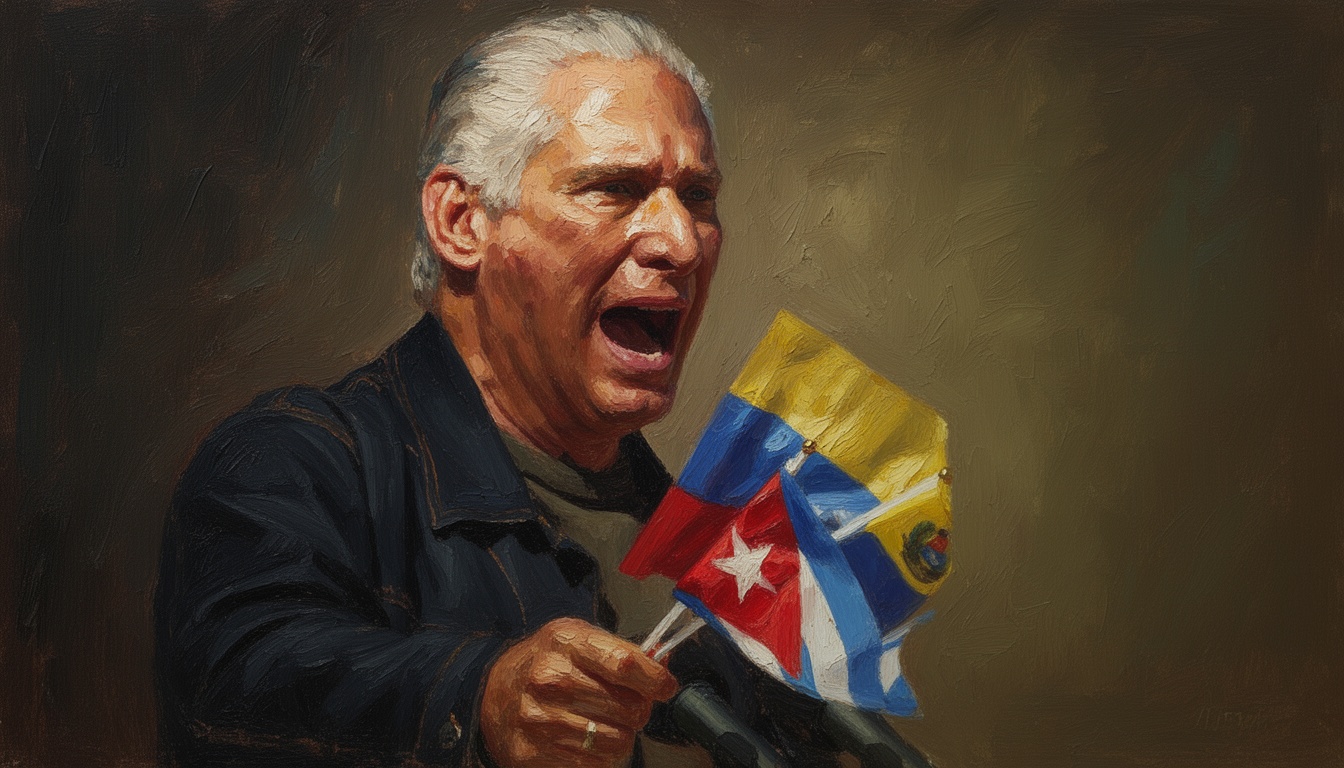
Cuban president warns US against invasion or regime change
Diaz-Canel asserts the US has no justification for a military strike or removal of his government. He warns of high costs and regional security impacts, while affirming Cuban self-defense if aggression occurs. The remarks signal ongoing high-stakes diplomacy and deterrence considerations in the Western Hemisphere.
The Cuban president issued a blunt warning to the United States, stating there would be no justification for a military attack on Cuba or for attempting to depose him. He framed any potential invasion as a costly enterprise with far-reaching regional security consequences. The rhetoric underscores Cuba’s resolve to defend its sovereignty, even as it cautions about the destabilizing effects of external action. No details on any imminent action were provided, but the message signals a sharpened stance on national survival.
The president’s comments come amid a long-standing adversarial dynamic with Washington, marked by sanctions, diplomatic freezes, and periodic spikes in rhetoric. He argued that external attempts to change Cuba’s leadership would fail to achieve their aims and would provoke a robust Cuban response. The interview framed Cuba as ready to defend itself, reflecting a broader regional discourse on deterrence and sovereignty in the Caribbean.
Strategically, the remarks place the United States and its regional partners on notice that Cuba views any attack or attempt at regime change as a direct security crisis. The statement channels Cold War-era messaging into a modern context where the island relies on political solidarity with allies and a narrative of resilience. The broader implication is a potential shift in how regional powers balance influence and respond to external coercion.
Technically, the president did not disclose military deployments or capabilities, but Cuban leadership has historically emphasized territorial defense, border security, and civil mobilization as components of deterrence. The dialogue does not reveal new weapons systems or unit movements, yet it reinforces Cuba’s emphasis on sovereignty and resistance to external disruption. Analysts will watch for any changes in troop posture, alliance dynamics, or sanctions that could alter stability along the Caribbean gateway.
Looking ahead, the risk calculus centers on how Washington recalibrates pressure versus engagement, and how Havana expands international advocacy to counter isolation. If tensions rise, regional actors may seek to reinforce diplomatic channels, humanitarian considerations, and crisis communication to prevent miscalculation. The immediate forecast is heightened vigilance, with both sides likely to prioritize messaging, deterrence, and leverage in any future confrontation.