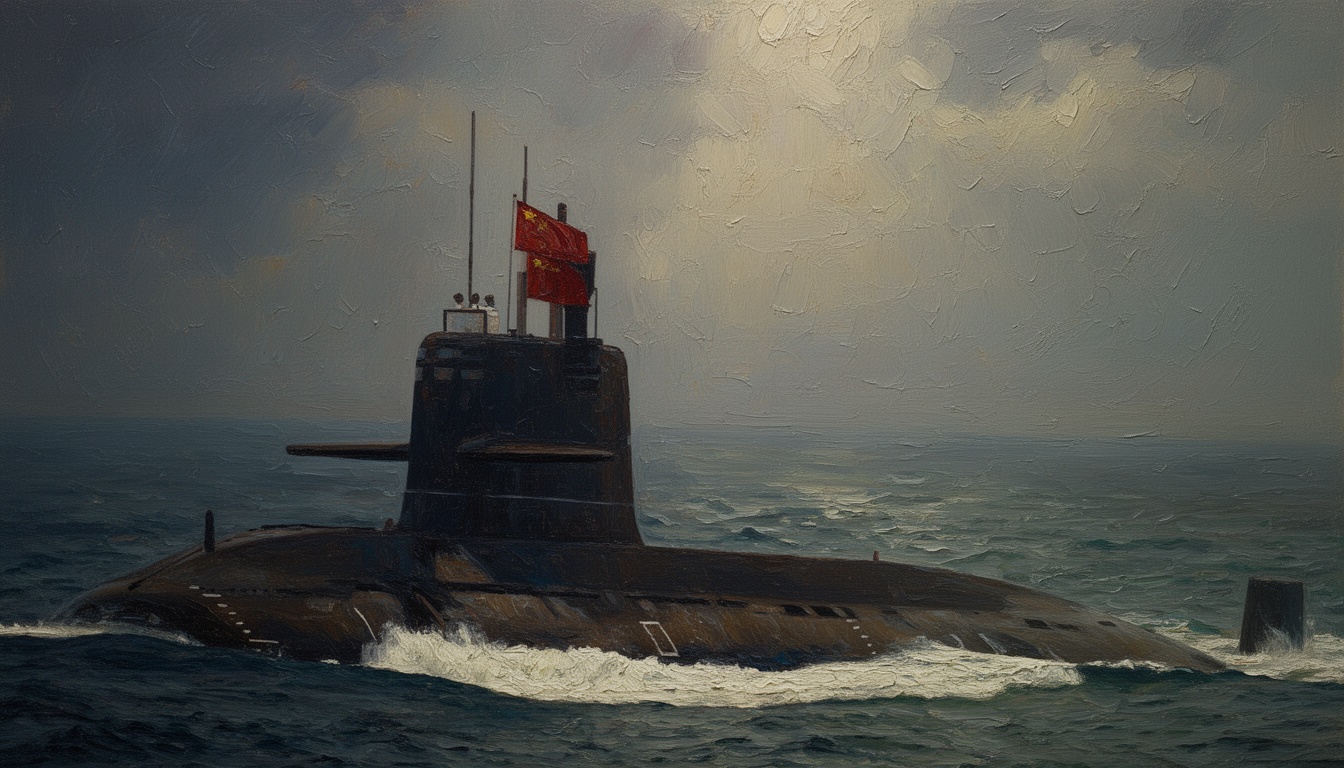
Crystal Enables GPS-Free Thorium Clock Navigation
A new fluorinated borate crystal emits ultraviolet light at 145.2 nm, enabling potential GPS-free navigation with thorium-based clocks. Researchers see implications for submarine and deep-space guidance, as ultra-precise, portable clocks advance in multiple nations.
The core development is blunt and real: researchers in Xinjiang have produced a crystal capable of generating ultraviolet light necessary for future thorium nuclear clocks. This technology could underpin GPS-free navigation for submarines and deep-space probes, offering an alternative to satellite-based positioning. The breakthrough centers on a fluorinated borate compound that pushes laser light toward a record-wavelength of 145.2 nanometres. This wavelength meets a critical requirement for these ultra-precise clocks being pursued in the United States, China, and other major research centers. The team reports the advancement in a high-profile materials science venue, signaling its significance for next-generation timing systems.
Background context shows this work sits at the intersection of quantum metrology and defense-relevant navigation solutions. Thorium-based nuclear clocks are theoretical constructs designed to offer extreme precision over traditional atomic clocks. The Xinjiang effort follows a broader, international push to develop portable, tamper-resistant timing devices that are independent of space-based infrastructure. If proven scalable, such clocks could reshape how submarines maintain stealthy, assured navigation in GPS-denied environments. The scientific community views this as part of a longer trajectory toward autonomous deep-space guidance as well as robust underwater platforms.
Strategic significance centers on resilience and strategic mobility. With GPS-denied environments a recurring risk for maritime and aerospace operations, GPS-free clocks could enhance stealth and endurance for submarines and deep-space missions alike. Nations pursuing advanced nuclear clocks could gain a competitive edge in timing accuracy, reducing vulnerability to spoofing or jamming. The development also elevates the role of advanced materials in defense-relevant technologies, potentially accelerating cross-domain integration with sensors and propulsion systems. The result could be a more distributed, less satellite-reliant framework for critical navigation.
Technical and operational details: the fluorinated borate crystal is designed to emit ultraviolet light at 145.2 nm, a demanding specification that challenges material stability and purity. This emission is intended to drive the light source needs of thorium-based clocks, which rely on precise nuclear transitions to maintain time with unprecedented stability. While the work is early-stage, the reported wavelength target indicates a path toward compact, lab-grade prototypes. The broader program in the field involves cross-disciplinary teams—chemists, photonics engineers, and metrologists—pursuing ruggedization, radiation hardness, and power efficiency for field deployment.
Likely consequences and forward assessment suggest a future where GPS-independent navigation becomes technically feasible for select platforms. Submarines could gain deeper, more reliable underwater navigation without surface signals, while deep-space probes could operate with reduced reliance on Earth-based timing signals. However, practical deployment will hinge on scale-up, integration with thorium clocks, and rigorous testing under operational conditions. Policymakers should monitor related energy and materials-security considerations as this line of research advances, potentially prompting international collaboration or competition in ultra-precise timing technologies.