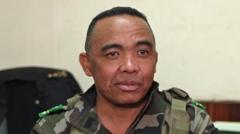
Crisis in Madagascar: Military Leader Dissolves Government Without Explanation
Colonel Randrianirina's sudden government dissolution raises alarm over political stability and military control, threatening regional security dynamics. This maneuver could destabilize Madagascar and empower competing factions.
Colonel Randrianirina has executed a surprise dissolution of the civilian government in Madagascar, a decision announced with no rationale provided. This abrupt action signals a potential increase in military authority amid rising tensions in the country. Such instability threatens a further erosion of political order following his initial power seizure last year.
The situation in Madagascar has been deteriorating since Randrianirina took control in 2022 following a coup that deposed the previous government. His administration has faced ongoing criticism for its authoritarian governance and lack of public support. The political landscape has been marred by unrest and opposition from various civic groups who demand the restoration of democratic processes.
This development is significant as it underscores the fragility of Madagascar’s political stability, which could have far-reaching implications for the Indian Ocean region. As the military consolidates power, the potential for civil unrest or violent opposition escalates, increasing risks for neighboring countries. The geopolitical stakes could also affect international maritime shipping routes, considering Madagascar’s strategic location.
Key actors in this unfolding crisis include Colonel Randrianirina and opposition groups that are increasingly vocal against military rule. Randrianirina's motivations may include a desire to quell dissent and eliminate potential political rivals before upcoming elections, which were already rife with uncertainty. Meanwhile, opposition factions may coalesce in response to this power grab, risking violent clashes.
Operational details remain sparse, but the recent military maneuvers indicate a tightening grip over state institutions. Control over security forces and critical infrastructure could enhance Randrianirina's power base, potentially leading to further military expenditures as he seeks to maintain order amidst growing dissent. International observers are concerned about the military's ability to manage any ensuing chaos.
The consequences of this dissolution could entail heightened civil unrest, with opposition groups possibly escalating protests or even armed resistance. Furthermore, this may prompt international condemnation and potential sanctions, further isolating Madagascar and exacerbating economic challenges.
Historically, this situation parallels other military coups in Africa that have led to prolonged conflicts, such as the events in Sudan and Mali where military leaders faced significant backlash from the populace. These precedents suggest a potential cycle of violence and instability that Madagascar might enter.
Looking forward, intelligence analysts should monitor the movements of opposition groups and any changes within the military ranks closely. Indicators of potential civil unrest, shifts in military support, and international responses will be critical in assessing the trajectory of Madagascar’s political landscape. Constant engagement with local stakeholders will also be necessary to gauge any evolving situations on the ground.