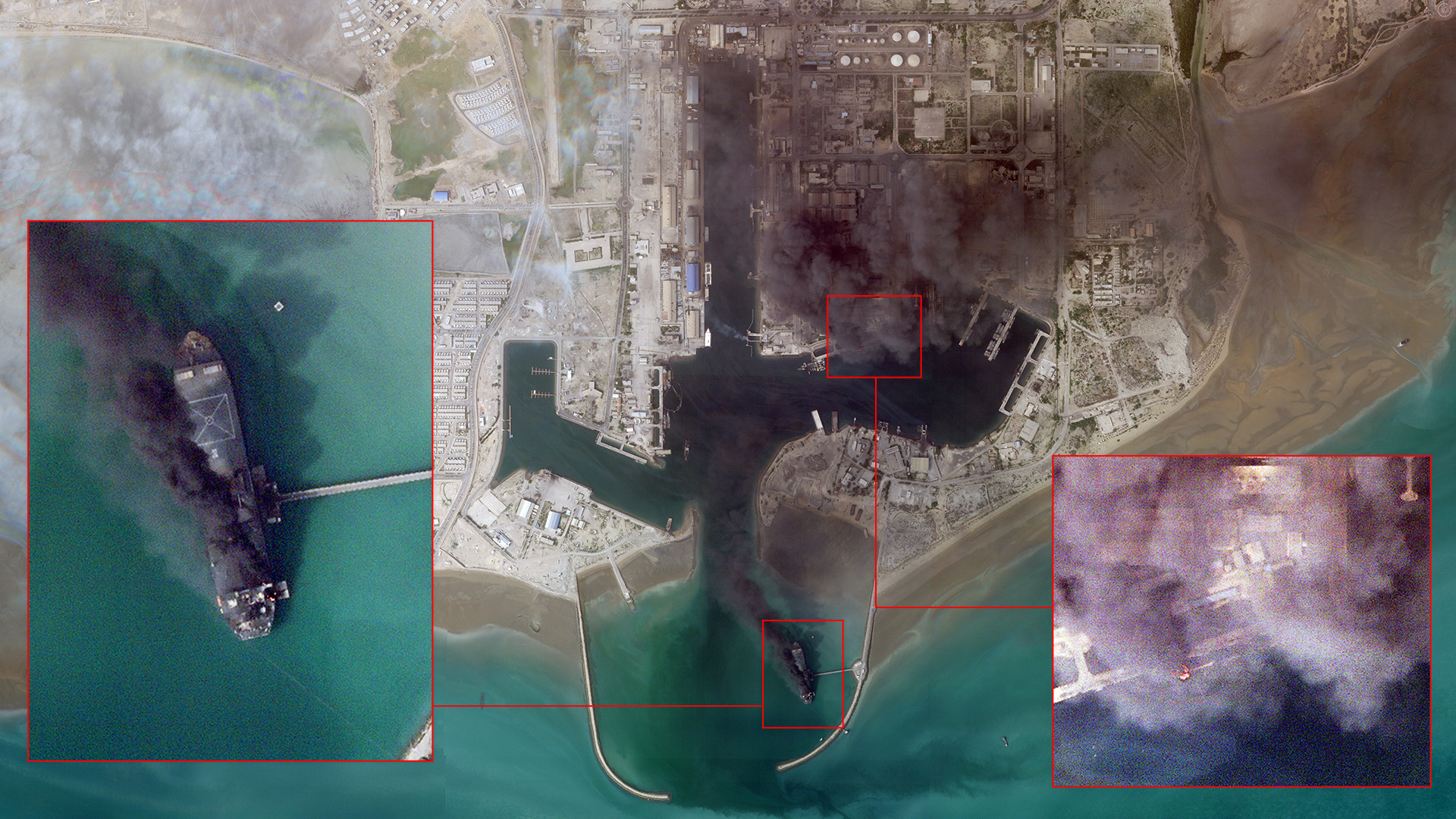
Crisis Erupts as Iran's Strategic Naval Base Attacked, One Frigate Aflame
A severe strike on Iran's key naval base near the Strait of Hormuz underscores escalating regional tensions and vulnerabilities in Iran's maritime defenses. This incident raises the stakes for key international shipping routes crucial to global oil supply.
Iran's vital naval base near the Strait of Hormuz was set ablaze during a coordinated attack overnight, resulting in extensive damage, including at least one frigate engulfed in flames. The assault has generated substantial black smoke visible over the key maritime chokepoint, which controls nearly a third of global oil shipment traffic. Casualties and the source of the strikes remain unclear amid Iran's immediate efforts to contain the fire.
The Strait of Hormuz has been a hotspot for conflict and tension, primarily due to Iran's confrontational posture toward its regional adversaries and the United States. Iran's growing naval capabilities have sought to assert influence over this critical waterway, leading to a series of confrontations in recent years. Previous incidents included drone attacks and confrontations with naval vessels from the U.S. and its allies, signaling a strategic rivalry that has escalated significantly since the U.S. withdrew from the Iranian nuclear deal in 2018.
This strike is significant as it reveals the vulnerabilities of Iran's naval assets in a region where the Iranian Revolutionary Guard Corps operates with impunity. Strategically, the attack threatens to destabilize already precarious maritime conditions in the Gulf, potentially disrupting oil supplies and heightening tensions among Gulf Cooperation Council states along with Western naval forces stationed nearby. The risk of further military escalation is substantial if Iran retaliates against perceived aggressors or escalates its confrontations with the U.S. Navy protecting regional shipping lanes.
Key actors involved are likely state-backed perpetrators seeking to undermine Iran's naval dominance in the Gulf. Countries like Israel and Saudi Arabia have openly expressed intentions to counter Iranian influence, while remaining potential outside players could include U.S. forces that have increasingly stepped up their presence in the region following previous provocations. This event also raises questions about the efficacy of Iran's maritime defense systems amid fierce Iraqi and Israeli air capabilities.
Technical aspects remain murky, but if we consider the attack's implications, it is essential to assess Iran's naval assets, including the frigates known as the Moudge-class, which are designed for anti-surface and anti-submarine warfare. The loss of any of these platforms, which reportedly cost over $300 million each, represents a significant dent in Iran's navy infrastructure. These ships are pivotal for maintaining Iranian deterrence capability in the Strait, emphasizing the urgency for Tehran to address its naval vulnerabilities.
The consequences of this attack may lead to a rapid escalation as Iran may seek reprisal against naval operations or assert control over trade routes to demonstrate strength. Increased drone activity or missile tests could be indicative of Iranian attempts to bolster its naval posture post-attack. Regional allies of Iran may be called to bolster support, further complicating an already convoluted geopolitical landscape.
Historically, similar attacks have led to spiraling confrontations; for example, the 1980s Tanker War saw U.S. Navy intervening extensively to protect shipping during Iran-Iraq conflict, resulting in heightened militarization. The increased presence of foreign naval forces in the Gulf could follow suit if the U.S. and allies perceive Iran as a direct threat to their interests, laying the groundwork for a broader conflict.
Moving forward, defense analysts should monitor the Iranian response closely, particularly any retaliatory strikes or enhancements to military readiness in the Gulf. Watch for maneuvers in the surrounding regions, particularly involving naval assets and potential coalition formations among Gulf allies. Target acquisition by Iranian forces against U.S. and allied vessels will become critical in avoiding a larger maritime conflict in the strategically vital Strait of Hormuz.