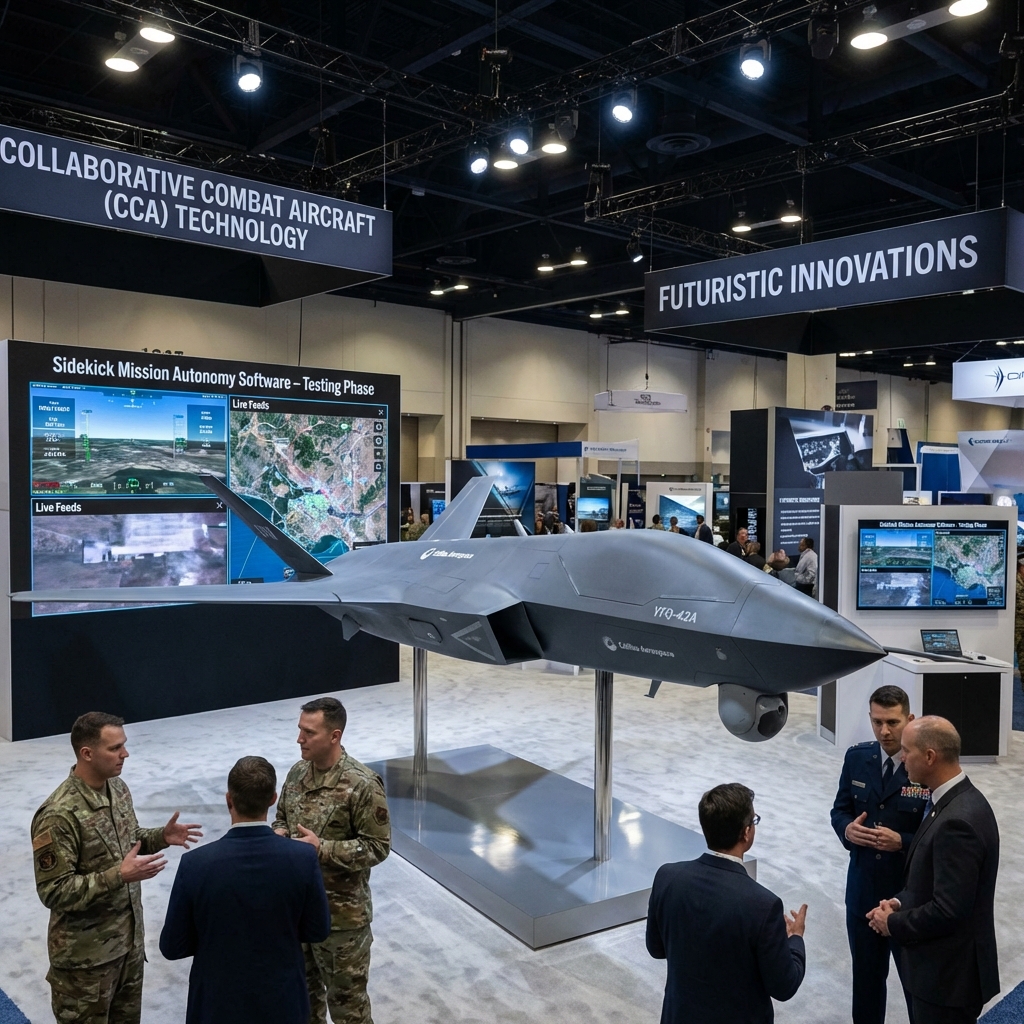
Collins Aerospace and GA-ASI Enhance CCA with Sidekick Testing
Collins Aerospace has successfully demonstrated its Sidekick mission autonomy software aboard the YFQ-42A uncrewed aircraft. This test marks a significant advancement in collaborative combat aircraft (CCA) technology.
Collins Aerospace has reported the successful completion of a critical flight test of its Sidekick mission autonomy software, integrated within the YFQ-42A uncrewed jet. This demonstration underscores the ongoing collaboration between Collins Aerospace and General Atomics Aeronautical Systems, Inc. (GA-ASI) to enhance the operational capabilities of uncrewed platforms, particularly in the context of collaborative combat scenarios where manned and unmanned systems work in concert.
The Sidekick software is designed to enable advanced autonomy and decision-making capabilities for uncrewed aircraft, facilitating complex missions with minimal human intervention. During the test flight, the YFQ-42A demonstrated its ability to autonomously navigate a series of predefined mission profiles while successfully executing tasks that typically require human oversight. The technical specifications include real-time data processing for situational awareness and the capacity to adapt flight maneuvers based on dynamic battlefield environments.
The strategic significance of this development is multifaceted. As military forces around the globe increasingly adopt networked and autonomous systems, the integration of sophisticated software like Sidekick positions Collins Aerospace and its partners at the forefront of innovation in uncrewed technologies. This capability could lead to enhanced mission success rates and the ability to undertake operations in contested environments where risk to human pilots is a concern.
Collins Aerospace, a prominent player in aerospace and defense, is leveraging its extensive experience in avionics and systems integration to push the boundaries of autonomous flight technologies. The YFQ-42A represents an advanced platform designed for exploration of future combat roles, with applications ranging from intelligence, surveillance, and reconnaissance (ISR) missions to strike operations in coordination with crewed assets.
Ultimately, the successful demonstration of Sidekick lays the groundwork for further enhancements in the operational capacity of uncrewed platforms. As military strategies evolve towards increased integration of swarming technologies and networked systems, advancements like these could play a pivotal role in shaping the future of air combat and joint operations across domains.