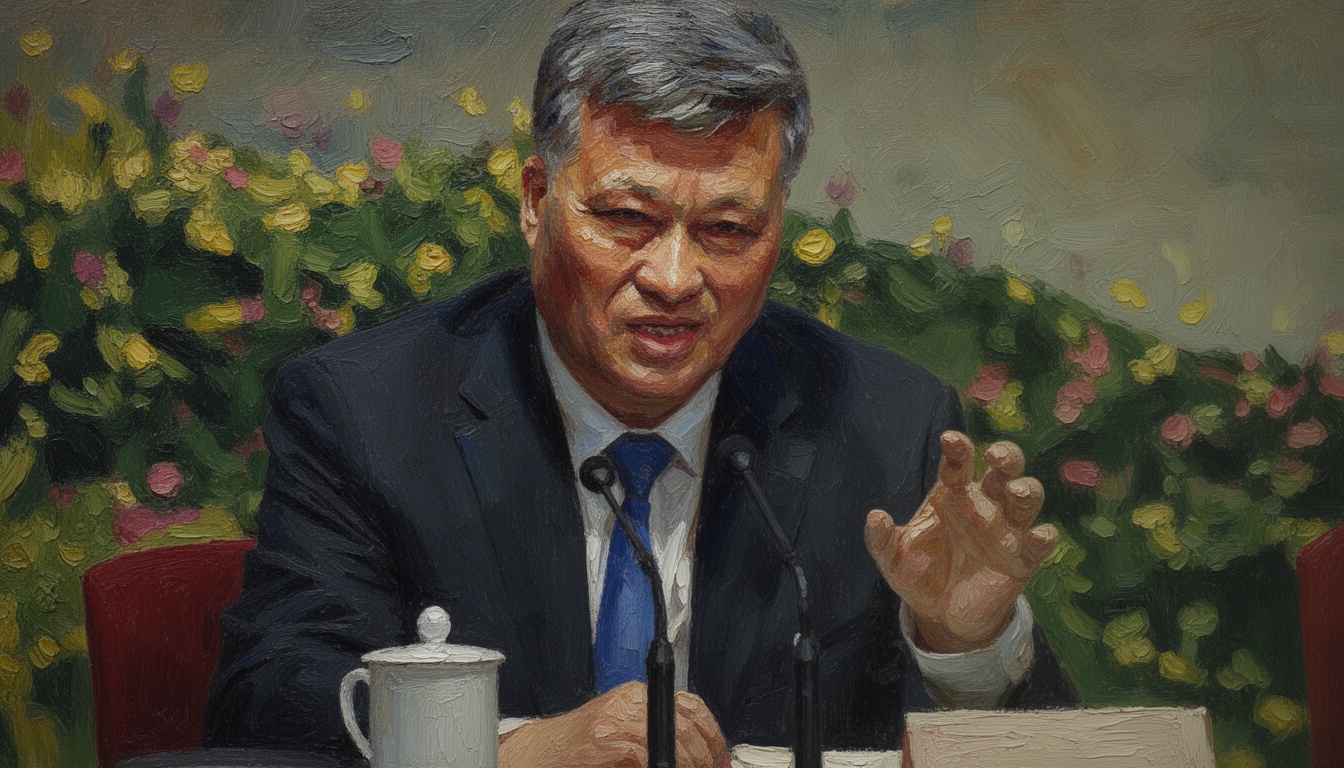
Chinese Politburo Member Ma Xingrui Faces Corruption Probe
Ma Xingrui, a top Chinese Politburo figure and former Xinjiang party chief, is under anti-corruption investigation, marking an unprecedented elite crackdown since 2022. This intensifies Beijing’s internal political purge and signals growing instability within China’s Communist Party leadership.
Ma Xingrui, a senior member of China’s Politburo and former Communist Party chief of Xinjiang, has been publicly placed under investigation by China’s anti-corruption watchdog, state-controlled Xinhua reported Friday. This makes him the third Politburo member probed since the current five-year term began in 2022, an extraordinary level of accountability at the highest power echelons.
The investigations also include He Weidong, former vice-chairman of the Central Military Commission (CMC), who has been expelled from the party amid serious allegations. These high-level inquiries reflect an intensifying anti-corruption campaign within Beijing that targets not just low-ranking officials but the top tier of political and military leadership.
Strategically, this purge destabilizes the tightly controlled Chinese Communist Party’s unity and exposes potential fractures in the governing elite. Ma Xingrui’s previous command over Xinjiang, a critical security flashpoint involving ethnic tensions and global scrutiny, places the probe into the wider context of China’s ongoing internal security and political control challenges.
The Chinese Communist Party’s elite bodies, including the Politburo and CMC, are typically insulated from public disciplinary actions. The emergence of multiple allegations at these levels is highly unusual and may signal internal factional struggles or efforts to consolidate power by Xi Jinping’s leadership.
Looking ahead, this unprecedented level of elite purging could lead to further unrest within the party ranks and complicate China’s domestic stability and foreign policy. The military and regional governance frameworks may face shifts as new leadership fills these vacuums, impacting China’s regional security posture in sensitive areas like Xinjiang and beyond.