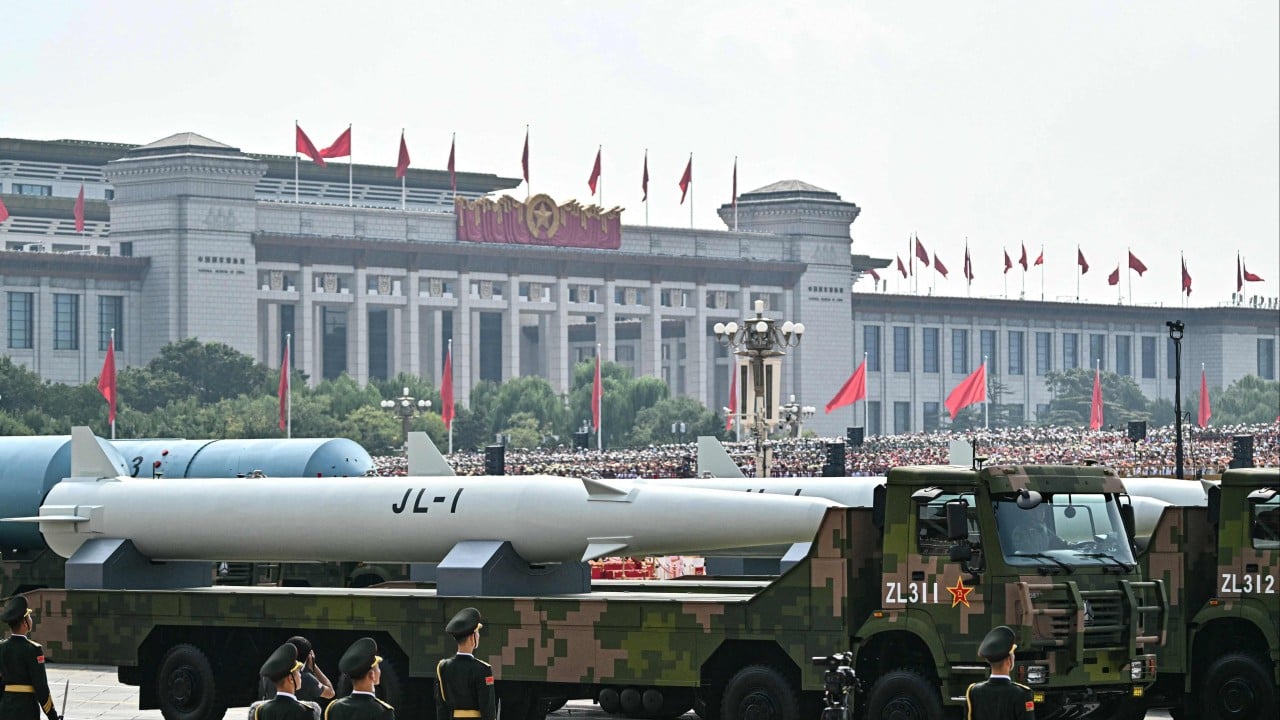
China's Nuclear Arsenal Vulnerable at Centralized Storage Facility, US Report Reveals
China's nuclear strategy faces critical vulnerabilities as most warheads are stored at a single site, raising significant risks in potential conflicts. The concentration of these warheads underscores a hazardous reliance on one facility during escalating tensions.
China's nuclear strategy may be dangerously compromised, as a recent report indicates that the majority of its nuclear warheads are concentrated at a single facility in the northwest region. This centralized storage poses a significant risk, particularly in the event of military conflict. The findings, published by the US Air University's China Aerospace Studies Institute, raise alarms regarding the security and logistical management of the People’s Liberation Army Rocket Force as it pertains to its nuclear capabilities.
The report stems from open-source intelligence, analyzing the structural organization of China's nuclear arsenal. Historically, China has maintained a relatively small nuclear stockpile contrasted with the United States and Russia, favoring a strategy involving a minimal deterrent posture. However, the rapid expansion and modernization of its nuclear capabilities over the past decade have resulted in a dangerous reliance on this solitary storage site, which could be a prime target during hostilities.
This development is significant, as it exposes strategic risks and vulnerabilities within China's nuclear deterrent strategy. If adversaries were to identify and target this facility, the effectiveness of China’s second-strike capability could be severely undermined. Furthermore, the lack of redundancy in its nuclear storage complicates strategic deterrence, possibly emboldening rival powers and escalating regional tensions in Asia.
Key actors in this scenario include the Chinese Communist Party, which seeks to project strength through nuclear capabilities while minimizing perceived weaknesses. Meanwhile, the US Department of Defense and NATO allies closely monitor this development. The motivations are clear: a robust nuclear arsenal is critical for China's aspiration to assert dominance in East Asia, but this concentration also exposes vulnerabilities that adversaries could exploit.
From a technical perspective, the report highlights the logistical elements of warhead management within the People’s Liberation Army. While exact figures remain classified, estimates suggest that China could possess approximately 400 nuclear warheads, with a substantial number of these housed at this single site. Such a concentration raises operational risks during conflict scenarios where a surprise attack could devastate its nuclear deterrent capability.
The consequences of this revelation could be far-reaching, with potential escalation vectors including increased military readiness from neighboring states and a recalibration of strategic postures among regional powers. Additionally, this centralization could draw the attention of non-state actors with an interest in disrupting nuclear stability, further exacerbating security challenges in the region.
Historically, similar vulnerabilities have played pivotal roles in nuclear policy debates. The Soviet Union faced similar flaws in its nuclear strategy during the Cold War, where centralized locations for warhead storage became prime targets. Lessons from that era underline the importance of facility diversification as a countermeasure to potential first-strike scenarios.
Looking ahead, intelligence analysts will need to monitor shifts in China's nuclear policy and any adjustments to its storage strategies. Critical indicators include changes in military exercises, satellite imagery of storage facilities, and rhetoric from Chinese leadership regarding deterrence capabilities. This development necessitates close scrutiny by defense analysts and policymakers worldwide, as the implications extend beyond China to global security dynamics.