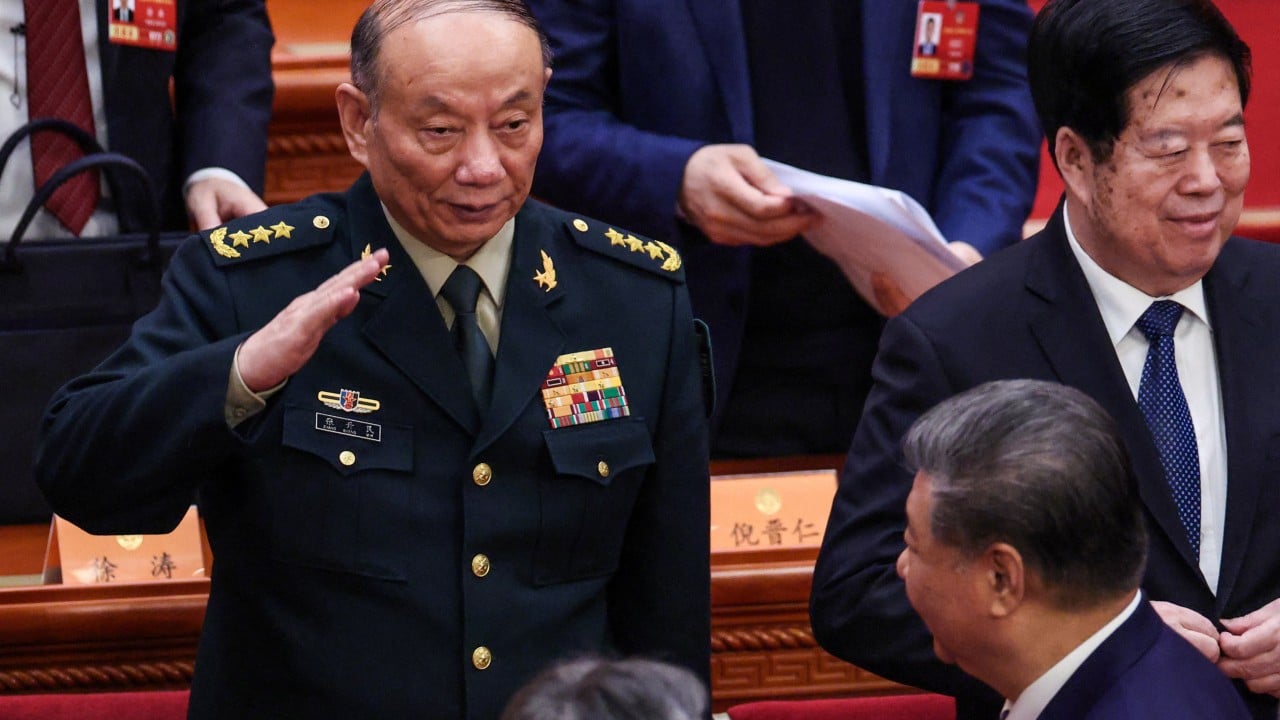
China's Military Leader Calls for Urgent Political Purge Amid Corruption Crisis
China's military hierarchy is undergoing intensified scrutiny as calls for political rectification escalate, coinciding with corruption probes. This development poses significant risks to the stability and effectiveness of the People's Liberation Army (PLA).
Zhang Shengmin, the last uniformed general on China's Central Military Commission, has demanded an urgent deepening of 'political rectification' within the People's Liberation Army (PLA) as the country prepares for the centenary of the armed forces. This comes in the wake of extensive corruption investigations that have implicated numerous high-ranking military officials, raising questions about the integrity and loyalty of the PLA at a critical moment in national defense strategy.
Historically, the PLA has been plagued by corruption issues, particularly since Xi Jinping came to power in 2012 and launched a wide-ranging anti-corruption campaign. This campaign has targeted military leaders and has resulted in the prosecution of dozens of high-ranking officers. Zhang's commentary highlights not just the ongoing challenge of corruption but also the implications of shifting loyalties as Xi consolidates power while aiming to modernize the military.
The call for political rectification is significant as it signals an internal crisis that further exposes vulnerabilities within the PLA. This scrutiny may weaken operational effectiveness, particularly at a time when China is asserting its military might in the South China Sea and around Taiwan. The ongoing issues suggest a military potentially more factionalized and concerned with internal loyalty than external threats.
Key actors, including Zhang Shengmin and Xi Jinping, are motivated by the need to solidify the Communist Party's control over the military amidst mounting civilian oversight and scrutiny. Zhang’s insistence on political rectification indicates a growing awareness of the need for ideological loyalty over military capability, which may further entrench a culture of compliance rather than effectiveness.
Operationally, the PLA’s modernization efforts may be at risk due to the distraction and resources required for internal purges. China has allocated nearly $250 billion towards military spending in 2023, aiming to enhance its naval and aerial capabilities. However, if resources are diverted to internal investigations and political loyalty tests, the military’s strategic objectives could falter.
Likely consequences include a more insulated PLA, which might develop a suspicion-based operational culture inhibiting joint operations or effective international engagement. An already tense military posture could escalate, leading to confrontation as the PLA struggles to balance internal purges with its need for preparedness.
Historically, precedents exist where military purges have led to chaotic restructuring, notably during the Cultural Revolution, creating operational pitfalls that impacted China’s military readiness. The modern implications of politicized military actions carry the weight of these historical lessons as they could deter world powers from engagement or provoke aggressive posturing from regional rivals.
Going forward, analysts should monitor the outcomes of these political rectification efforts, especially concerning leadership stability and operational readiness. Indicators should include the outcomes of ongoing anti-corruption investigations, shifts in military leadership, and any strategic changes in PLA operations in the South China Sea and Taiwan Strait.