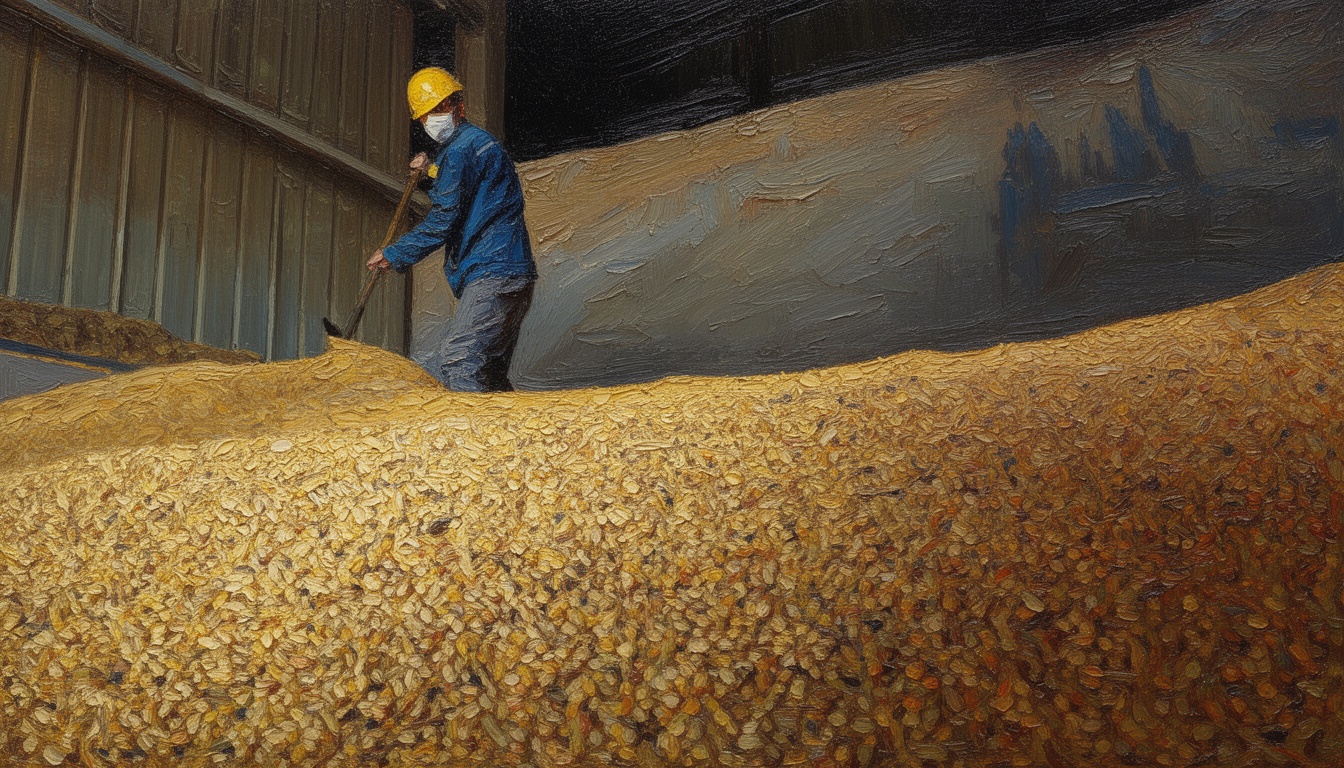
China Warns Food Security Risks as Iran War Threatens Supplies
China cautions that its food security could be exposed to global price swings from extreme weather or broad conflict. Beijing notes structural weaknesses in processing and crop diversity, while international analysis ties food insecurity to the US-Israel stance on Iran. The issue underscores how geopolitics can ripple through supply chains and commodity markets worldwide.
China’s food security is at risk from a combination of climate volatility and ongoing great-power tensions over Iran. Beijing asserts the nation has adequate staple grain stocks, yet the broader food sector remains fragile due to structural flaws. In particular, the processing industry is underdeveloped and high-quality crop varieties are unevenly available across regions. This mix of vulnerabilities could amplify price spikes if global markets tighten or disruption deepens.
Historical patterns show China’s heavy reliance on imports for certain foodstuffs can magnify external shocks. Weather extremes, from droughts to floods, can slash yields and reroute global trade flows, while geopolitical frictions can disrupt shipping lanes and trade corridors. Even with domestic buffers, China’s trade partners and logistics networks link its food security to the global balance of supply and demand. The government has repeatedly signaled reforms to strengthen domestic resilience, but progress remains uneven across provinces and commodities.
Strategically, the issue sits at the intersection of food policy, industrial modernization, and global risk. A widening geopolitical rift over Iran further complicates the outlook for commodity markets, potentially driving volatility in grains, soy, and edible oils. As prices rise, domestic inflationary pressures could force policy responses ranging from subsidies to investment in storage and logistics. The broader risk is a cascading effect where commodity shocks feed into social stability and diplomatic calculations.
Operationally, the Chinese state continues to push agricultural modernization, storage expansion, and diversification of supply sources. Data suggest ongoing investments in grain handling facilities, cold chains, and seed innovation, though progress varies by region. Budgets for rural development and food security programs appear to be growing, signaling a deliberate attempt to dampen external shocks and sustain export capacity. Market analysts expect that resilience will depend on both domestic reforms and the ability to navigate international supply disruptions.
The likely consequences include sharper policy focus on strategic reserves, improved crop genetics, and greater emphasis on regional supply security. If global tensions persist, price volatility could threaten urban affordability and rural livelihoods alike. In the near term, China is likely to favor risk-based import strategies, diversified suppliers, and intensified investments in domestic production to cushion any shocks to global food systems.