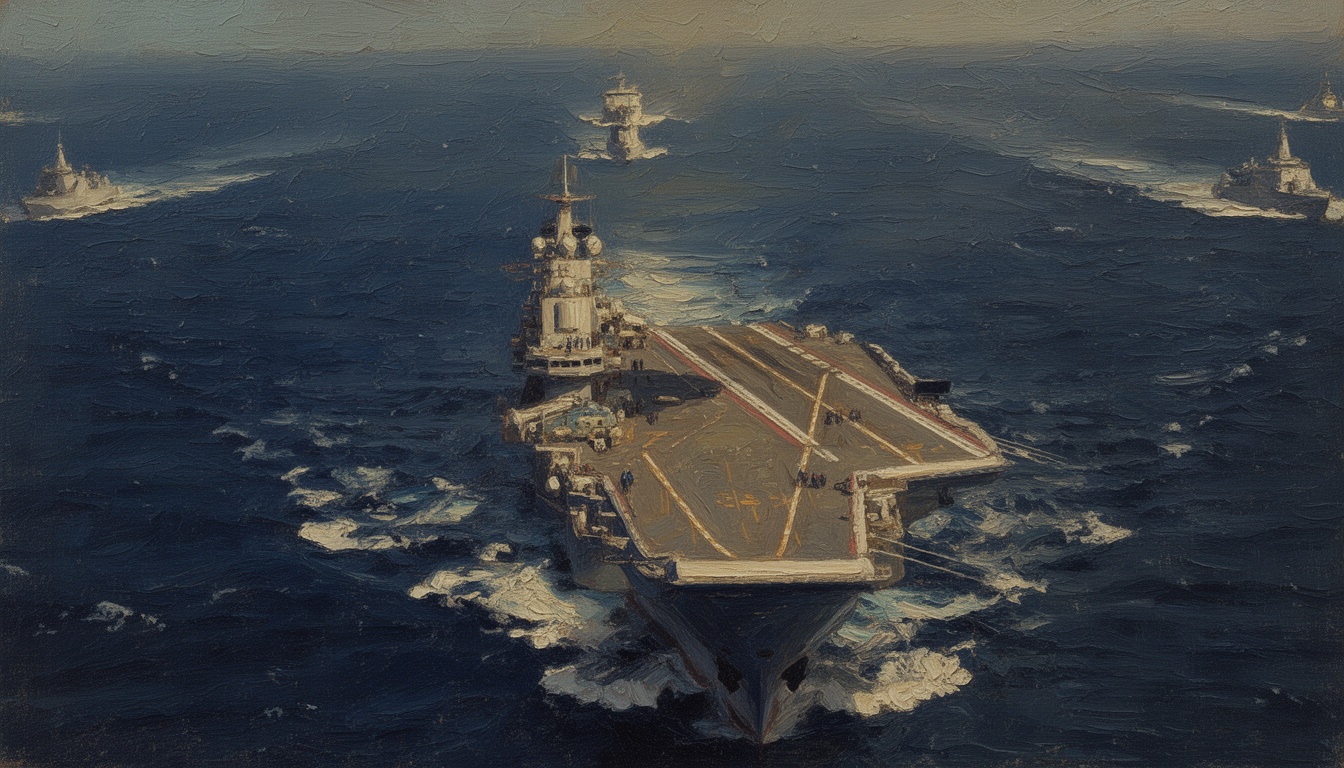
China stages navy drill as US and Philippines embark on Balikatan 2026
China conducts a naval drill east of Luzon amid Balikatan 2026, signaling intensified pressure around Taiwan and the U.S.-Philippines security architecture. Beijing frames the exercise as a regional response to shifts in security dynamics. The move underscores rising maritime frictions and the risk of miscalculation in the Western Pacific.
The People’s Liberation Army (PLA) has announced a naval drill east of Luzon in the waters off the northern Philippine island, a clear signal as Balikatan 2026 unfolds with U.S. and Philippine forces. The exercise appears timed to coincide with the annual Indo-Pacific security drills hosted by Manila and Washington, creating a visible demonstration of power in a high-tension sea area. The PLA Southern Theatre Command stated that the fleet conducted maneuvers in response to the current regional security environment, portraying the action as a necessary measure to safeguard regional stability.
Analysts view the drill as part of a broader pattern of maritime coercion and signaling by Beijing designed to complicate alliance-based deterrence. The timing directly challenges the balance of power around Taiwan, highlighting Beijing’s willingness to operate in waters close to Philippine territory while Western-aligned forces conduct joint exercises. This creates a read-across for potential escalation, as both sides test thresholds for routine naval activity near critical nodes along the first island chain.
Strategically, the drill tests both the diplomatic and military resilience of allied alliances in the region. Washington has repeatedly framed Balikatan as a capability-building exercise that also signals extended deterrence to partners facing Beijing’s assertiveness. By placing a naval show of force near Luzon, Beijing seeks to normalize more assertive maritime behavior near a U.S. ally, raising questions about future freedom-of-navigation operations and crisis management amid rising regional tensions.
Technically, the PLA’s move involved a fleet deployment—described as a “naval fleet” by the Southern Theatre Command—likely encompassing destroyers or frigates, anti-submarine warfare assets, and air cover from maritime patrol aircraft. The precise composition and duration of the drills remain undisclosed, but such exercises typically emphasize surface warfare readiness, anti-ship strike planning, and simulated coastal defense operations. In parallel, Balikatan 2026 emphasizes interoperability, live-fire training, and joint-reaction drills, highlighting the potential for rapid scale-up if crises erupt.
The consequences point toward a more volatile security environment in the Western Pacific, with both sides signaling commitments that could raise the risk of miscalculation. For Manila, the drill mirrors a delicate balancing act between reassuring security partners and avoiding provocation with Beijing. For Washington, it reinforces extended deterrence while narrowing the space for Beijing to operate freely in adjacent waters. Analysts forecast greater patrol density and more frequent military signaling by both sides in the near term, increasing the probability of inadvertent incidents that could escalate into broader confrontation.