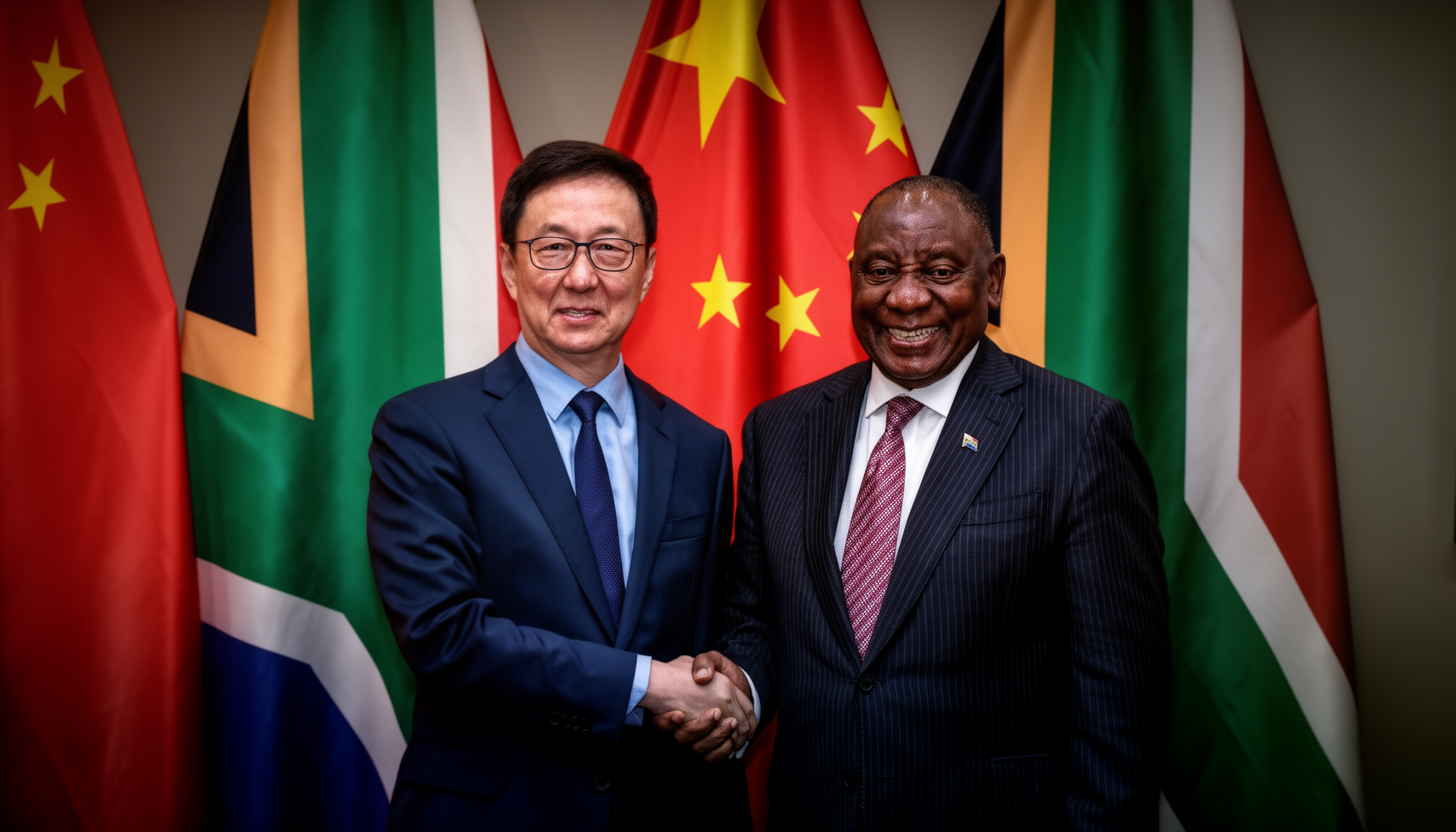
China Moves to Shield South Africa After US Cuts G7 Invitation
China vows full support for South Africa as US pressures allies to exclude Pretoria from key summits. This deepens divisions between major powers over influence in Africa and signals Beijing’s growing readiness to counter Western diplomatic isolation tactics.
China announced firm backing for South Africa after Pretoria’s President Cyril Ramaphosa was uninvited from the Group of Seven (G7) summit in France. This followed US-led pressure on G7 members to snub Ramaphosa, aiming to isolate South Africa diplomatically over its stance towards Russia.
The original G7 invitation came directly from French President Emmanuel Macron during the 2023 G20 summit in Johannesburg. Its withdrawal marks a rare escalation of US-European coordinated diplomatic sanctions targeting an African leader. Pretoria formally protested the disinvitation.
Strategically, the episode underscores intensifying rivalry between Washington and Beijing for influence on the African continent. China presents itself as South Africa’s “reliable friend,” pledging continued economic and political assistance while the West pursues punitive measures. This push-pull shapes regional power dynamics amid ongoing geopolitical fault lines.
Technically, South Africa holds a pivotal role as the continent’s most industrialized economy and a gateway to broader African markets. Beijing’s support ties into extensive Belt and Road infrastructure projects and strategic mineral partnerships crucial for technology supply chains. The G7 snub risks pushing Pretoria closer into China’s orbit at a critical juncture.
If China successfully fills the vacuum left by Western isolation, it will empower Beijing’s narrative of alternative global leadership and weaken Western diplomatic cohesion. South Africa’s maneuvering is a bellwether for shifting alliances across Africa, adding complexity to an already volatile global security landscape.