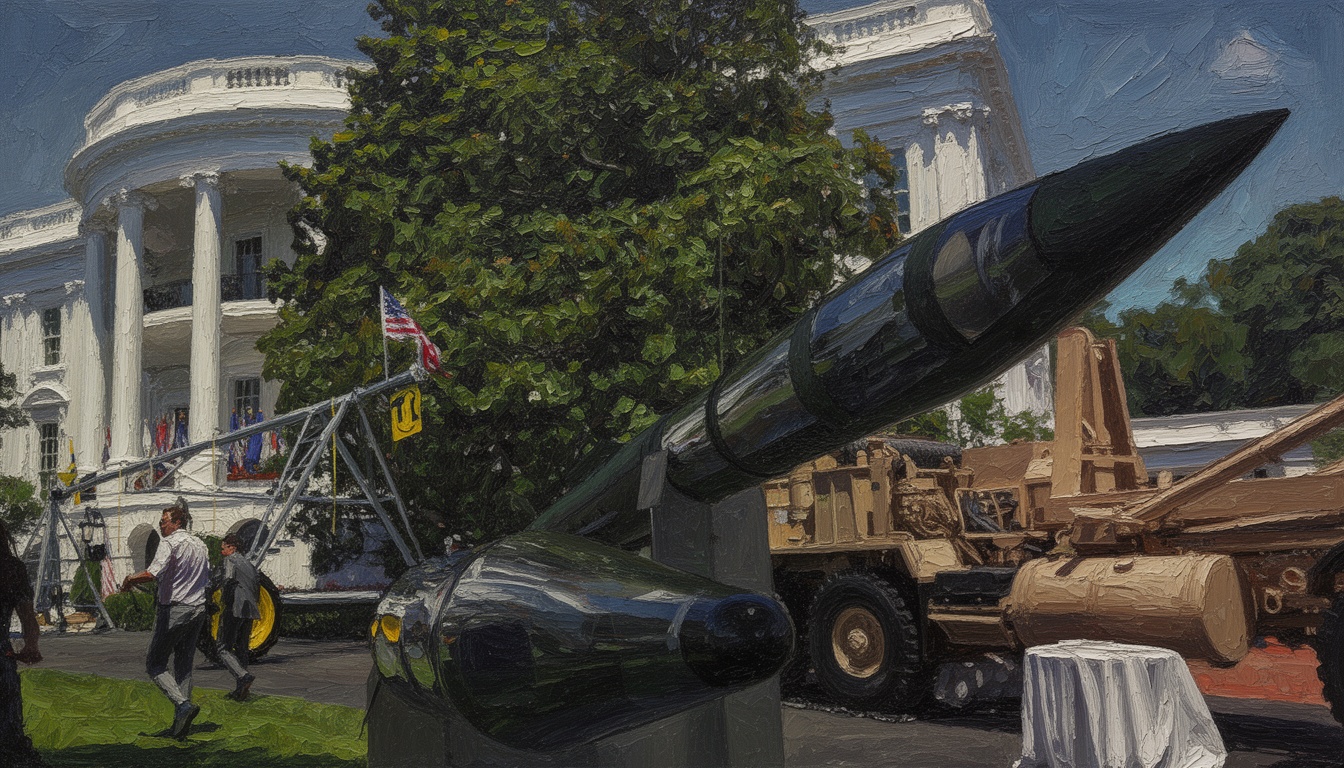
China Detects US Munitions Weakness Exposed by Iran War
Chinese military observers warn that depleted US munitions stocks and constrained production create a critical vulnerability. The Iran conflict appears to have driven heavy consumption of Patriot and THAAD interceptors, plus SM-3/SM-6 inventories. Observers project potential risks against capable rivals and ambiguous future supply lines.
The Iranian war has laid bare a weakness in the United States’ munitions posture, according to Chinese military observers. They contend that depleted stockpiles and limited current production capacity will tighten the United States’ defense options against stronger adversaries. Observers caution that the gap could be exploited by competitors seeking strategic leverage.
Analysts say the 39-day conflict drained significant quantities of core air defense tools, notably Patriot missiles and THAAD interceptors. The war’s rapid consumption stressed inventories that were already stretched by prior global contingencies. This stress test underscores how quickly high-demand missiles can move from reserve to front-line use.
Background to this assessment includes a history of dual-use production pressures and a shifting defense budget, with emphasis on next-generation missiles and modernization programs. The Iran engagement reportedly accelerated demand beyond what producers anticipated. Chinese analysts view this as a potential bellwether for future great-power competition and deterrence dynamics.
Technical details cited point to Standard Missile 3 (SM-3) and Standard Missile 6 (SM-6) stock levels and the rate of turnover, though exact numbers remain unpublished. Stockpiles of interceptors for long-range and mid-range air defense systems have been described as vulnerable to supply-chain disruption. The overall implication is a heightened risk for the United States in multi-domain crises where rapid rearmament is essential.
Looking forward, observers warn that adversaries may test the United States’ ability to respond under pressure. The war’s lessons could push revisions in munitions procurement, industrial base resilience, and allied stock-sharing arrangements. In a broader sense, the assessment signals a shift in strategic calculations as states re-evaluate dissuasion and escalation thresholds.