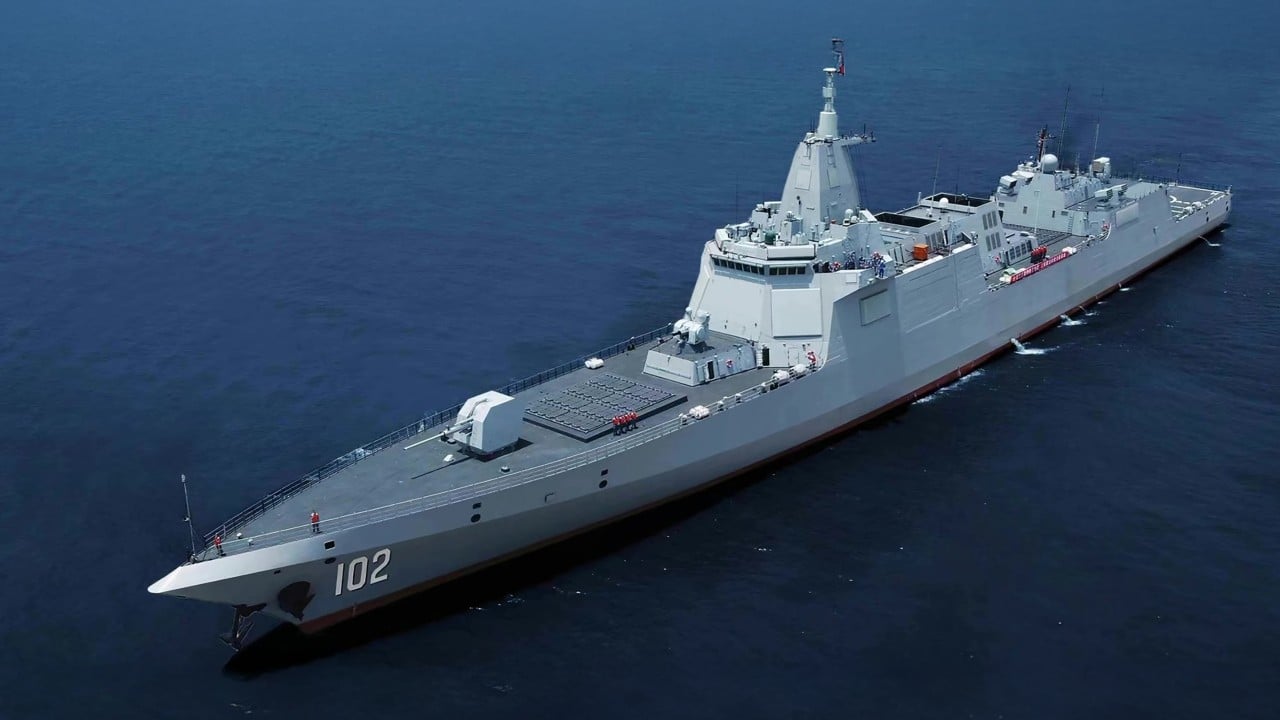
China Deploys Type 055 Destroyers, Escalating Naval Threat to Taiwan
The commissioning of Type 055 destroyers signals a direct military escalation by China, intensifying naval operations in the Taiwan Strait and surrounding waters while heightening regional tensions.
China's People's Liberation Army Navy (PLAN) has taken a provocative step by preparing to commission its first two Type 055 guided-missile destroyers, hull numbers 109 and 110, into the East China Sea Fleet. Recent photographs have confirmed their arrival at a Zhoushan naval base, marking a significant expansion of the PLAN's capabilities, particularly concerning operations near Taiwan. This move could drastically alter the security dynamics in the region, signaling Beijing's intention to bolster its naval presence and assert dominance in contested waters.
The Type 055 destroyer represents a major technological leap for the PLAN, featuring advanced anti-air, anti-surface, and anti-submarine warfare systems. As the most powerful surface combatants in the Chinese fleet, these destroyers are equipped with vertical launch systems capable of firing a variety of missiles, including the YJ-18 anti-ship and HHQ-9 surface-to-air missiles. The deployment of such sophisticated assets highlights China's strategic goal to project its military power and influence well beyond the first island chain.
This escalation is significant due to its implications for regional stability. The commissioning of the Type 055 destroyers not only emboldens China's military posture but also serves to pressure Taiwan, which has been in a precarious state since increasing tensions with Beijing. The Philippines, Japan, and the United States, witnessing this buildup, may reevaluate their response strategies in the face of a growing Chinese naval threat, exacerbating the already tense security environment in East Asia.
Key actors in this situation include not only the Chinese government and military but also Taiwan and the U.S. The Chinese Communist Party aims to strengthen its claim over Taiwan and deter foreign influence, while Taiwan seeks to defend its sovereignty. The U.S. remains committed to supporting Taiwan, evidenced by recent arms sales, but faces challenges in countering China's rapidly advancing naval capabilities.
Technically, the two Type 055 destroyers are part of a larger fleet expansion effort by the PLAN, which is projected to include up to 30 destroyers of this class in the near future. Each Type 055 destroyer reportedly costs between $300 million to $500 million, a significant investment reflecting China's prioritization of naval power. Their operational range and capabilities allow them to engage targets at extensive distances, thereby extending the conflict radius around Taiwan well into the Pacific.
The likely consequences of this development point to a sharpening of military confrontations between China, Taiwan, and potentially the U.S. Increased naval operations by the PLAN could provoke countermeasures from U.S. naval forces, resulting in more frequent encounters in the Taiwan Strait. Furthermore, Taiwan may intensify its military preparedness, leading to an arms race in the region as countries scramble to bolster defenses.
Historically, the deployment of new military assets often signals a change in strategic posturing and operational readiness. The changes seen with the Type 055 destroyers evoke memories of Cold War naval buildups, where show of force became a significant element of global maritime strategy. Past precedents indicate that such moves could lead to miscalculations and unintended escalations, particularly in a region marked by high stakes and strategic rivalries.
In forward assessment, monitoring the operational status of the Type 055 destroyers will be crucial, alongside any increase in PLAN naval drills or exercises around Taiwan. Key intelligence indicators will include increased deployments of Chinese naval and air assets, changes in the frequency of Taiwanese military exercises, and the presence of U.S. naval vessels in the region. Observers should be vigilant in tracking these developments to gauge the evolving military landscape in East Asia.